Physical Address
304 North Cardinal St.
Dorchester Center, MA 02124
Physical Address
304 North Cardinal St.
Dorchester Center, MA 02124


here is a specific minute I keep returning to. Not 11:11, the one everyone already watches for. Not 3:33, the one that shows up in every angel number listicle. Mine is 5:11, and once I started paying attention to why it kept finding me, I built an entire evening practice around it. This is that practice, and the reasoning underneath it.

Most people who tell me they cannot meditate are describing a failure that never happened. They sat down, they tried to still the mind, and the mind refused. Thoughts kept arriving. A grocery list, an old argument, a worry about a child, the sudden certainty that they were doing it wrong. After a few minutes or a few weeks they concluded that meditation was not for them, that their particular mind was too busy, too anxious, too loud. They had tried to switch off a waterfall by standing under it, and when they got wet they blamed themselves.

Open any meditation app and you will find the same promise repeated in soothing pastel tones: less stress, better sleep, a calmer commute. The pitch works. The global meditation apps market was valued at around 2.2 billion dollars in 2025 and continues to climb as millions of people reach for their phones to find a moment of peace.

Chronic pain has a way of shrinking a life. When discomfort lingers for months or years, it stops being a signal and becomes a resident, coloring sleep, mood, relationships, and the simple willingness to move through a day. For a long time the standard answers were pharmaceutical, and for a long time those answers carried a heavy cost. So it is worth paying close attention when a practice as old and as freely available as meditation turns out to hold up under rigorous scientific scrutiny.

When you sit down to meditate, something in you seems to slow. The breath softens, the shoulders drop, and the chatter in your head loses a little of its urgency. For a long time, this felt like a subjective shift, the sort of thing you could describe but never really measure. A new study has changed that. Researchers have now mapped the exact window in which a meditating brain begins to reorganise itself, and the answer is far shorter than most practitioners assume. The big shift arrives around the seven minute mark.
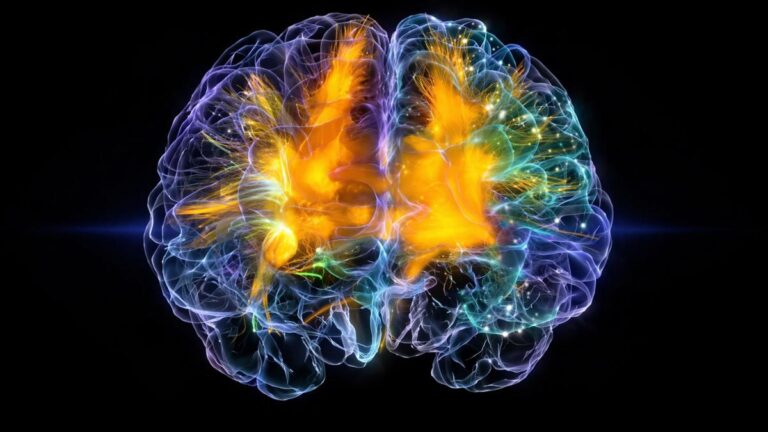
Most people assume that meaningful change in the brain takes months, even years, of dedicated practice. That belief is understandable but increasingly challenged by hard science. A landmark study published in the peer-reviewed journal Communications Biology has demonstrated that just seven days of intensive meditation can trigger measurable, wide-ranging changes in both brain function and blood biology. The implications reach far beyond stress relief. We are talking about fundamental shifts in how your brain engages with reality.

War does not end when the guns fall silent. For the millions of people who have lived through armed conflict, the ceasefire is not a conclusion but a threshold into a different kind of battle. One that is invisible, that has no front line, and that can rage for decades within the nervous system, the memory, and the soul. The world rushes to rebuild roads and institutions, but the inner landscape of the survivor is often left in ruin, unmapped and unacknowledged.

In 1961, a young Soviet surgeon named Leonid Rogozov found himself in a crisis that had no precedent. Deployed as the sole doctor on an Antarctic expedition, he watched the winter ice close in around his station, and then he started to feel sick. Abdominal pain. Fever. He knew the diagnosis immediately: appendicitis. He also knew what it meant. Without surgery, he would die. But he was the only surgeon for thousands of miles, trapped on a frozen continent with a ship that would not return until spring.

Something remarkable is unfolding at the intersection of neuroscience and ancient spiritual practice. Researchers have now documented what many practitioners have long suspected: that certain psychedelic compounds do not simply distort consciousness in random or chaotic ways, but appear to guide the brain into territory that overlaps meaningfully with deep meditative states. For those of us on the contemplative path, this is far more than a curiosity. It is a validation, a mirror held up to practices that have existed for thousands of years, now finally being examined through the lens of modern brain imaging.

Most people who meditate do so on faith. They sit, they breathe, they return their attention to the present moment for ten or twenty minutes, and then they get on with their day. At some point, weeks or months in, they either feel that something has shifted or they quietly give up. The whole thing can feel impossibly vague, like trying to measure sunlight with a ruler.