Physical Address
304 North Cardinal St.
Dorchester Center, MA 02124
Physical Address
304 North Cardinal St.
Dorchester Center, MA 02124

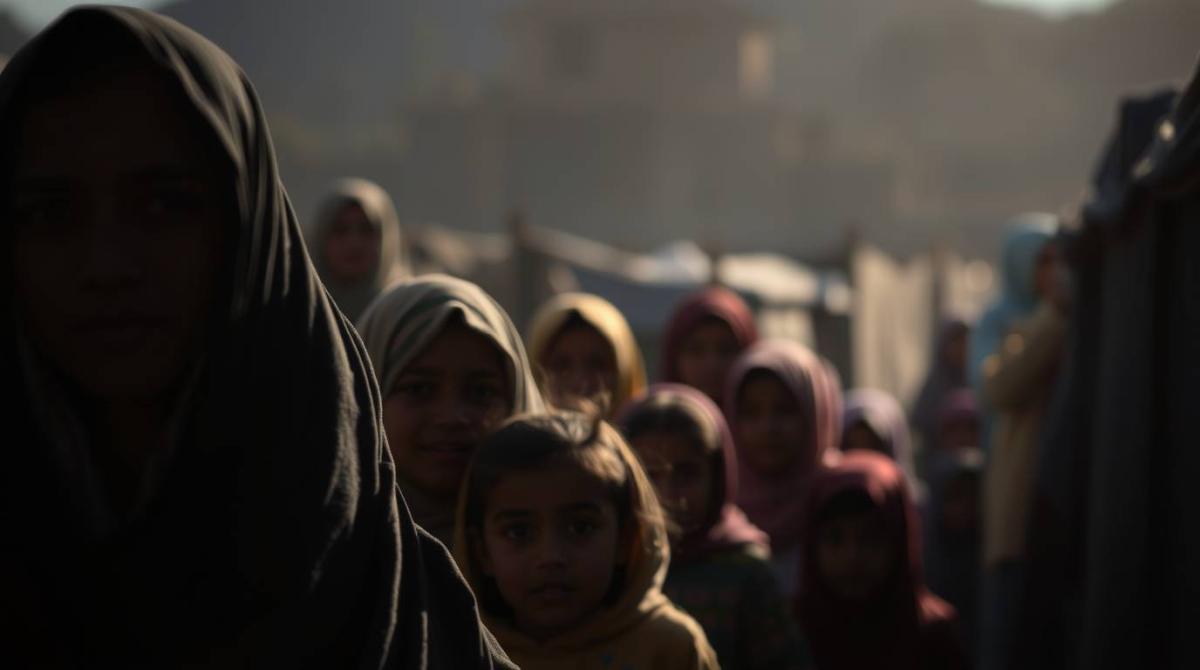
War does not end when the guns fall silent. For the millions of people who have lived through armed conflict, the ceasefire is not a conclusion but a threshold into a different kind of battle. One that is invisible, that has no front line, and that can rage for decades within the nervous system, the memory, and the soul. The world rushes to rebuild roads and institutions, but the inner landscape of the survivor is often left in ruin, unmapped and unacknowledged.
War does not end when the guns fall silent. For the millions of people who have lived through armed conflict, the ceasefire is not a conclusion but a threshold into a different kind of battle. One that is invisible, that has no front line, and that can rage for decades within the nervous system, the memory, and the soul. The world rushes to rebuild roads and institutions, but the inner landscape of the survivor is often left in ruin, unmapped and unacknowledged.
This is where the conversation about mindfulness and mental health in conflict zones becomes not just a policy discussion, but a deeply spiritual one.
Trauma is not a story you tell about the past. It is a present-tense experience, stored in the body as surely as any physical injury. Research into post-traumatic stress disorder consistently shows that survivors of war, whether civilians, refugees, or combatants, carry the imprint of their experiences in the architecture of the nervous system itself. The brain learns to expect danger. The body holds the freeze, fight, or flight response in a kind of permanent readiness. Sleep becomes fractured. Relationships become strained. The present moment is contaminated by sensory echoes of events that may be years or continents away.
This is not weakness. It is the intelligent, adaptive response of a human being to extraordinary threat. But it becomes a prison when the threat has passed and the body has not received the signal that it is safe to rest.
What is needed, then, is not simply the absence of war. It is a process of genuine inner reconstruction. A return to presence.
Mindfulness is not a modern invention. It is an ancient remembering. Long before it entered the language of clinical psychology or appeared as a feature on wellness apps, the practice of bringing awareness to the present moment was at the heart of nearly every major spiritual tradition on Earth.
In Islam, the practices of Dhikr (the remembrance of God) and Sabr (patient endurance) cultivate exactly what modern mindfulness research affirms: the capacity to observe experience without being consumed by it, to anchor the self in something greater than the chaos of circumstance. In Buddhist traditions, the practice of Vipassana, or insight meditation, has for thousands of years offered a systematic method for seeing clearly into the nature of suffering and finding freedom within it. In Christian contemplative practice, silent prayer and the discipline of recollection serve the same purpose: the return of scattered attention to a deeper ground of being.
What all of these traditions understood, and what contemporary neuroscience is now confirming, is that the quality of attention transforms experience. The capacity to witness one’s own suffering without identifying with it completely is not a luxury. It is a fundamental human capacity that can be cultivated, and it is one of the most powerful forces available for healing.
For more on how these ancient contemplative tools intersect with modern consciousness science, see our article on the neuroscience of meditation and spiritual practice.
Mindfulness-based interventions in conflict zones are not about asking traumatised people to feel positive or to minimise what they have experienced. They work precisely because they offer something different: a way to be present with difficult experience without being retraumatised by it.
Programs like Mindfulness-Based Stress Reduction (MBSR) and Trauma-Informed Mindfulness Therapy have been deployed in Syrian refugee camps, in post-genocide Rwanda, and among internally displaced families in Ukraine. The results consistently show reductions in PTSD symptoms, improved sleep, stronger emotional regulation, and perhaps most significantly, a renewed sense of inner agency. Survivors begin to discover that while they cannot control what happened to them, they retain a kind of sovereignty over their inner world that no external force has been able to permanently destroy.
This is profoundly important from a spiritual perspective. One of the deepest wounds of war is the experience of powerlessness, the sense that the self has been violated at its most fundamental level. Mindfulness practice, when approached with genuine depth, is in part a reclamation of that inner ground. It is the recognition that consciousness itself, pure awareness, the witnessing presence that observes all experience, has never actually been harmed.
This is precisely what mystics across traditions have pointed to. The self that can be wounded is not the deepest self.
One of the most accessible entry points into mindfulness for trauma survivors is the breath. Not because breathing is simple, it is actually a remarkably sophisticated act, but because it is always available and it exists at the threshold between the voluntary and involuntary, the conscious and the automatic. To place attention on the breath is to step, even briefly, out of the mental time machine of trauma that carries consciousness perpetually between a painful past and a feared future.
Somatic approaches to mindfulness, those that emphasise body-based awareness rather than purely cognitive observation, have proven especially valuable for survivors of extreme trauma. When the thinking mind is overwhelmed, the body can become the doorway back into the present. Simple practices: noticing the weight of feet on the ground, the temperature of air on the skin, the rhythm of the chest rising and falling, can interrupt the loop of hypervigilance and begin to signal the nervous system that safety, however fragile, is possible.
This is not metaphor. It is neurological reality. Practices that cultivate present-moment awareness have been shown to reduce activity in the amygdala (the brain’s threat-detection centre) and strengthen the prefrontal cortex, which governs regulation, perspective-taking, and the sense of a coherent self. Healing, at every level, appears to move through presence.
For a deeper exploration of how breath-work and body-centred practice connect to spiritual awakening, visit our guide on conscious breathing and inner transformation.
War does not only wound individuals. It wounds communities, cultures, and the fabric of shared reality itself. Inherited trauma, the transmission of unresolved suffering across generations, is now well-documented in epigenetic research. The children and grandchildren of those who survived genocide, famine, or displacement carry biological and psychological traces of experiences they never personally lived through.
This means that healing, too, must be understood as a collective and multigenerational project. Mindfulness, integrated into community rituals, reconciliation processes, and educational systems, offers one avenue for interrupting the cycle. The work in Rwanda after the 1994 genocide, where meditation and group-based healing practices were woven into reconciliation initiatives, offers a powerful example of what becomes possible when inner work and social repair are pursued together.
Peace, in the deepest sense, is not simply the absence of conflict. It is the presence of something: a quality of wholeness, of right relationship, of what many traditions simply call love. The path toward it runs, inevitably, through the interior of each human being willing to undertake the journey.
There is a temptation, in the face of large-scale human suffering, to dismiss inner work as self-indulgent or inadequate to the scale of the problem. But this misunderstands the relationship between consciousness and reality. Every act of genuine healing, every moment in which a traumatised person reclaims their own presence and dignity, ripples outward. Healed individuals raise children differently. They engage with their communities differently. They choose differently.
The reconstruction of war-torn societies ultimately depends on the inner reconstruction of the people within them. Mindfulness is not a replacement for political solutions, economic support, or justice. But it is an indispensable companion to all of them, one that addresses the dimension of suffering that no external intervention can reach.
The war inside can end. And it begins, as it always has, with this breath, this moment, this return to presence.
For related reading, explore our article on healing the pain body and releasing stored trauma.