Physical Address
304 North Cardinal St.
Dorchester Center, MA 02124
Physical Address
304 North Cardinal St.
Dorchester Center, MA 02124

Weekend attunements and 10 minute online healings miss the point. Discover Usui Reiki Ryoho as it began: a daily practice for the mind.
Type “Reiki” into any video platform and you will be offered a strange menu. Ten minute sessions that promise to clear your energy through the screen. Weekend courses that turn a complete beginner into a certified healer by Sunday evening. Psychic upgrades, instant manifestation, chakra resets on demand. It is colourful, it is fast, and it is almost entirely unrecognisable to the people in Japan who still practise the method the way its founder taught it.
That gap matters. Not because anyone owns spirituality, but because the shortcut version so often leaves people disappointed. They try a session or a crash course, feel little lasting change, and conclude that Reiki is empty. What they never met was the practice itself: a patient, daily discipline aimed first at the mind, with physical wellbeing following behind it like a shadow follows a walker.
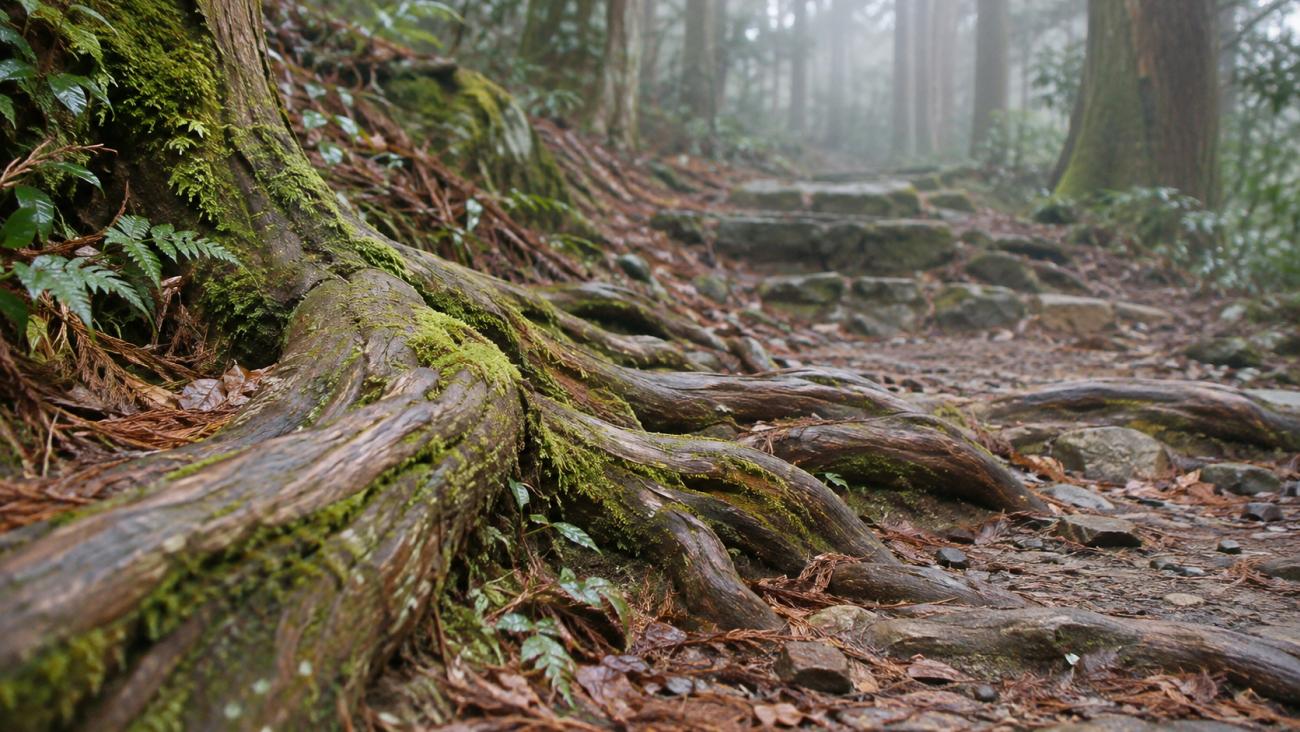
Mikao Usui was born in 1865 and spent much of his life studying and searching. In the early 1920s he climbed Mount Kurama, a forested sacred mountain north of Kyoto, and undertook a 21 day period of fasting and meditation. Scholars who have looked at the setting point out that Kurama had long been a place for mountain ascetics, and that Usui was stepping into an old tradition of shugyō, or demanding spiritual training, rather than inventing something from nothing.
What he brought down the mountain he shared from Tokyo. In April 1922 he opened a dōjō in Harajuku and founded a society to teach his method. A detailed academic profile from the World Religions and Spirituality Project gives its full name as Shinshin Kaizen Usui Reiki Ryōhō Gakkai and describes how quickly it filled with students. When Usui died in 1926, those students raised a large memorial stone at Saihōji temple in Tokyo, and its inscription remains one of the most reliable records of his life. The historian Massimo Introvigne has written a vivid account of visiting that grave and the stone beside it.
Most people only ever hear the word Reiki. The longer name is far more revealing. Shinshin means mind and body, and the order is deliberate: the mind is named first. Kaizen is usually translated as improvement, though teachers who work closely with the original texts describe it as an ongoing inner cultivation rather than a tune up. Teacher and researcher Frans Stiene unpacks the phrase in his essay on Shinshin Kaizen Usui Reiki Ryoho, arguing that hands on healing of others grows out of this inner work and was never its starting point.
Put plainly, Usui’s own title for the system tells you what it was for. Train the mind, and the body comes along. Healing is welcome when it happens, but it is the fruit, not the root.
At the centre of the method sit five short precepts, known in Japanese as the gokai. Translations vary a little, but the shape is always the same: for today only, do not anger, do not worry, be grateful, work honestly, be kind. Students were asked to recite them every morning and every evening with their palms together, a posture called gasshō. The International House of Reiki keeps a clear version of the precepts and the instructions that come with them.
Notice what is missing from that list. There is nothing about channelling, nothing about pulling something out of another person, nothing about wealth. Every line points back at your own reactions. Anger and worry are the two habits of mind that quietly run most of our days, and the precepts ask you to meet them freshly, one day at a time. That “just for today” framing is the genius of it. Nobody can promise never to worry again. Almost anyone can try for the next few hours.
Traditional teaching moves through three broad stages. Shoden, the first teaching, works on the nature of the mind and the daily habit of practice. Okuden, the inner teaching, introduces the symbols and deepens the relationship between a settled mind and a settled body. Shinpiden, the mystery teaching, is the level that later became known in the West as Master.
The Western system packaged these as Reiki 1, Reiki 2 and Master, but the original society never treated them as boxes to tick on a timetable. Senior teachers assessed each student’s progress, and there were more gradations than the familiar three. Advancement depended on what had actually changed in a person, not on how many hours of class they had sat through.
Reiki reached the West through Hawayo Takata, a Japanese American woman from Hawaii who trained with Usui’s student Chujiro Hayashi from late 1935. She taught for decades and deserves credit for keeping the practice alive outside Japan. She also reshaped it heavily for American audiences. Researchers at the World Religions and Spirituality Project note that the Japanese idea of reiki was recast as a Western “universal life energy,” the training was formalised into three paid levels, and self treatment became the core of Western practice.
Takata also told stories about Usui that the records simply do not support, presenting him at various times as a Christian and a university principal. The International House of Reiki has catalogued these and later claims in a sober page on historical Reiki inconsistencies, including the famous ten thousand dollar fee she set for Master training in the 1970s.
After her death in 1980, the floodgates opened. Hundreds of styles appeared, levels were split and recombined, new symbols were added, and eventually online attunements arrived. Some of this was sincere experimentation. Much of it was marketing. Somewhere along the way the idea of a slow inner discipline was replaced by the idea of a product you could buy, receive and be finished with. If you are trying to make sense of the styles on offer today, our guide to the three Reiki lineages worth knowing maps the main branches.
The trouble with the spectacle version is not that it is too ambitious. It is that it points people in the wrong direction. If you are told that healing should arrive in ten minutes, then a quiet, ordinary session feels like failure. If you are told a weekend makes you a healer, you never learn to sit with your own restlessness, which is the very skill the precepts are trying to build.
It is worth being honest here too. Mainstream research bodies such as the US National Center for Complementary and Integrative Health report that studies of Reiki for specific conditions are mostly small and inconsistent. That finding sits uncomfortably with grand promises of instant cures. It sits much more comfortably with what Usui actually described: a practice for living with less anger and less worry, whose effects show up gradually in how you meet each day.
Japanese teachers often use the phrase anshin ritsumei to describe where the practice leads: a settled heart and a life lived from that settled place. It is a beautiful idea, though careful writers point out that the term entered Reiki vocabulary later than Usui himself. Teacher Brian Brunius makes the useful point that treating anshin ritsumei as a prize to win only turns it into one more thing to chase.
That is the paradox at the heart of authentic practice. The more you grab for results, the further away they seem. The more you simply show up, recite the precepts, place your hands and sit quietly with whatever is moving inside you, the more the results arrive on their own. Less reactivity. Better sleep. A little more room between a trigger and your response. People who have practised this way for years tend to describe exactly these ordinary, cumulative shifts rather than fireworks.
You do not need a mountain or a monastery to begin. A simple traditional rhythm might look like this:
None of this is glamorous. That is rather the point. Usui asked his students to recite these lines every morning and evening, and his own story is one of demanding training on a mountain rather than a gift handed over in an afternoon.
If this slower path appeals to you, look for teachers who talk more about the precepts and daily practice than about powers and upgrades. Good questions to ask include how long they expect students to practise between levels, whether they teach self practice before treating others, and how they describe the history. A teacher comfortable saying “this takes time” is usually a teacher worth time.
Reiki, in the form its founder left behind, is not entertainment and not a shortcut. It is a quiet invitation to turn toward your own mind, one day at a time, and to let a calmer life grow from there. That invitation is still open, and it asks for nothing more dramatic than showing up tomorrow morning and beginning again.