Physical Address
304 North Cardinal St.
Dorchester Center, MA 02124
Physical Address
304 North Cardinal St.
Dorchester Center, MA 02124


There is a peculiar pattern in modern civilization: the most powerful medicines are often the ones we've been taught to ignore. The aronia berry, known by the unfortunate colonial name "chokeberry," stands as a perfect example of how we've systematically severed ourselves from nature's intelligence in favor of systems that keep us dependent and disempowered.

The conversation around microdosing psychedelics as a potential treatment for ADHD sits at a fascinating crossroads. On one side, we have compelling personal testimonies from individuals who claim life-changing results. On the other, scientists urge caution, pointing to the almost complete absence of rigorous clinical data. This tension between experiential wisdom and scientific validation defines one of the most intriguing debates in both the psychedelic renaissance and ADHD treatment communities.

For decades, the standard of care for major depressive disorder has relied heavily on oral antidepressants, such as Selective Serotonin Reuptake Inhibitors (SSRIs) and Serotonin-Norepinephrine Reuptake Inhibitors (SNRIs). However, these traditional medications often act as a "Band-Aid" solution, where patients feel relief only while taking the drug, and symptoms frequently resurface or worsen upon cessation. Furthermore, they typically require four to eight weeks to show efficacy. In contrast, ketamine therapy has emerged as a transformative tool that offers rapid symptom relief (sometimes within hours) by addressing the root neurobiological causes of depression.

For centuries, a microscopic organism has lived on the surface of still waters, capable of doubling its entire mass every 16 to 48 hours. Known scientifically in the family Lemnaceae, duckweed is the fastest-growing flowering plant on Earth. Despite its status in ancient civilizations as a "pure" food and its current role as a cornerstone of NASA's deep-space survival plans, modern Western society has rebranded this miracle crop as a "tier 1 aquatic nuisance."

There's a war being waged on your front lawn, and you're paying for both sides.
Right now, you probably have a plant growing in your yard that contains more protein than spinach, produces unlimited free fertilizer, and can regulate blood sugar better than diabetes medications. You're also probably spending money to kill it.
If that sounds insane, that's because it is. But it gets worse: in 70% of American suburbs, allowing this plant to bloom can get you fined by your homeowner's association. Welcome to the greatest con job in modern agriculture.

For 8,000 years, a grain sustained the Aztec empire alongside corn and beans. It provided complete protein, thrived in drought, and produced yields rivaling corn despite seeds smaller than a millimeter. Then Spanish conquistadors arrived, witnessed its role in religious ceremonies, and declared its cultivation punishable by death. Fields were burned. Seed savers were executed. An entire agricultural system was systematically destroyed not because the crop failed, but because it succeeded in ways that threatened colonial control. This is the story of amaranth, and the violence required to erase knowledge that refuses to die.
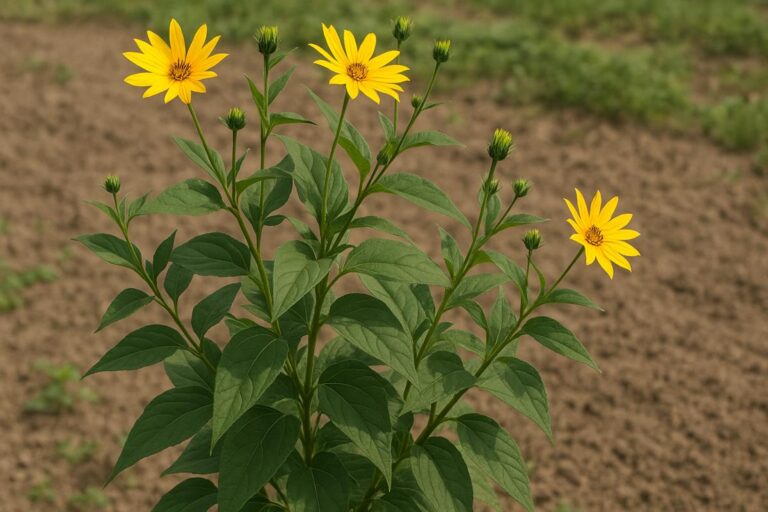
There exists a plant so productive that one tuber can generate 200 offspring in a single season. It survives temperatures of minus 30 degrees Celsius, thrives without irrigation, and feeds the soil while feeding you. Native Americans cultivated it for thousands of years. Europeans embraced it as a famine solution. Then, after World War II, it disappeared from collective memory. This is the story of the sunchoke, also known as the Jerusalem artichoke, and why its abundance became a liability in systems designed around scarcity and control.

For over 4,000 years, a humble plant fed entire civilizations across China, Greece, and the Americas. It requires almost no water, thrives in the harshest conditions, and contains more omega-3 fatty acids than most fish. Today, it's called a weed. This is the story of purslane, and why the systems that control your food want you to keep poisoning it.

In our journey to understand the human body's remarkable capacity for healing and adaptation, we often encounter stories that challenge conventional wisdom. Today, we explore a fascinating intersection of microbiology, evolutionary biology, and personal transformation—one that suggests our bodies may possess far greater adaptive capabilities than we realize.

A powerful message has been circulating on social media that cuts straight to the heart of humanity's current predicament. While it might sound like conspiracy theory to some, when examined through the lens of spiritual awakening and conscious observation, it reveals uncomfortable truths about the structures that shape our collective reality. The question isn't whether there's a shadowy cabal orchestrating every detail, but rather how systems of control perpetuate themselves through our unconscious participation.