Physical Address
304 North Cardinal St.
Dorchester Center, MA 02124
Physical Address
304 North Cardinal St.
Dorchester Center, MA 02124

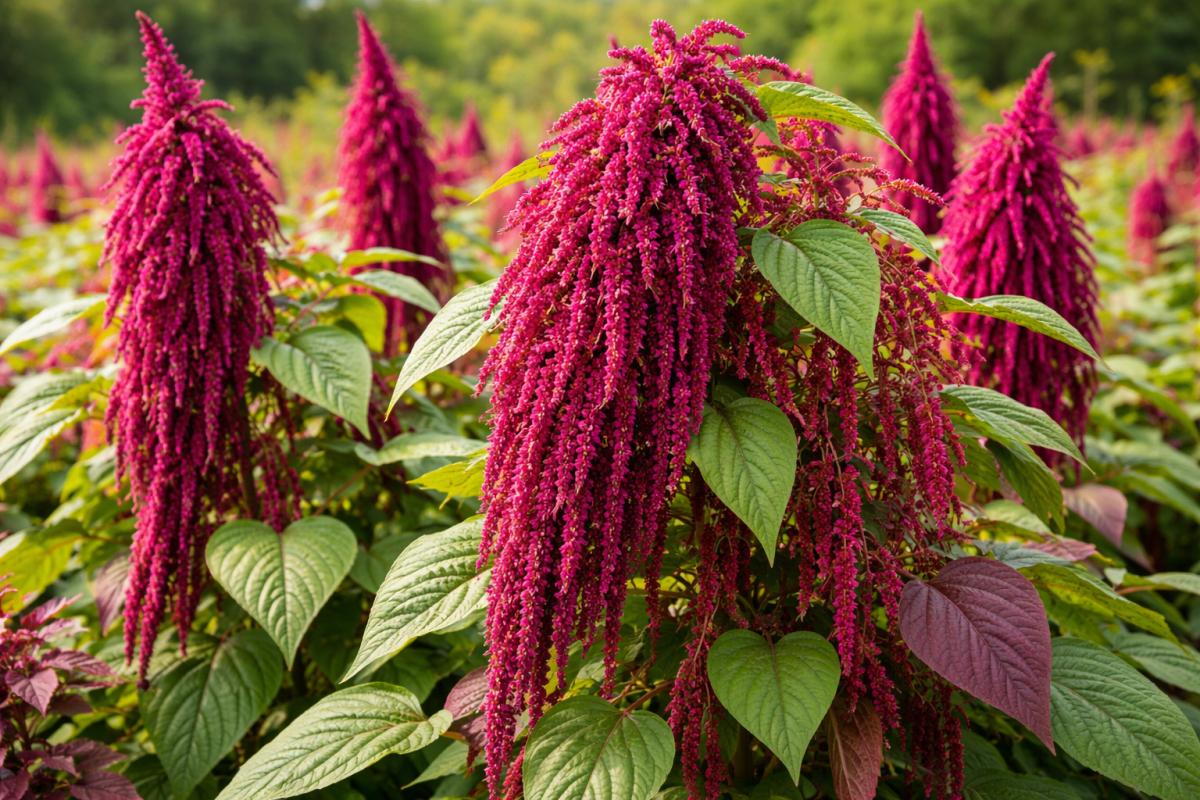
For 8,000 years, a grain sustained the Aztec empire alongside corn and beans. It provided complete protein, thrived in drought, and produced yields rivaling corn despite seeds smaller than a millimeter. Then Spanish conquistadors arrived, witnessed its role in religious ceremonies, and declared its cultivation punishable by death. Fields were burned. Seed savers were executed. An entire agricultural system was systematically destroyed not because the crop failed, but because it succeeded in ways that threatened colonial control. This is the story of amaranth, and the violence required to erase knowledge that refuses to die.
For 8,000 years, a grain sustained the Aztec empire alongside corn and beans. It provided complete protein, thrived in drought, and produced yields rivaling corn despite seeds smaller than a millimeter. Then Spanish conquistadors arrived, witnessed its role in religious ceremonies, and declared its cultivation punishable by death. Fields were burned. Seed savers were executed. An entire agricultural system was systematically destroyed not because the crop failed, but because it succeeded in ways that threatened colonial control. This is the story of amaranth, and the violence required to erase knowledge that refuses to die.
Amaranth (Amaranthus species) belongs to a rare category: plants that provide complete protein containing all nine essential amino acids human bodies cannot synthesize. This places it in the same functional class as animal products, a characteristic almost unheard of in the plant kingdom.
According to research on amaranth nutrition, one cup of cooked amaranth delivers nine grams of protein with an amino acid profile that researchers in Guatemala determined may be the most nutritious plant-based protein available. The grain is particularly rich in lysine, an amino acid typically deficient in cereals like wheat, corn, and rice.
Beyond protein, amaranth concentrates nutrients at levels that justify the overused term “superfood.” It provides more calcium and iron than quinoa, substantial amounts of magnesium, phosphorus, and manganese, plus high concentrations of vitamin C, folate, and B vitamins. The grain contains powerful antioxidants including gallic acid, vanillic acid, and carotenoids that combat cellular damage and inflammation.
Both the seeds and leaves are edible. The leaves actually surpass spinach in iron, vitamin C, and calcium content, providing two distinct nutritional powerhouses from a single plant. This dual functionality amplified amaranth’s value to subsistence agricultures but complicated its commercialization in systems demanding single-purpose crops.
The grain is naturally gluten-free, making it safe for people with celiac disease while providing the structure and versatility typically associated with wheat. It can be ground into flour, popped like miniature popcorn, cooked as porridge, or added to soups and baked goods. This flexibility threatens entire product categories built around gluten-free alternatives and plant-based protein supplements.
Amaranth demonstrates the resilience characteristics of a plant selected for survival across millennia. As a C4 plant, it fixes carbon with exceptional efficiency, allowing it to thrive in high temperatures and low moisture conditions where conventional grains fail.
The plants reach heights of six to nine feet, producing massive seed heads containing thousands of tiny grains. Despite their minuscule size (about one millimeter in diameter), these seeds generate yields comparable to corn and rice. A single plant can produce 50,000 to 60,000 seeds, ensuring reproductive success even in challenging conditions.
The plant tolerates drought, heat, poor soils, and various elevations from sea level to high mountains. This adaptability allowed it to spread across diverse environments throughout the Americas, from Mexico through Central America into the Andean highlands. Different varieties evolved for specific conditions, but all shared fundamental hardiness.
This climate resilience has attracted renewed scientific attention as conventional agriculture confronts increasing instability. NASA studied amaranth for potential use in space farming specifically because of its productivity under stress conditions. The same characteristics that made it a survival crop for ancient civilizations make it strategically valuable for climate-disrupted food systems.
But these advantages create problems for industrial agriculture built on control and dependence. Crops that thrive without irrigation undermine water-intensive operations. Plants that produce abundant seed year after year eliminate recurring purchases. Resilience that enables farmer autonomy threatens systems profiting from vulnerability.
Amaranth held sacred status among Aztec civilizations, appearing third in importance on Montezuma’s agricultural tribute list after corn and beans. The grain, called “huauhtli” in Nahuatl, was not merely food but a central element of religious practice and cultural identity.
During ceremonies honoring the war god Huitzilopochtli, Aztecs popped amaranth seeds and mixed them with honey and occasionally ritual blood to form dough. This mixture was shaped into figures of deities, which were then ceremonially broken and distributed to participants who consumed them as an act of spiritual communion, taking the god into themselves.
When Spanish conquistadors led by Hernan Cortes arrived in 1519, they recognized this practice as a direct threat to Catholic conversion efforts. The creation of edible deity figures paralleled Christian communion in ways Catholic authorities found intolerable. Amaranth’s deep integration into indigenous spiritual life made it a target for systematic elimination.
The suppression was brutal and comprehensive. According to historical accounts from Berkeley Food Institute, Cortes declared he would cut off the hands of anyone caught planting amaranth. Fields were burned. Seed stores were destroyed. Growing or possessing amaranth became punishable by death. The Spanish imposed wheat cultivation in its place, both to control food supplies and to enforce cultural domination through agricultural systems.
This represented one of history’s most aggressive agricultural suppressions. Unlike crops that declined through economic competition or gradual displacement, amaranth faced active, violent eradication by colonial powers wielding military force and religious authority. The goal was complete erasure.
The Spanish justification centered on religious grounds, but economic and political factors drove the violence. Amaranth enabled independence in ways that undermined colonial extraction.
The grain required no special processing, grew easily across diverse conditions, and produced abundant yields without intensive labor or external inputs. Indigenous peoples could maintain food security outside Spanish-controlled systems. This autonomy threatened the colonial model requiring native populations to produce wheat, sugar, and other cash crops for export while becoming dependent on Spanish-controlled food supplies.
Wheat required milling, specialized cultivation knowledge, and often irrigation infrastructure, all of which could be monopolized and taxed. Amaranth grew itself with minimal intervention, asked for almost nothing, and belonged to no one. Its pervasive success across the Americas meant seeds existed everywhere, impossible to fully control or commodify.
The religious ceremonies provided convenient justification for suppression that served deeper control objectives. By framing amaranth as pagan and dangerous, Spanish authorities legitimized destruction that was fundamentally about power, resources, and forced dependence.
The pattern repeats across colonized regions: crops and practices enabling indigenous autonomy are classified as primitive, dangerous, or inferior. Then they are systematically replaced with systems requiring purchased inputs, specialized knowledge, and integration into markets controlled by colonizing powers.
The suppression nearly succeeded. For nearly 400 years, amaranth existed primarily in remote areas where indigenous communities preserved seed stocks in secret, passing them through generations at great risk. These acts of agricultural resistance maintained genetic diversity and cultural continuity through centuries of prohibition.
The grain began reemerging in the 1970s when researchers in the United States rediscovered its nutritional properties and climate resilience. Small-scale cultivation expanded in Mexico, Central America, and eventually globally. Today, amaranth appears in health food stores, organic markets, and specialty products, though it remains marginal compared to its historical importance.
The revival faces practical challenges. Amaranth’s tiny seeds complicate mechanical harvesting. The grain lacks standardized varieties optimized for industrial agriculture. Most fundamentally, it cannot be easily patented or genetically modified into proprietary forms requiring licensing fees. These same characteristics that made it unsuitable for colonial control make it problematic for modern agricultural corporations.
Contemporary promotion often strips amaranth of its historical context, marketing it as a trendy superfood for health-conscious consumers while erasing the indigenous knowledge systems that developed and preserved it. This pattern of extraction continues: take the seeds, erase the source, profit from the marketing.
Follow the suppression pattern across centuries and the logic becomes clear. Amaranth provides complete protein naturally, threatening the multibillion-dollar plant-based protein supplement industry. It grows in challenging climates without irrigation, undermining systems profiting from water scarcity and drought vulnerability. It produces abundant seed that farmers can save and replant, eliminating recurring seed purchases.
The grain cannot be easily controlled, standardized, or incorporated into industrial systems requiring uniformity, long shelf life, and mechanical processing. Its small seed size complicates harvesting and cleaning. Its unfamiliarity in modern markets requires consumer education. Its historical associations with indigenous resistance make it politically complex.
These factors ensure amaranth remains marginal despite nutritional superiority and climate advantages. The systems that profit from dependence, scarcity, and recurring purchases cannot accommodate crops offering abundance and independence. So amaranth stays classified as alternative, specialty, or niche rather than returning to its historical status as a staple grain feeding empires.
Amaranth grows across North and Central America right now. The leaves appear in Latin American markets as “quelites” or “bledo.” The seeds are sold in health food sections and Mexican groceries. The plant often appears as a weed in gardens and disturbed soils, perpetually attempting to reclaim its place.
The tiny seeds can be cooked like rice, simmered into porridge, popped like microscopic popcorn, or ground into flour for baking. The leaves cook like spinach, adding minerals and protein to soups, stews, and vegetable dishes. Starting with small amounts allows digestive systems to adapt to the high fiber content.
The grain requires cooking. Raw amaranth blocks nutrient absorption and remains inedible. This processing requirement, while simple, creates another barrier to direct consumption compared to crops that can be eaten raw.
Amaranth exemplifies a category of crops systematically marginalized not through honest competition but through violence, suppression, and economic structures designed to prevent their success. These plants share characteristics: exceptional nutrition, climate resilience, minimal input requirements, and resistance to ownership and control.
The conquistadors needed military force and death penalties to nearly eliminate amaranth because the grain’s advantages were obvious to everyone who grew it. Modern suppression operates through subtler mechanisms but serves identical purposes. Crops enabling genuine independence remain incompatible with systems profiting from dependence.
The question is not whether amaranth tastes good or grows well. Archaeological evidence and historical records confirm both. The question is who benefits from you never learning that a plant exists which provides complete protein, thrives in drought, produces abundant seed for free, and survived centuries of violent suppression through the courage of indigenous seed savers. And what changes when you choose to remember anyway.