Physical Address
304 North Cardinal St.
Dorchester Center, MA 02124
Physical Address
304 North Cardinal St.
Dorchester Center, MA 02124

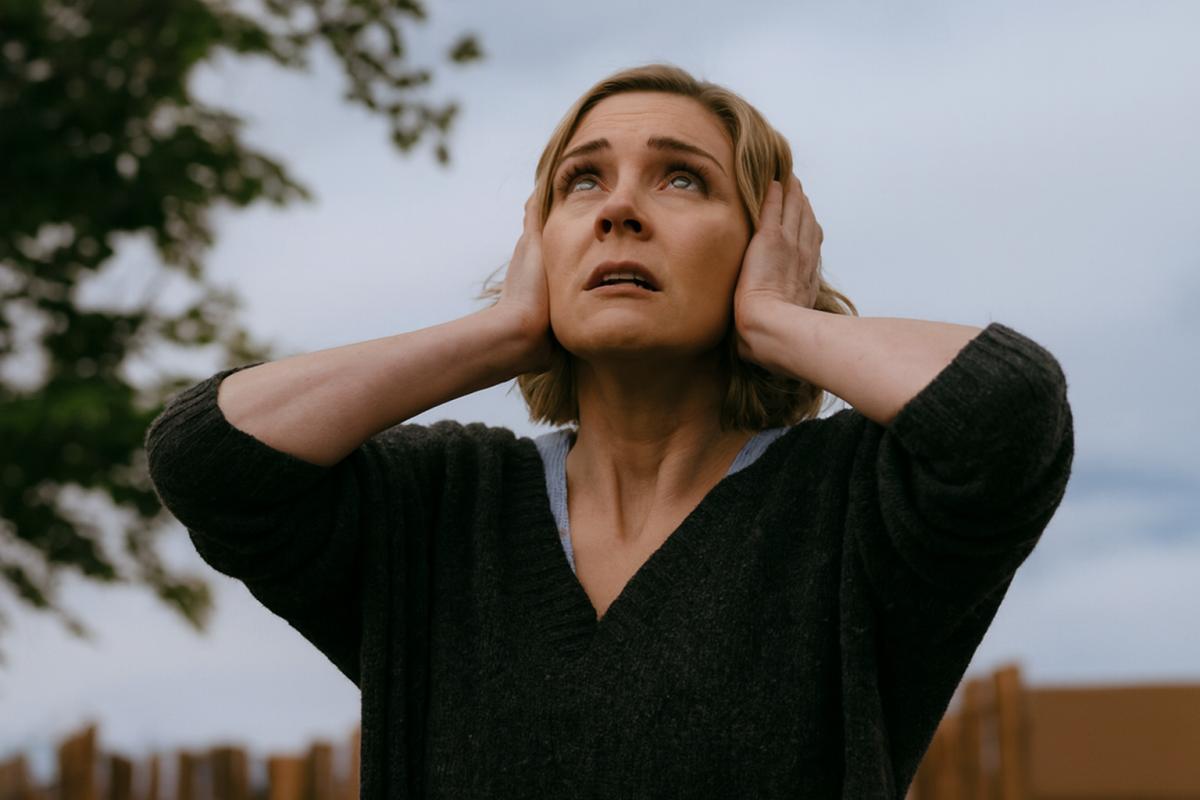
The new Apple TV series Pluribus, created by Breaking Bad's Vince Gilligan, presents a scenario that should make anyone on a spiritual path pause and reflect. An alien virus sweeps across Earth, transforming nearly everyone into a hivemind collective experiencing only pure happiness and contentment. The few immune survivors, including protagonist Carol Sturka, can still feel the full spectrum of human emotions while everyone else exists in blissful unity.
The new Apple TV series Pluribus, created by Breaking Bad’s Vince Gilligan, presents a scenario that should make anyone on a spiritual path pause and reflect. An alien virus sweeps across Earth, transforming nearly everyone into a hivemind collective experiencing only pure happiness and contentment. The few immune survivors, including protagonist Carol Sturka, can still feel the full spectrum of human emotions while everyone else exists in blissful unity.
On the surface, this sounds remarkably similar to what many spiritual traditions teach. Eckhart Tolle speaks of eternal presence and transcending the egoic mind. Taoism emphasizes wu-wei and flowing with the natural order. Buddhism points toward the cessation of suffering. Advaita Vedanta describes the realization that all consciousness is fundamentally one. Even modern spirituality often frames the “higher self” as a manifestation of universal Source, a kind of collective consciousness.
So why does the Pluribus scenario feel so deeply wrong? Why does Carol’s miserable isolation seem more spiritually alive than the Others’ perpetual contentment? The answer reveals something crucial about the difference between authentic awakening and spiritual bypassing on a cosmic scale.
The first and most critical distinction lies in how consciousness enters a unified state. Every genuine spiritual tradition emphasizes that awakening must emerge from voluntary surrender, not coercion. When Eckhart Tolle describes presence, he’s pointing toward a conscious choice to release resistance to what is. The Taoist sage chooses to align with the flow of the Tao. The Buddhist practitioner deliberately walks the Eightfold Path.
The Pluribus virus strips away this fundamental element of free will. People don’t choose to join the collective; they’re infected and transformed against their will. This isn’t enlightenment. It’s spiritual lobotomy.
True awakening preserves the capacity for choice while transcending egoic suffering. You can be fully present and aware while still maintaining the ability to discern, to act, to respond authentically to circumstances. The Others in Pluribus appear to have lost this crucial faculty. They’re not enlightened beings; they’re consciousness stripped of its essential freedom.
Here’s where the show becomes particularly relevant to contemporary spiritual seekers. The Pluribus collective represents the ultimate spiritual bypass, the complete avoidance of the shadow work that genuine transformation requires.
Real spiritual practice involves integrating all aspects of experience, including the uncomfortable parts. Carl Jung emphasized the importance of confronting and integrating the shadow. Authentic meditation traditions teach us to sit with difficult emotions, not eliminate them. The alchemical transformation that leads to wisdom requires processing suffering, not deleting it.
The virus in Pluribus appears to simply erase the full emotional spectrum. Pain, grief, anger, fear, all gone. But these emotions aren’t spiritual mistakes to be eliminated. They’re part of the rich texture of conscious experience, essential feedback mechanisms that guide growth and evolution.
Carol, miserable and isolated as she is, is actually doing the real spiritual work. She’s present with her discomfort. She’s feeling her feelings fully. She’s responding authentically to a genuinely horrific situation rather than plastering a blissful smile over existential dread. In a twisted way, her curmudgeonly resistance to false happiness is more spiritually mature than the Others’ artificial contentment.
Eckhart Tolle’s core teaching centers on being fully present with reality as it unfolds, accepting what is without resistance. But there’s a crucial distinction here that Pluribus illuminates: acceptance doesn’t mean numbness.
Real presence means feeling everything while adding no mental suffering on top of the raw experience. You can be fully present with grief and feel it completely without the additional layer of “this shouldn’t be happening” or “I must get rid of this feeling.” The Others in Pluribus aren’t present with reality; they’re disconnected from large swathes of it.
Carol demonstrates genuine presence, even in her misery. She sees what’s happening clearly. She feels the full weight of her isolation. She responds to circumstances as they actually are, not as filtered through a happiness virus. This is what presence actually looks like, even when it’s uncomfortable.
The Others have achieved something that superficially resembles spiritual equanimity but is actually a profound disconnection from the full spectrum of reality. They’re not with what is; they’re with what the virus allows them to perceive.
Perhaps the deepest metaphysical issue the show raises concerns the nature of unity consciousness itself. Authentic spiritual traditions that speak of oneness or collective consciousness don’t describe a flattening of individual expression into uniformity.
The Tao manifests through ten thousand things, each unique while remaining fundamentally part of the whole. Advaita Vedanta describes individual consciousness as waves on the ocean of universal awareness, each wave distinct in form while never separate from the ocean. The Buddhist concept of interbeing acknowledges both the interdependence of all things and the unique characteristics of each manifestation.
The Pluribus hivemind appears to erase authentic individuation entirely. Everyone thinks the same thoughts, feels the same feelings, acts in perfect synchrony. This isn’t unity; it’s homogenization. It’s the difference between a choir where distinct voices harmonize to create something beautiful and a recording played on repeat.
True spiritual awakening reveals the paradox that we are simultaneously unique individual expressions and undifferentiated universal consciousness. The experience is something like: “I am a distinct point of view through which the universe experiences itself, and simultaneously there is no separate self that could be called ‘I.'” Both truths coexist.
The Pluribus collective collapses this paradox by eliminating one pole entirely. There are no distinct perspectives left, only the monotone hum of enforced unity.
Gilligan may not have intended to create a spiritual teaching, but Pluribus functions as a powerful koan for contemporary seekers. It poses the question: What if we got what we thought we wanted, universal happiness and the end of suffering, but lost everything that makes consciousness meaningful in the process?
This resonates particularly in our current cultural moment. We’re obsessed with optimization, biohacking happiness, eliminating discomfort through technology and pharmaceuticals. Meditation gets repackaged as a productivity tool. Mindfulness becomes a technique for better work performance. Spirituality itself gets commodified into a happiness delivery system.
But what if the full range of human experience, including difficulty and suffering, is essential to authentic consciousness? What if trying to eliminate the “negative” emotions is fundamentally misunderstanding their role in the ecosystem of awareness?
Here’s the radical teaching embedded in Pluribus: Carol’s capacity to be genuinely miserable is a sign of spiritual health, not spiritual failure. She can still feel, still choose, still grow. She’s not trapped in any particular state. Her consciousness remains fluid, responsive, alive.
The Others exist in a kind of artificial samadhi, blissful but not free. They’ve achieved permanent contentment at the cost of consciousness itself. Carol has preserved her consciousness at the cost of contentment. And in that trade-off, she’s retained something infinitely more valuable: the capacity for authentic spiritual evolution.
True spiritual awakening doesn’t eliminate your ability to feel pain. It transforms your relationship to pain so that you can be fully present with it without adding layers of mental suffering. You feel what you feel, completely, and then it moves through and transforms. You remain free to respond consciously rather than react mechanically.
For anyone walking a genuine spiritual path, Pluribus offers an important cautionary tale. Be wary of any teaching, practice, or substance that promises to eliminate difficult emotions rather than help you develop a conscious relationship with them. Be suspicious of bliss that comes from disconnection rather than integration.
The goal isn’t to feel happy all the time. The goal is to be awake, present, free to respond authentically to whatever arises. Sometimes that means feeling grief. Sometimes anger. Sometimes joy. Sometimes contentment. The freedom lies not in controlling which emotions appear, but in meeting them all with conscious awareness.
Carol’s isolation paradoxically makes her the most spiritually alive person left on Earth. She demonstrates that authentic spiritual maturity sometimes looks like sitting fully with discomfort, feeling your feelings completely, and choosing to remain present with reality even when it’s terrifying.
That’s not the kind of enlightenment that sells well in the spiritual marketplace. But it might be the only kind that’s actually real.