Physical Address
304 North Cardinal St.
Dorchester Center, MA 02124
Physical Address
304 North Cardinal St.
Dorchester Center, MA 02124

Have you ever felt like you were missing something? Like there’s a whole world happening just beyond your perception, a hidden hum of communication that you can’t quite tune into? That’s the feeling that propels The Telepathy Tapes, a groundbreaking podcast created by filmmaker Ky Dickens. It’s not just a podcast; it’s an unfolding map of the mind, a journey into a reality where the impossible happens every day.
Have you ever felt like you were missing something? Like there’s a whole world happening just beyond your perception, a hidden hum of communication that you can’t quite tune into? That’s the feeling that propels The Telepathy Tapes, a groundbreaking podcast created by filmmaker Ky Dickens. It’s not just a podcast; it’s an unfolding map of the mind, a journey into a reality where the impossible happens every day.
Dickens, initially a curious observer, has become a passionate guide, leading us through the looking glass into a world where non-speaking autistic individuals are not just present but powerful communicators, demonstrating telepathic abilities that challenge the very foundations of how we understand human connection.
Dickens’ journey began with a spark of curiosity. She encountered the work of Dr. Diane Powell, a neuroscientist who dared to explore the extraordinary claims of telepathy among autistic individuals. Powell’s research, which had been met with skepticism and even professional repercussions, suggested that some non-speaking autistics could accurately read the minds of others. This wasn’t a parlor trick; it was a consistent, repeatable phenomenon that demanded a closer look. Dickens, a filmmaker by trade, recognized a story that needed to be told, a narrative that could reshape our understanding of human potential.
The Telepathy Tapes is not a dry recitation of scientific data. Instead, Dickens crafts an engaging narrative, introducing us to the individuals at the heart of this phenomenon. We as listeners witness tests where the subjects report, successive test by test, accurately what the parents are looking at from across the room under controlled conditions.
We meet parents, teachers, and therapists who have witnessed firsthand the telepathic abilities of these non-speaking individuals. Their stories are full of raw emotion, from initial disbelief to profound awe and, sometimes, anger at a system that has long marginalized and underestimated these individuals. These stories are like emotional anchors, keeping us grounded in the human experience while exploring the seemingly fantastical.
Dickens employs vivid metaphors and similes, to help us grasp the complex concepts at play. She talks about how the autistic mind may be like a radio receiver, finely tuned to a frequency of thought that most of us have forgotten how to access. This isn’t a deficit; it’s a different way of experiencing the world, a heightened sensitivity to the energetic currents that flow beneath the surface of our everyday interactions.
Dickens and her guests often discuss how the “left brain” can be a source of “noise in the signal,” interfering with the ability to receive information telepathically, while the non-speakers, whose left brain activity may be less dominant, can perceive the signal clearly.
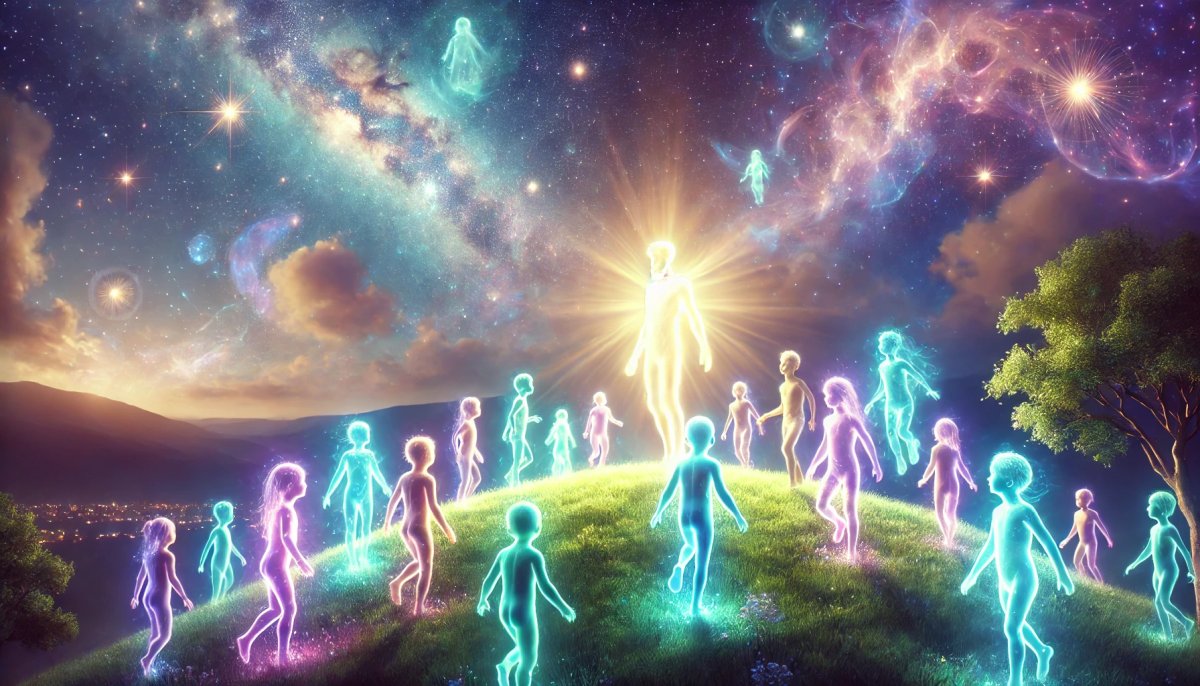
One of the most fascinating aspects of The Telepathy Tapes is the exploration of “the hill”. This isn’t a physical place but a shared mental space, a telepathic meeting ground where non-speaking individuals from all over the world connect and communicate. It’s as if they’ve discovered a hidden dimension of the internet, a mental chat room where they can exchange ideas, share experiences, and offer mutual support.
The discovery of the hill is presented as a kind of Rosetta Stone, a key that unlocks a deeper understanding of the interconnectedness of consciousness. Dickens herself describes the feeling as deeply rattling, making her realize this phenomenon is not isolated.
The Telepathy Tapes also addresses the skepticism and resistance that this research has encountered. Dickens explores the challenges faced by Dr. Powell, whose professional license was temporarily revoked for daring to explore the possibility of ESP. She highlights the stories of parents and teachers who have been dismissed or gaslit when trying to advocate for their children. Dickens’ work reveals how deeply ingrained our materialistic worldview is, and how difficult it can be to accept that human potential extends beyond the limits of our current scientific understanding.
Through her storytelling approach, Dickens demonstrates that the telepathic abilities of these individuals are not some isolated anomaly, but rather a reflection of a much deeper, more fundamental truth about human consciousness. She emphasizes that these abilities are not limited to non-speakers, but potentially a part of our shared human heritage. It’s a reminder that the limits we perceive are often self-imposed.
The podcast serves not only to document but also to validate. Dickens has become a champion for non-speaking individuals, highlighting the importance of presuming competence. She advocates for a world where these individuals are seen, heard, and valued for their unique perspectives and abilities.
Through the podcast, a community is forming, an army of allies who recognize the importance of this paradigm shift. She quotes Lily, a non-speaker who calls those who can speak “Muggles” referring to the non-magical people in the Harry Potter stories, thus highlighting the fact that the non-speakers may have a more complete view of reality.
Dickens’ mission is not just about exploring the science, it’s also about amplifying the voices of those who have been silenced for so long. She describes how these individuals desire to contribute to society, to be the “future of medicine” or “the future of science”.
She also shows that these individuals are more focused on love, consciousness, and the well-being of the planet than on personal gain. Dickens has created a space where these voices can be heard, a platform for a new narrative of human possibility.
As the podcast unfolds, it becomes increasingly clear that this isn’t just about telepathy; it’s about recognizing the boundless potential of the human mind and the interconnectedness of all living beings. It’s about moving beyond our limitations and embracing a more expansive view of reality.
Dickens’ journey is a call to open our minds, to listen deeply, and to step into a future where the impossible becomes, not just possible, but a lived reality. The Telepathy Tapes is not just changing minds; it’s changing the world, one mind at a time.
The Telepathy Tapes can be found on here.