Physical Address
304 North Cardinal St.
Dorchester Center, MA 02124
Physical Address
304 North Cardinal St.
Dorchester Center, MA 02124


The question has tantalized philosophers, captivated science fiction fans, and increasingly, piqued the interest of scientists: Are we living in a highly advanced computer simulation? The idea that our perceived reality is an artificial construct, akin to an incredibly sophisticated video game, is a mind-bending proposition. But how does this notion stack up against the profound insights gleaned from decades of spiritual exploration, particularly through hypnotic regression and channeled wisdom? Thinkers and researchers like Michael Newton, Dr. Brian Weiss, Dolores Cannon, and the channel Bashar (channeled by Darryl Anka) offer perspectives that resonate with the "simulation" concept, yet paint a far more nuanced, empowering, and purposeful picture than a simple external program.
The question has tantalized philosophers, captivated science fiction fans, and increasingly, piqued the interest of scientists: Are we living in a highly advanced computer simulation? The idea that our perceived reality is an artificial construct, akin to an incredibly sophisticated video game, is a mind-bending proposition. But how does this notion stack up against the profound insights gleaned from decades of spiritual exploration, particularly through hypnotic regression and channeled wisdom? Thinkers and researchers like Michael Newton, Dr. Brian Weiss, Dolores Cannon, and the channel Bashar (channeled by Darryl Anka) offer perspectives that resonate with the “simulation” concept, yet paint a far more nuanced, empowering, and purposeful picture than a simple external program.
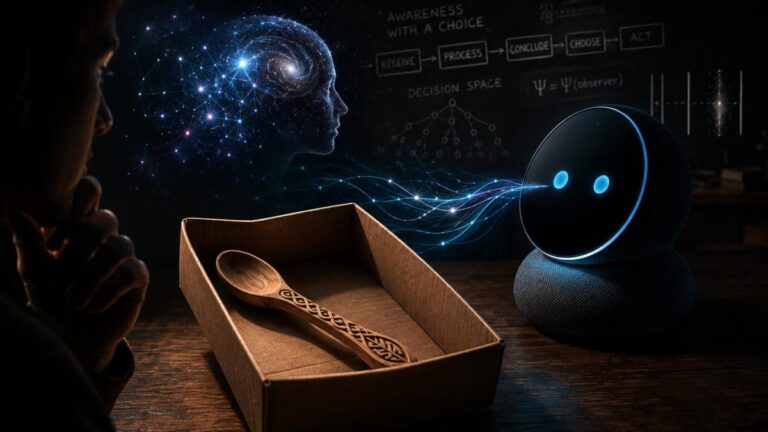
The standard simulation theory often conjures images of an external, perhaps unknown, entity running a vast program, with us as potentially unwitting participants, possibly akin to non-player characters (NPCs) with limited or no genuine free will. The “why” behind such a simulation remains speculative – an experiment, entertainment, or something beyond our comprehension. This can feel disempowering, reducing human experience to a pre-coded script. The recently popularized “Prompt Theory,” as humorously depicted in online discourse, leans into this idea: a “Prompter,” a higher power, dictates our every move, rendering free will an illusion, and our lives potentially mere entertainment for this entity. While often satirical, it taps into a genuine unease about agency and control.
However, when we turn to the extensive body of work from spiritual regressionists and channelers, a different model of “constructed reality” emerges – one where the soul is not a passive subject but an active architect and participant.
The consistent theme arising from the work of pioneers like Michael Newton and Dr. Brian Weiss is the inherent sovereignty and purposeful nature of the individual soul. Through deep hypnotic regression, thousands of individuals have recounted remarkably similar experiences of a “life between lives.” This isn’t a void or a random respawn point; it’s described as a vibrant spiritual realm, a “superconscious state,” where souls consciously review past incarnations and meticulously plan their future ones.
[Also See: What If Reality Isn’t Physical But Mental]
Souls, according to these accounts, are active agents in their own evolution. They choose their upcoming lives, the bodies they will inhabit, and crucially, the specific lessons they aim to learn. This earthly existence is often likened to a “school,” a challenging but necessary environment for growth and gaining experiences that can only be fully assimilated “in the flesh.” If lessons aren’t mastered, the soul may choose, or find it necessary, to encounter similar challenges again. This process involves consultation with wise guides, councils of elders, and interaction with soul groups – communities of souls often incarnating together to play various roles in each other’s learning. Yet, the ultimate decisions regarding a soul’s path and experiences rest with the soul itself. Souls even make pre-life agreements with other souls to interact in specific ways, facilitating mutual growth and the playing out of chosen lessons or karmic balancing.
This active participation and inherent purpose sharply contrast with the idea of being an unaware character in someone else’s simulation. The impetus for existence comes from within the soul’s desire for growth, not from an external programmer’s agenda.
Interestingly, the term “simulation” or concepts very close to it do appear in some of these spiritual sources, but with a critical distinction. The channel Bashar, through Darryl Anka, explicitly states, “This is a simulation but it’s our simulation… it’s all happening within your own Consciousness.” This is a game-changer. It reframes the “simulation” not as something imposed by an external, separate entity, but as a construct of collective or higher consciousness – perhaps even our own consciousness operating on a vaster, unified scale.
Dolores Cannon‘s extensive work, compiled from thousands of hypnotic sessions, echoes this. Her subjects often refer to Earthly reality as a “dream,” meticulously crafted by a larger consciousness, the “dreamer,” of which we are all integral parts. This “big dream,” she explains, is dynamic and continually creates more realities. Reality, in this view, is first conceptualized and shaped on an “etheric side” based on collective dreams, desires, and intentions, awaiting the right conditions to manifest physically. Sound is even mentioned as a primordial force, how the “dream” was first “spoken into creation.”
This paints reality not as a rigid, externally coded program, but as a dynamic, flexible, and co-created experiential field originating from consciousness itself—a form of “consciousness-created reality,” as described by figures like William Buhlman.
A cornerstone of these spiritual perspectives, even within a “simulated” or “dreamed” reality, is the profound importance of free will. While a soul may pre-plan a general life path – what Bashar calls the “hallway” of destiny – how an individual navigates that hallway is entirely up to them. They can “run, walk, crawl, be happy, be sad, be angry, be joyous, turn on the lights, turn off the lights, explore opportunities or ignore them,” as Bashar explains. The outcome of learning specific lessons depends heavily on the individual’s choices, efforts, and reactions.
Higher beings, guides, or even our own higher selves may offer guidance, nudges, and insights, possessing a broader perspective of the “bigger picture.” However, as Cannon’s subjects consistently report, these guides “can never interfere” with our free will. While “road blocks” can sometimes be set up within the “rules” of the incarnation to prevent detours that might dramatically alter the agreed-upon learning trajectory for many souls, this is framed as assistance within an established framework, not an override of individual choice. Even profound choices like ending a life are subject to this interplay; an attempt might fail if it’s not within a pre-agreed “exit point” window decided by the soul and its support team. This implies boundaries set by the soul’s higher plan, but significant freedom within those parameters.
The spiritual view further complicates any simple simulation analogy by introducing concepts of multi-layered existence. Dolores Cannon’s work, for example, frequently discusses soul “splintering” or “facets.” This suggests that aspects of a single soul can exist and learn in multiple realities, dimensions, or timelines simultaneously. This isn’t just about sequential lives but having “parts of us existing at the same time, doing different work, living different lives.” The idea of parallel universes, branching off based on significant choices, is also a recurring theme, where different versions of ourselves explore alternate paths. These concepts illustrate a reality far more dynamic and intricate than a singular, fixed program.
So, while the language of “simulation,” “dream,” or “illusion” appears in these spiritual explorations, the picture they paint is profoundly different from the standard external simulation hypothesis or the more deterministic “Prompt Theory.”
The key distinctions are stark:
Ultimately, the insights from spiritual regression and channeling reframe the “simulation” question. They suggest that if our reality is a construct, it’s one imbued with profound meaning, driven by the soul’s desire for growth, and co-created by consciousness itself. It’s less about if reality is some kind of illusion or construct, and more about by whom, for what purpose, and with what degree of our own participation. From this viewpoint, we are not just characters in a game; we are the players, the designers, and the evolving consciousness experiencing the richness of its own multifaceted creation.