Physical Address
304 North Cardinal St.
Dorchester Center, MA 02124
Physical Address
304 North Cardinal St.
Dorchester Center, MA 02124


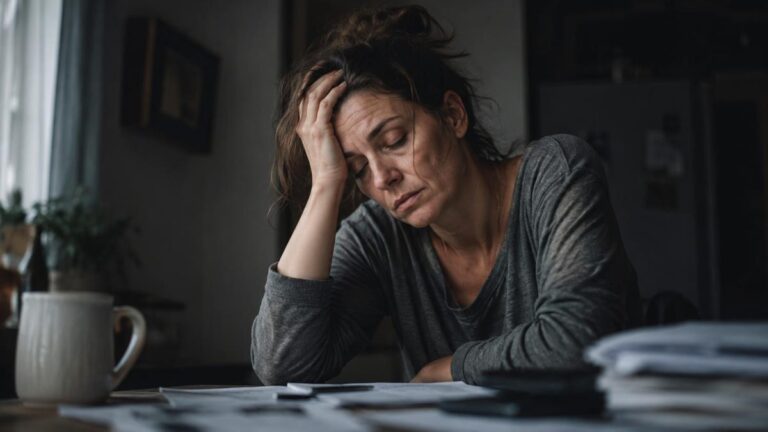
There is a particular kind of exhaustion that comes from being told nothing is wrong with you. You have had the scans. You have seen the specialists, and some of them disagreed with each other, and none of them could name the thing that has been living in your lower back or your neck or your gut for the past three years. The muscle is hard. You can feel it. Your physiotherapist can feel it. And yet the imaging comes back clean, and you leave the appointment carrying the strange humiliation of a body that hurts without permission.
There is a particular kind of exhaustion that comes from being told nothing is wrong with you.
You have had the scans. You have seen the specialists, and some of them disagreed with each other, and none of them could name the thing that has been living in your lower back or your neck or your gut for the past three years. The muscle is hard. You can feel it. Your physiotherapist can feel it. And yet the imaging comes back clean, and you leave the appointment carrying the strange humiliation of a body that hurts without permission.
I want to write about something that sits at the meeting point of two vocabularies I use often on this site. One is the language of consciousness work, of the shadow, of the pain-body, of the parts of ourselves that carry what the conscious mind has set down. The other is clinical neuroscience, which has arrived at something remarkably similar by an entirely different road, and which has the studies to show for it.
Before anything else: if you have new or changing symptoms, get them examined properly. Everything below assumes that has already happened. The physicians working in this field are the first to insist on it, and so am I. This is not an argument that illness is spiritual. It is an argument about what happens after the medical system has genuinely looked and genuinely found nothing.
Here is something worth sitting with for a moment. Your head is upright right now. You are not holding it up. Some part of you that operates entirely beneath your awareness is holding it up, adjusting continuously, and it has been doing this all day without asking you.
That system is the autonomic nervous system, and it manages a staggering amount of what you are. Digestion, heart rate, the micro-adjustments of balance, the tension in every muscle that keeps you assembled and vertical. Almost none of it reaches consciousness. You are, in a very literal sense, being operated.
This matters enormously for chronic pain, because it means that a muscle can be genuinely, physically tight without there being anything wrong with the muscle. The tightness is real. The hardness you can feel under your fingers is real. But the instruction to stay tight is not coming from damaged tissue. It is coming from a system that has decided this area needs protecting, and has not received word that the emergency ended.
The clinical framing calls this neuroplastic pain, and the model behind it is a self-sustaining fear-pain cycle: chronic pain becomes a learned pattern, the brain reads ordinary body sensations as dangerous and generates pain in response, that pain produces fear, the fear amplifies the danger signal, and the loop feeds itself. The protocol built on it, Pain Reprocessing Therapy, was developed by the psychotherapist Alan Gordon and set out for general readers in The Way Out.
Read that as a description of the pain-body and it fits without much strain. Something in you has learned to be afraid, the fear produces sensation, the sensation confirms the fear, and the loop sustains itself on its own energy. Tolle described the same structure and gave it a different name. What has changed is that the loop now has trial data attached to it.
I am wary of spiritual writing that gestures vaguely at science, so let me be specific about what exists and what does not.
The strongest evidence is a randomised trial run out of the University of Colorado Boulder and published in JAMA Psychiatry. Two thirds of chronic back pain patients who went through four weeks of the therapy were pain-free or nearly so afterwards, and most were still holding that relief a year later. The comparison arms make the number mean something: 66 percent for the therapy against 20 percent for placebo injections and 10 percent for usual care. A later analysis of the same trial found that what predicted recovery was whether patients came to see their pain as arising from mind and brain processes rather than from bodily damage, which is to say the reframing was not incidental to the treatment. It was the treatment.
[Also Read: Awakening Is Not Enough – The Shadow Work That Transforms You]
That is a striking result for a condition usually described as untreatable. But honesty requires the other half of the picture, and a careful clinical summary of the evidence states it plainly: independent replication is ongoing and not yet complete, so the strongest claims should be held with appropriate scientific humility.
Hold both. This is a real finding with real force, and it is one research programme, and the field is young. That is a more useful position than either dismissal or evangelism.
Now to the part that interests me most, because this is where the clinical language starts describing something the contemplative traditions have mapped for a very long time.
If the nervous system is running a protection circuit, what exactly is it protecting? The honest answer is usually: something young. A hypervigilant system did not become that way arbitrarily. It learned, often early, often for reasons that made complete sense at the time, that the world required watching. It has been watching ever since. Nobody told it that it could stop.
One physician working in this space, Dr Brad Fanestil, describes the autonomic nervous system as being very much like a frightened child. It is scared because that is its function. It is childlike because it cannot see the wider picture. It has your entire history of what seemed to keep you alive, and it has nothing else, and it is doing its best with that.
Sit with the practical implication, because it is confronting. Most of us have spent years relating to our own symptoms the way you would never relate to a frightened child. We shout at them. We tell them to shut up, to stop ruining the day. We tell them to toughen up. Or we refuse to look at them at all, which is its own kind of abandonment. Any of these will get you through an afternoon. None of them will teach a frightened thing that it is safe.
What you would actually do with a scared child is walk across the room. Put an arm around her. Not shout reassurance from sixty feet away, which communicates nothing except distance, but go close enough that she can feel that you are not afraid.
This is inner child work arrived at from neurology. It is also, precisely, the instruction for shadow work in the Jungian tradition: the part you refuse to look at does not leave, it goes underground and runs the machinery from there. Turn toward it and it loses the compulsive quality. Three vocabularies, one gesture, and the gesture is always the same. Go toward the thing you have been fleeing, and go toward it kindly.
The practice that comes out of this clinical work is called somatic tracking, and if you have any contemplative background you will recognise it immediately. You turn attention toward the uncomfortable sensation. You get curious about it. Where exactly is it. What is its shape, its upper edge, its texture. Is it the same on both sides of an imagined centre line.
It is body-scan practice with the metaphysics removed. The lineage is acknowledged openly enough by those who teach it: the practice rests on the definition of mindfulness as paying attention, on purpose, in the present moment, without judgement, which is Kabat-Zinn’s phrasing and Kabat-Zinn’s importation of much older material.
But here is the detail that makes this worth your attention, and it is the point where the clinical version is closer to the traditional teaching than most secular mindfulness is.
Somatic tracking is not supposed to work.
That sounds absurd until you see the mechanism. If you turn toward the sensation in order to make it leave, you have brought the entire fear structure with you. You are still treating the sensation as an emergency, still monitoring for change, still communicating danger with every part of yourself that is not saying the words. The frightened child can feel the difference between someone who is present and someone who is managing her. So can the nervous system. The wanting is the thing that sustains the loop.
So the instruction is to observe without agenda. To hold two contradictory things at once: of course you want the pain gone, and that is not today’s task. Today’s task is only to give the system a few seconds of experience in which the sensation was allowed to exist and nothing bad happened.
Anyone who has spent time with nondual practice will find this familiar to the point of vertigo. Effort defeats what effort is aimed at. Seeking the state prevents the state. The traditions have been saying this for centuries, and here it is again, reconstructed from clinical observation by people who mostly were not looking for it.
The self-compassion research points the same way. Kristin Neff’s framework identifies self-kindness, shared humanity, and mindfulness as its three components, and the body of work behind it associates self-kindness with lower stress and depression while self-criticism activates the stress response. That is loving-kindness practice, measured. The gesture the traditions call metta turns out to be the gesture the nervous system responds to, which is perhaps not surprising, since the traditions developed it by watching nervous systems for a very long time.
The practical form matters, and it is smaller than people expect.
You do not need a forty minute sit. If the sensation is overwhelming, five seconds of genuinely curious attention will do more than twenty minutes of gritted endurance. The part of you being addressed here has no sense of duration. It learns by repetition and by the felt quality of the encounter, not by the clock.
A workable shape: settle first, perhaps a minute of simply following the breath, until there is some steadiness to work from. Then turn attention to the uncomfortable area and ask one question. Where is its upper edge. What word would you put on it. Then return to the breath. Then go back once more, and ask something different. Where is it most intense. Does it have a shape.
Then stop, before frustration arrives. Stopping early is not failure. It is the whole method. You are not trying to outlast anything. You are giving a frightened system a series of brief, repeated experiences of being met without alarm, and then letting it rest.
Several times a day. Small. Unhurried. Uninterested in results.
What changes first is not usually the pain. It is the narrative.
There is an enormous difference between carrying the sentence I have a damaged back and carrying the sentence I have a protective circuit that has become overprotective. The first is a life sentence and a permanent identity. The second is a description of something learned, and anything learned can be unlearned, and the unlearning does not require you to fight yourself.
None of this is your fault. That deserves stating directly, because people in chronic pain carry an unreasonable amount of shame about it. These circuits formed outside your awareness, usually long ago, usually for reasons that were entirely sound when they formed. A system that learned to protect you is not a malfunction. It is loyalty that outlived its occasion.
The work is not to override it, and not to defeat it. You cannot defeat this part of yourself, and the attempt is itself another form of the alarm. The work is to go toward it with something other than fear, repeatedly, briefly, without demanding that it change, until it works out on its own that the danger has passed.
That is what the neuroscience is describing. It is also what the traditions have always described. The convergence is worth noticing.
If you have new, changing, or worsening symptoms, please have them properly assessed by a physician. Nothing here replaces medical evaluation, and the clinicians doing this work insist on that first.