Physical Address
304 North Cardinal St.
Dorchester Center, MA 02124
Physical Address
304 North Cardinal St.
Dorchester Center, MA 02124

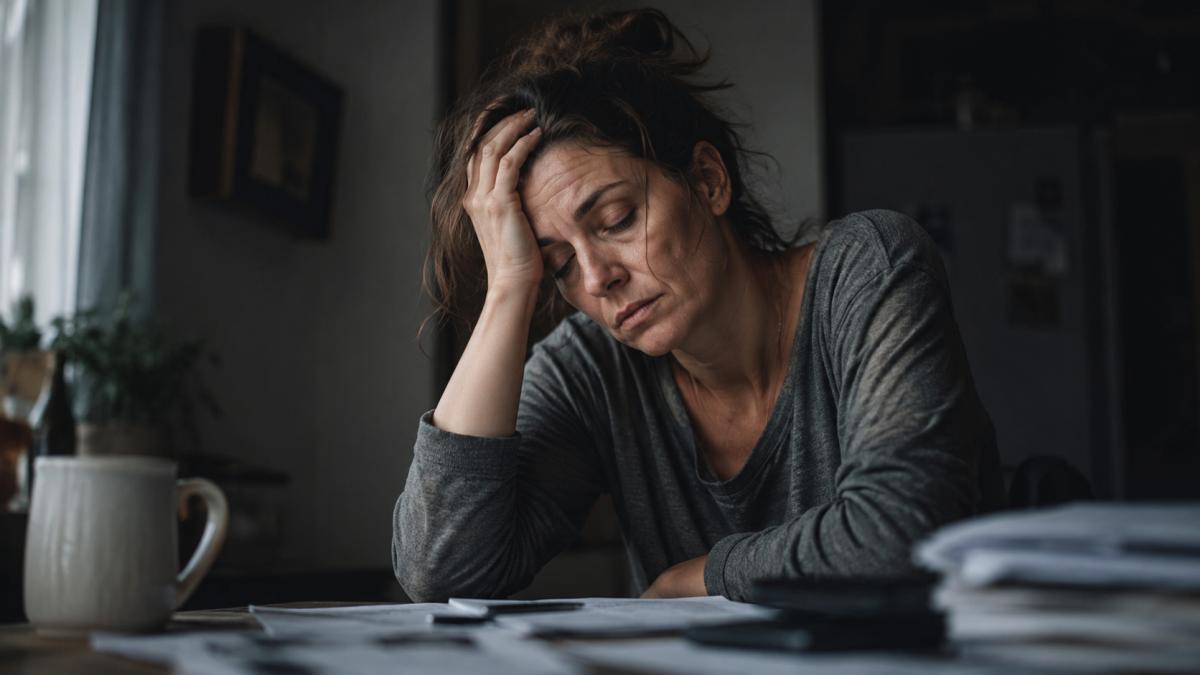
There is a particular kind of shame that settles over people who cannot find their purpose. It arrives quietly. You have read the books. You have sat with the questions. You have journalled, meditated, listened to the teachers who speak about alignment and calling and the soul's contract. And still, when you sit down to ask what you are actually here for, nothing comes. Not resistance, not fear, not some dramatic inner blockage you could at least work with. Just a kind of grey static where the answer should be.
There is a particular kind of shame that settles over people who cannot find their purpose.
It arrives quietly. You have read the books. You have sat with the questions. You have journalled, meditated, listened to the teachers who speak about alignment and calling and the soul’s contract. And still, when you sit down to ask what you are actually here for, nothing comes. Not resistance, not fear, not some dramatic inner blockage you could at least work with. Just a kind of grey static where the answer should be.
The spiritual world has an explanation ready for this, and it is almost always some variation of insufficiency. You are not surrendering deeply enough. You are still too attached to the ego. Your vibration is too low. The seeking itself is the problem. Somewhere behind all of it sits the implication that if you simply wanted it badly enough, or purely enough, the clarity would come.
I want to offer a different possibility, and it comes from an unlikely direction.
Dr Aimie Apigian is a double board certified physician in preventive and addiction medicine who spent years discovering that her own body was holding something her mind had long since filed away as unremarkable. In a recent conversation on Mayim Bialik’s podcast, discussing the work behind her book The Biology of Trauma, she said something that stopped me completely.
Having clarity takes energy.
Not metaphorical energy. Not the energy of enthusiasm or willpower. Metabolic energy. The actual output of the actual mitochondria in your actual cells. She was making a point that seems obvious once spoken and is almost never spoken: the capacity to know what you want, to see your life clearly enough to choose a direction within it, is not free. It runs on fuel. And a great many people who cannot locate their purpose are not spiritually deficient. They are running on empty.
This lands differently than the usual framing because it removes the moral weight. If clarity is a metabolic achievement rather than a spiritual one, then the absence of clarity is a resource problem, not a character problem.
To follow the argument you have to understand what Apigian means when she distinguishes stress from trauma at the cellular level, because they are not the same event scaled up and down.
Under stress, the cell mobilises. Adrenaline signals the mitochondria to produce more, and the whole system leans into the challenge. This is the design working correctly. There is a demand, the body meets it, the demand passes, the body returns to baseline. Stress followed by genuine rest is what produces growth, and the rhythm between them is not optional.
But there is a threshold. When the demand exceeds what the cell can deliver, the response inverts. Rather than mobilising, the system shuts down to conserve what remains. Membranes destabilise. Energy production drops. The cell is no longer fighting, it is preserving. That shutdown is not a malfunction. It is a survival strategy of last resort, and it can persist long after the original threat has gone.
The research supports the mechanism. Martin Picard and Bruce McEwen’s systematic review of psychological stress and mitochondria documents how psychosocial experience produces measurable structural and functional recalibration in mitochondria, a phenomenon they term mitochondrial allostatic load. Their companion conceptual framework makes the case that this is a genuine subcellular mechanism by which lived experience becomes physiology. More recent work has extended the finding into human brain tissue, examining how psychosocial history associates with mitochondrial biology in the brain itself.
None of this is fringe. It is the slow arrival of a scientific vocabulary for something the contemplative traditions have asserted for millennia without being able to say why.
The larger context for all of this traces back to work Vincent Felitti began at Kaiser Permanente in San Diego, where an unexpected pattern in an obesity programme opened onto something far bigger. The resulting Adverse Childhood Experiences study, published in 1998, surveyed thousands of insured, largely middle class adults and found a graded relationship between early adversity and adult disease across an unnervingly wide range of outcomes. Felitti’s own retrospective on the study’s origins is worth reading for how much institutional resistance the finding initially met.
What matters for our purposes is the shape of the finding. These were not people with dramatic histories. Many would have described their childhoods as ordinary, even good. Their bodies said otherwise.
[Also Read: The Simple Reson For Your Life Struggles May Be As Simple As]
Apigian’s addition is to ask what the mechanism is, and her answer is that the body did not receive whatever it needed to register that the danger had passed. The nervous system runs a continuous background calculation, what Stephen Porges named neuroception within polyvagal theory, assessing safety and threat below the level of awareness. When that calculation never resolves to safe, the system stays configured for a threat that ended decades ago. She describes it as putting on glasses that see danger everywhere. You cannot take them off by deciding to.
Here is where it becomes a spiritual question rather than a medical one.
If the capacity for clarity is metabolically expensive, and if a nervous system stuck in shutdown has systematically less metabolic capacity available, then the person who cannot find their purpose may be attempting an energetically costly act with an energetically depleted system. They are not failing at seeking. They are attempting something their biology cannot currently fund.
And the traditional spiritual response to this failure makes it worse. Told that the problem is insufficient devotion, the person tries harder. Trying harder means pushing, and pushing means adrenaline, and adrenaline is precisely the substance that carried them past their capacity in the first place. There is a reason so many people on spiritual paths are quietly exhausted. The seeking has become another form of the same push.
Apigian is blunt about something else that will be uncomfortable for parts of this community. A great deal of what passes for meditation, she suggests, is escape rather than presence. It is a technique for leaving a reality that feels intolerable rather than a technique for inhabiting it. The distinction is not in the posture or the breath. It is in whether you end the practice more present in your body or more successfully absent from it.
That is worth sitting with honestly. I have practised both, and only one of them was doing anything.
What she offers instead is almost disappointingly small, which is the point.
She calls it micro dosing safety. When she began teaching somatic work to patients coming off substances, she found that the usual instruction to relax produced the opposite of relaxation. Patients told her that feeling safe felt dangerous, because safety meant lowering a guard that had kept them alive. Full relaxation was not the goal. It was the threat.
So she reduced the dose. A moment of settledness rather than an hour. A pillow held against the abdomen, which is the least protected part of the body and therefore the place the musculature braces most persistently. She noted that the sensation of something covering the belly gives the nervous system permission to stop bracing, briefly, and that the brief version is what the system can actually accept. The somatic experiencing tradition developed by Peter Levine sits behind much of this, and its central claim is exactly this: that the approach works by facilitating the completion of self protective responses the body began but was never able to finish, releasing survival energy that remained bound in the tissue. The published research on the method has grown considerably in the last decade.
The theological analogy is exact, and I do not think it is a coincidence. The traditions have always said that grace arrives in small increments to those who are not yet able to receive it whole. Overwhelm the system with the thing it most needs and it will defend against the gift.
The reframe does not make purpose less real. It makes it less mysterious.
If clarity requires energy, then the work of restoring energy is not a distraction from the spiritual path but a precondition for it. Sleep is not less holy than prayer. Reducing inflammation is not less relevant than reading scripture. The nervous system’s daily state, in Apigian’s framing, is the single most consequential variable in a person’s life, more so than any practice layered on top of it.
It also rescues an enormous number of people from a false verdict. The person who wakes and does not want the day to start, who moves through work on caffeine and momentum, who cannot say what they want because the question produces only fog, has usually concluded something devastating about themselves. That they are lazy. That they are broken. That whatever animates other people was withheld from them.
A more accurate reading is that their system is running a very old protection programme, competently, at enormous metabolic cost, and there is not much left over for anything else. That is not a moral failure. That is a body that took a hit and never got the signal that it was over.
Apigian’s own trajectory is the argument. She went from a diagnosis and a rheumatologist telling her that nothing could be done, to working the mind, body and biology levels simultaneously, to normal markers and an absence of symptoms. She is careful to say this is not a promise and not a universal outcome. But it is a demonstration that the biology described here is not fixed.
Which means that if you cannot find your purpose right now, the honest first question is not what am I here for.
It is whether you currently have the energy to ask.
If the answer is no, that is not a spiritual verdict. It is a starting point, and a much more tractable one than the verdict you have probably been carrying. Fuel first. The clarity, when the system can afford it, tends to arrive on its own.