Physical Address
304 North Cardinal St.
Dorchester Center, MA 02124
Physical Address
304 North Cardinal St.
Dorchester Center, MA 02124

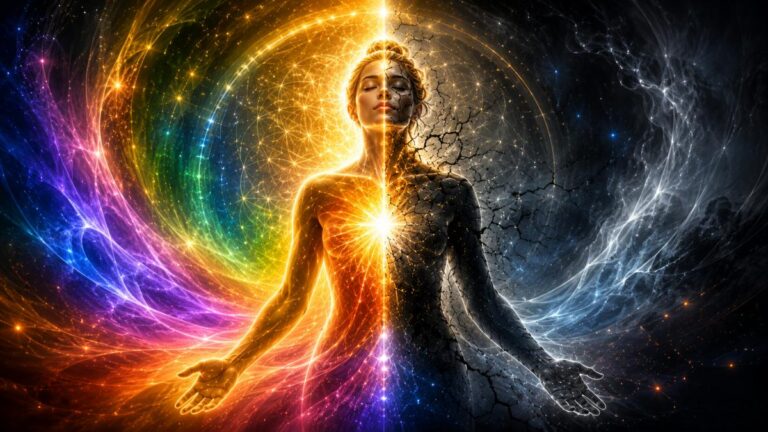
Imagine you’re strolling along a beach at sunrise. The sun is just peeking over the horizon, painting the sky in warm, golden hues. A gentle breeze rustles your hair, and you’re aware of the salty air filling your lungs. You sense your heartbeat, the firmness of the sand beneath your feet, and the soothing crash of waves in the distance. This is your physical experience—tangible, direct, and easy to name. But as you walk, you might also notice a deeper, quieter feeling of calm, a sense of inspiration, or even the spark of a new idea forming in your mind.
Imagine you’re strolling along a beach at sunrise. The sun is just peeking over the horizon, painting the sky in warm, golden hues. A gentle breeze rustles your hair, and you’re aware of the salty air filling your lungs. You sense your heartbeat, the firmness of the sand beneath your feet, and the soothing crash of waves in the distance. This is your physical experience—tangible, direct, and easy to name. But as you walk, you might also notice a deeper, quieter feeling of calm, a sense of inspiration, or even the spark of a new idea forming in your mind.
Those subtle, intangible experiences hint at layers of your being that go beyond the physical. Ancient wisdom traditions describe these layers as subtle bodies—a network of interconnected fields and energies that shape how you think, feel, and exist in the world. Exploring these subtle bodies can unlock deeper well-being, creativity, and spiritual insight.
In this beginner’s guide, we’ll talk about what “subtle energy body mapping” is, walk through seven layers or “bodies” often recognized in esoteric traditions, and highlight practical ways to connect with these hidden realms. Think of it as an invitation to open a treasure map—one that’s been there all along, just waiting for you to unfold and explore.
Let’s begin with an analogy. Picture your physical body as a house—the walls, roof, doors, windows, and so on. This house stands on firm ground; it’s solid, tangible, and easy to see. But every house also has an electrical wiring system that powers your lights, appliances, and heating. You usually don’t see the wires hidden behind the walls, yet they’re essential for everyday life.
In a similar way, the subtle energy body is that invisible wiring or energetic matrix that sustains and enlivens your physical form. These layers extend beyond what you can see with the naked eye, serving as conduits for vital energy, often called prana, chi, or vril in various traditions. When energy flows freely, you feel vibrant and connected. When it’s blocked or out of balance, you may experience fatigue, emotional distress, or even physical ailments.
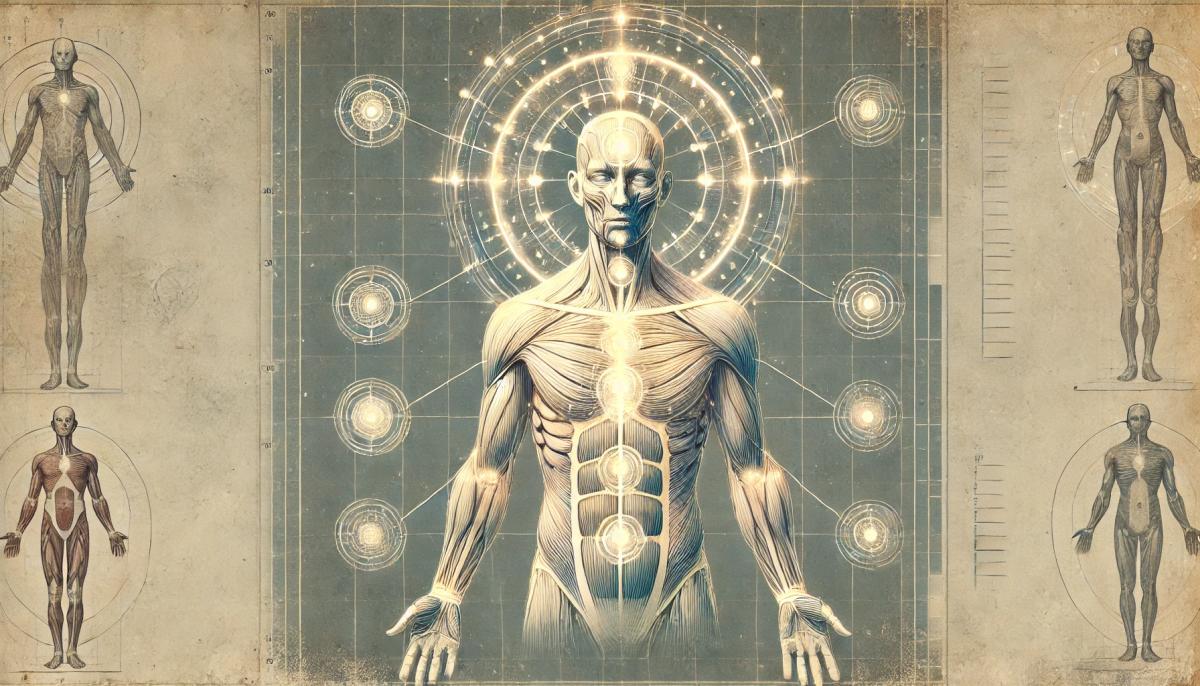
Rudolf Steiner, the founder of Anthroposophy, presented a profound perspective on the human being as a multi-dimensional entity composed of seven interrelated layers or “bodies.” Each layer represents a different aspect of existence, contributing to a holistic understanding of human nature, growth, and spiritual evolution.
The physical body is the most tangible and observable layer. It encompasses the material, biological structure of a person, shared with the mineral kingdom. Governed by the laws of physics and chemistry, it is formed, nourished, and sustained by the forces of nature. This layer houses the senses and acts as a vessel for the higher layers to manifest in the material world. Steiner emphasized the importance of nurturing this body to support the higher spiritual layers.
The etheric body, also called the “life body,” is the next layer. This layer governs vitality, growth, and regeneration, distinguishing living beings from inanimate matter. Shared with the plant kingdom, the etheric body maintains the life processes of the physical body, such as metabolism and cellular renewal. It also holds an individual’s memory and vital energy, acting as a blueprint for physical health and development. The etheric body continues to evolve throughout life and is instrumental in spiritual practices aimed at aligning with universal life forces.
The astral body, or soul body, is associated with emotions, desires, and consciousness. Shared with the animal kingdom, this layer gives rise to subjective experiences such as pleasure, pain, and the ability to dream. It is the seat of instincts and the realm where individuals engage with their inner worlds. Steiner highlighted the astral body’s role in bridging the higher spiritual realms with the physical experience, making it a central focus for inner development and emotional refinement.
The ego, or “I” body, represents the essence of individual selfhood and self-awareness. Unlike the preceding layers, this is unique to humans, marking the capacity for conscious thought, free will, and moral discernment. It allows individuals to develop a sense of purpose and identity, integrating experiences from the physical, etheric, and astral bodies into a coherent whole. Steiner considered the ego the transformative center, where spiritual progress occurs through self-reflection and ethical striving.
The spirit self, or “manas body,” emerges when the ego refines the astral body. This layer represents the individual’s higher mind and spiritual consciousness, transcending personal desires and connecting with universal truths. It aligns the soul with divine wisdom, enabling altruistic love and higher understanding. Through spiritual disciplines and inner work, the spirit self becomes a beacon of higher purpose and moral clarity.
The life spirit, or “budhi body,” is an even subtler layer that evolves from the etheric body. This body represents the forces of divine life, imbuing the individual with harmony, healing, and creativity. It embodies the universal aspect of existence and serves as a bridge to cosmic consciousness. Steiner regarded the life spirit as a transformative force that elevates the human experience to align with divine will and universal love.
The spirit man, or “atman body,” is the pinnacle of spiritual evolution. This layer reflects the eternal and immortal aspect of the self, fully unified with the divine. It is the perfected essence of being, transcending individuality and embodying universal spirit. According to Steiner, developing this body requires lifetimes of spiritual growth, culminating in a state of divine realization and oneness with the cosmos.
Before we dive further, let’s zoom in on a specific area in your physical-energetic interface: the solar plexus. Located at the center of the abdomen, this cluster of nerves and ganglia acts like a “power station” for your body, storing and receiving the vital energy (prana, chi, vril) that your subtle bodies need.
Imagine the solar plexus as a glowing orb. When anxiety strikes, it can feel like a tight knot, blocking the flow of energy. Over time, that blockage can manifest as fatigue, digestive issues, or chronic stress. By practicing conscious breathing and relaxation—focusing on softening that tight knot—you can restore vital energy, ensuring this little powerhouse continues to support you.
Picture the nervous system as an intricate highway, carrying signals between your brain and every cell. But it’s more than just a physical network of neurons—it’s also intimately linked to your subtle energy bodies. When functioning well, the nervous system distributes vital energy throughout the body, like water flowing through a lush garden. But if stress or imbalance hits, those highways can get congested, leading to mental fatigue, emotional turbulence, or physical ailments.
Conscious breathing, meditation, and energy practices help regulate these highways, maintaining smooth traffic flow. They quiet the mind, relax the body, and support emotional equilibrium, allowing you to tap more consistently into your subtle energy fields.
Reading about these layers is one thing; feeling them is another. Here are a few simple ways to begin sensing and working with your subtle energy:
Let’s make this a bit more concrete with a tiny anecdote. Meet Lena. She’s an overworked nurse who has spent years giving to others but rarely taking time for herself. One day, Lena notices a growing knot of tension in her stomach area—right around the solar plexus. She feels anxious at work and starts having trouble sleeping.
One evening, a friend suggests she try ten minutes of conscious breathing, specifically focusing on her solar plexus. Although initially skeptical, Lena decides she has nothing to lose. She sits quietly, closes her eyes, and imagines a warm golden light flowing into her body with each inhale, collecting in the area of her solar plexus. On the exhale, she visualizes the tension slowly dissolving.
After a week of this practice, Lena notices she’s sleeping better. She also feels a quiet sense of self-assuredness rising within her, as though some internal conductor is bringing her inner orchestra into harmony. The tension in her solar plexus isn’t completely gone, but it’s significantly less intense. Buoyed by these small successes, she explores a local Tai Chi class, feeling tiny waves of tingling in her hands during the exercises. The more she explores, the more she realizes that her nervous system, emotions, and deeper energies all intertwine, supporting her overall health.
Lena’s story illustrates how even a small, consistent practice can open the gates to deeper self-awareness.
These considerations underscore how richly woven our being is, reminding us that our daily awareness usually touches just the tip of the iceberg.
Now that you’ve peeked behind the curtain, you may be wondering how to bring this knowledge into practical use. Consider these simple daily integrations:
Let’s conclude with a final story. Envision a grand, ancient tree in a sun-dappled forest. Its trunk stands firm, akin to your physical body—the most visible part. Beneath the ground, the tree’s roots form a hidden network, not unlike your etheric blueprint. Rising through the core is the tree’s life-giving sap, reminiscent of your astral emotions and your solar plexus reservoir of energy. Each branch extends in different directions, akin to the further layers—the Ego/I, Spirit Self, Life Spirit, and finally the intangible Spirit Man/Atman, reaching toward the sky in an eternal dance with sunlight.
The tree needs all parts—roots, trunk, branches, leaves—to flourish. If one part weakens, the entire organism is affected. Similarly, you are this tree, made of multiple layers, each influencing the other. Tending to your roots (physical and etheric layers), nourishing your trunk (astral and ego), and allowing your highest branches to stretch into the cosmos (Spirit Self, Life Spirit, Spirit Man) create a harmonious, thriving forest within you.
Subtle energy body mapping invites you to look beyond the physical into a kaleidoscope of possibility—where emotional well-being, spiritual insight, and physical vitality converge. Far from being just a mystical concept, understanding these layers can be remarkably grounding, offering practical tools for stress relief, emotional balance, and a richer sense of life’s purpose.
By combining simple practices—like conscious breathing, Tai Chi, or gentle meditation—with mindful awareness of your solar plexus and nervous system, you begin to align your entire being. You’re stepping onto a fascinating path of self-discovery that, over time, can blossom into a deeper, more harmonious engagement with yourself and the world around you.
As you continue exploring, remember Lena’s journey: small steps, taken consistently, can lead to meaningful changes. And like the ancient tree, your branches are limitless. Allow them to reach outward, draw in the cosmic sun, and anchor deep into the wisdom of the earth below.
Thank you for joining this beginner’s foray into Subtle Energy Body Mapping. May your journey be filled with curiosity, gentleness, and a newfound appreciation for the intricate layers that make you who you are.
Disclaimer: This article is intended for informational and educational purposes only. It explores Rudolf Steiner’s philosophical framework on the human being and should not be interpreted as medical advice or a substitute for professional medical care. Always consult a qualified healthcare professional for medical concerns or conditions.