Physical Address
304 North Cardinal St.
Dorchester Center, MA 02124
Physical Address
304 North Cardinal St.
Dorchester Center, MA 02124


In the ever-evolving landscape of integrative medicine, a recent publication in Communications Biology has taken the scientific community by storm. The study, titled "Neural and molecular changes during a mind-body reconceptualization, meditation, and open label placebo healing intervention," offers a meticulous look into how contemplative practices and the power of expectation can reshape the brain and body at a molecular level. For anyone interested in the intersection of neuroscience, psychology, and holistic health, this research provides both rigorous evidence and a roadmap for practical application.
In the ever-evolving landscape of integrative medicine, a recent publication in Nature has taken the scientific community by storm. The study, titled “Neural and molecular changes during a mind-body reconceptualization, meditation, and open label placebo healing intervention,” offers a meticulous look into how contemplative practices and the power of expectation can reshape the brain and body at a molecular level. For anyone interested in the intersection of neuroscience, psychology, and holistic health, this research provides both rigorous evidence and a roadmap for practical application.
The investigators from the University of California San Diego recruited 20 healthy volunteers who participated in an intensive 7-day residential retreat program. Over this period, participants engaged in approximately 33 hours of guided meditation and group healing practices while researchers collected data through functional magnetic resonance imaging (fMRI), blood sampling, and a battery of cognitive and physiological assessments.
What sets this work apart is its dual focus on both neural dynamics and molecular signatures. By measuring brain activity in real time and tracking circulating biomarkers such as cytokines, stress hormones, and brain-derived neurotrophic factor (BDNF), the study bridges the gap between macroscopic brain changes and microscopic biochemical shifts. This comprehensive approach provides a complete picture of how intensive meditation affects the entire human system.
To ensure scientific rigor, the researchers employed advanced neuroimaging and blood-based assays to capture the dynamic effects of the intensive retreat. The mindfulness component involved guided breathing, body-scan meditation, and a structured reflection on the interconnectedness of mind and body. Importantly, the study incorporated an “open-label placebo” approach, meaning participants knowingly took part in healing activities presented as placebos, procedures or treatments with no active medical ingredient that can still produce real benefits through the power of expectation and social connection.
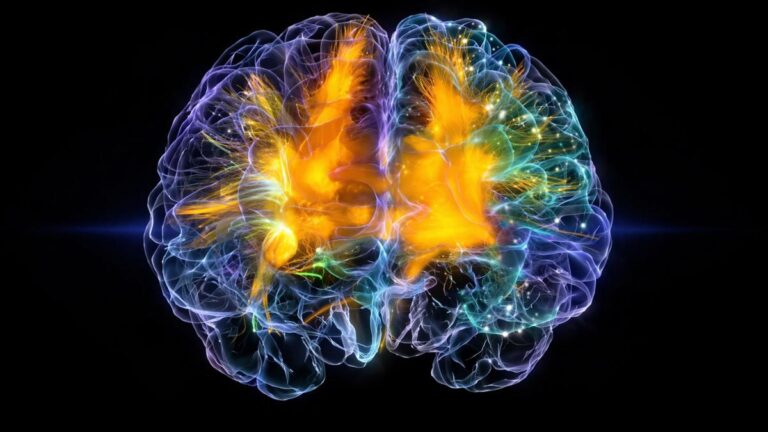
fMRI scans captured changes in resting-state connectivity, particularly within the default mode network (DMN) and the salience network, regions known to be modulated by meditation. The default mode network, responsible for self-referential thinking and mind-wandering, showed decreased functional integration during both rest and meditation. This finding is crucial because an overactive DMN is associated with rumination, anxiety, and depression.
The study found that meditation decreased functional integration in the default mode network by a statistically significant margin and reduced whole-brain modularity. This means that different brain regions became less segregated and more capable of communicating with each other, a sign of enhanced neural flexibility and integration. The researchers noted that these brain patterns were remarkably similar to those previously documented only with psychedelic substances, demonstrating that meditation can trigger profound altered states of consciousness without any pharmacological intervention.
Biochemical assays revealed that blood samples were analyzed for inflammatory markers, neuroendocrine hormones, and other molecular indicators of health. At the biochemical level, the study identified significant changes in pro-inflammatory and anti-inflammatory pathways. Perhaps most remarkably, the researchers found upregulation of BDNF, a protein that functions as the brain’s fertilizer, promoting neuron development, survival, and integration.
In a particularly innovative aspect of the study, researchers took plasma samples from participants before and after the retreat and applied them to cultured neurons in the laboratory. The post-retreat plasma dramatically increased neurite outgrowth, the process by which neurons extend their branches to form new connections. This finding demonstrates that meditation doesn’t just change the brain directly but also alters blood chemistry in ways that promote neuroplasticity throughout the entire nervous system.
The study revealed that post-retreat plasma enhanced glycolytic metabolism in cultured cells, indicating a shift toward faster and more responsive energy production. This metabolic reprogramming suggests that meditation may optimize how cells generate and utilize energy, potentially contributing to the increased vitality and mental clarity that practitioners often report.
Additionally, the researchers found modulation of tryptophan metabolism, a pathway critical for producing neurotransmitters like serotonin. Changes in neurotransmission-associated exosome miRNA transcripts further indicated that meditation influences gene expression patterns related to brain signaling and communication.
Participants completed the Mystical Experience Questionnaire (MEQ-30) to assess whether they had profound experiences during meditation characterized by feelings of unity, transcendence, and altered states of consciousness. Average MEQ scores increased significantly after the retreat, and higher scores correlated with greater biological changes, including enhanced integration of brain activity across different regions. This correlation suggests that the subjective intensity of spiritual experiences may parallel measurable biological integration across neural circuits.
One of the most clinically relevant findings was the elevation of endogenous opioids, the body’s natural painkillers. This activation of internal pain management systems suggests that meditation could serve as a non-pharmacological approach to chronic pain management. The study also revealed significant immune system activation, with changes in both inflammatory and anti-inflammatory signaling pathways.
These findings have particular relevance for patients with stress-related disorders, chronic pain conditions, autoimmune diseases, and mood disorders. The fact that these changes occurred in just seven days suggests that intensive meditation retreats could provide rapid therapeutic benefits for individuals suffering from these conditions.
The convergence of neural and molecular evidence underscores the legitimacy of mind-body interventions as complementary therapies in modern medicine. The study demonstrates that intensive meditation produces broad short-term neural and plasma-based molecular changes associated with enhanced neuroplasticity, metabolic reprogramming, and modulation of functional cell signaling pathways.
For clinicians, integrating structured meditation programs into treatment plans could enhance patient outcomes, particularly in chronic pain, depression, anxiety, and stress-related illnesses. For patients, adopting even brief daily mindfulness practices can set the stage for both psychological and physiological transformation. The research validates what contemplative traditions have known for millennia, but now with measurable biological evidence.
While this study examined an intensive retreat format, the principles can be adapted to various meditation styles and time commitments. As explored in this guide on meditation styles, different personalities and needs call for different approaches to contemplative practice. Whether you’re drawn to mindfulness meditation, loving-kindness practice, or visualization techniques, the key is finding a style that resonates with your unique cognitive fingerprint.
While the study’s participants underwent a 7-day intensive regimen, the core principles can be translated into everyday routines. Start small by committing to just 5 to 10 minutes of mindful breathing each morning. Gradually extend the duration as comfort and confidence grow. Consistency matters more than duration, as even brief daily engagement can trigger beneficial neural and molecular cascades.
Use guided resources such as apps like Insight Timer or Headspace to provide structured meditation sessions tailored to beginners. These tools can help establish a regular practice without feeling overwhelming. Track your progress by keeping a simple log noting time spent meditating, perceived stress levels, and any noticeable changes in mood, sleep quality, or physical well-being.
Consider combining meditation with gentle movement practices such as yoga or tai chi to amplify neural connectivity benefits. The integration of physical and mental practice may provide synergistic effects that enhance both brain plasticity and physical health. Many practitioners find that incorporating breathwork, body awareness, and gentle movement creates a more holistic and sustainable practice.
One of the most fascinating aspects of the study is the validation of open-label placebo effects. The fact that participants experienced measurable biological changes even when they knew they were engaging in placebo healing rituals demonstrates that expectation and belief can influence biological pathways. This doesn’t diminish the effects but rather highlights an additional tool in the healing arsenal.
Remind yourself that the mind’s expectation of healing can activate real physiological mechanisms. Approach your meditation practice with genuine intention and openness to transformation, understanding that your beliefs and attention can leave measurable fingerprints on your biology.
The research team plans to investigate how each individual component of the retreat, meditation, reconceptualization, and open-label placebo healing, works alone and in combination. Future studies will also examine how long these biological changes persist and whether repeated interventions can enhance or sustain their effects. Longitudinal research will be crucial for understanding whether intensive meditation can provide lasting health benefits.
This groundbreaking research challenges the longstanding dualistic separation between mind and body, empirically demonstrating that conscious experience is intricately woven into the fabric of physiological health. The study shows that our minds and bodies are deeply interconnected, and what we believe, how we focus our attention, and the practices we participate in can leave measurable fingerprints on our biology.
The Nature publication provides compelling, high-quality evidence that mind-body reconceptualization and meditation are not mere “feel-good” practices but are grounded in measurable changes to brain circuitry and biochemical markers. By harnessing the brain’s plasticity and understanding the power of expectation and social connection, we can create a holistic framework for healing that complements conventional medical treatments.
The practical insights from this research offer an accessible pathway for anyone seeking to optimize their mental and physical well-being. Whether you’re dealing with chronic stress, seeking better emotional regulation, or simply curious about the potential of consciousness-based practices, this study provides scientific validation for what contemplative traditions have taught for thousands of years: that the mind has extraordinary power to heal and transform the body.