Physical Address
304 North Cardinal St.
Dorchester Center, MA 02124
Physical Address
304 North Cardinal St.
Dorchester Center, MA 02124

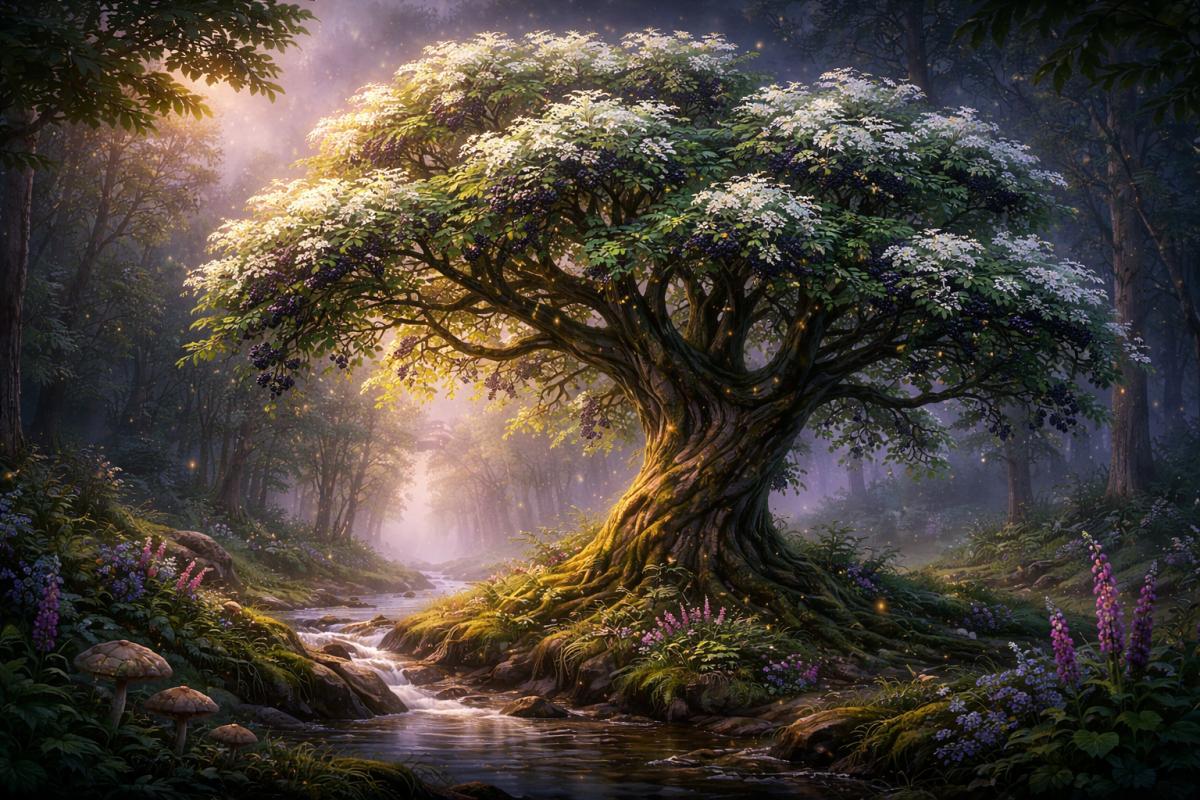
Few trees occupy as complex and revered a place in metaphysical tradition as the elder. Known botanically as Sambucus, elder has been treated for centuries not merely as a plant, but as a living boundary between worlds. Across European folk belief, pagan cosmology, and esoteric herbalism, elder is understood as a threshold being. It stands at the edge of life and death, health and illness, the visible and the unseen.
Few trees occupy as complex and revered a place in metaphysical tradition as the elder. Known botanically as Sambucus, elder has been treated for centuries not merely as a plant, but as a living boundary between worlds. Across European folk belief, pagan cosmology, and esoteric herbalism, elder is understood as a threshold being. It stands at the edge of life and death, health and illness, the visible and the unseen.
For a metaphysical practitioner, elder is not a passive ally. It is a conscious presence that demands respect, intention, and ethical engagement. This article explores the elder tree as a spiritual guardian, healer, and liminal guide, and why its symbolism remains deeply relevant in modern metaphysical practice.
Elder is traditionally associated with liminality. Liminal spaces are thresholds, moments of transition where one state dissolves and another has not yet fully formed. These spaces appear in physical form, such as doorways, forest edges, riverbanks, and crossroads. Elder thrives precisely in these environments.
In metaphysical symbolism, this ecological preference is not accidental. Elder is believed to exist comfortably in transitional states, making it a guide for humans navigating periods of uncertainty, grief, transformation, or rebirth.
In folklore, elder was rarely planted in the center of cultivated gardens. Instead, it appeared near boundaries. It marked the edge of villages, the borders of fields, or the margins between wild land and settlement. This placement reinforced its role as a guardian of thresholds rather than a symbol of domestic comfort.
One of the most persistent metaphysical beliefs surrounding elder is that it is inhabited by a spirit often referred to as the Elder Mother. Known by various names in Northern European traditions, this being was seen as both nurturing and severe.
The Elder Mother was believed to grant healing, protection, and wisdom to those who approached with respect. However, she was also thought to punish those who exploited or disrespected the tree. Cutting elder without asking permission was said to invite misfortune, illness, or spiritual imbalance.
This belief reflects a broader animistic worldview in which plants are conscious entities rather than inert resources. Elder, in particular, was considered highly sensitive to human intention.
Metaphysically, elder is regarded as a powerful protective force. Branches were historically hung above doors and windows to prevent harmful energies from entering the home. Elder was believed to repel malevolent spirits, curses, and psychic intrusion.
Interestingly, elder was also associated with witchcraft and magic, yet it was simultaneously used to ward against harmful magic. This paradox highlights an important metaphysical principle. Elder does not choose sides based on labels such as witch or healer. It responds to intention and ethical alignment.
In spiritual practice, elder is often invoked for protection during periods of vulnerability. This includes illness, emotional upheaval, or spiritual awakening. Its role is not to block experience, but to ensure safe passage through it.
Few trees embody the death rebirth cycle as clearly as elder. Its flowers appear in luminous white clusters in spring and early summer, symbolizing purity, renewal, and emergence. Later in the year, these flowers transform into deep purple or black berries, associated with blood, ancestors, and the underworld.
Metaphysically, elder teaches that death and life are not opposites but phases of the same continuum. The tree does not resist decay. Its hollow stems and short lifespan compared to other trees emphasize impermanence and regeneration.
This symbolism made elder a frequent presence in funerary rites and ancestral rituals. It was believed to assist the dead in crossing between realms and to help the living process grief and transformation.
One of elder’s most distinctive physical traits is its hollow stems. In folklore, this feature was interpreted as evidence that elder serves as a conduit for spirit communication. Hollow objects were often associated with breath, sound, and passage.
Elder wood was traditionally used to make whistles, flutes, and simple wind instruments. These were not merely musical tools, but ritual devices believed to call spirits, ancestors, or protective forces.
In metaphysical terms, elder does not block energy. It channels it. This makes it a powerful ally for practices involving communication, intuition, and subtle perception.
While elderberries are often associated with depth and shadow, elderflowers represent light, purification, and gentle renewal. Metaphysically, elderflower is linked to emotional cleansing rather than confrontation.
Elderflower was historically used in rituals to cleanse spaces after illness, conflict, or grief. Water infused with elderflower was sprinkled in sickrooms, homes, and around newborns. The intention was to restore harmony and invite gentle protection.
In contemporary metaphysical practice, elderflower is associated with emotional release, softening grief, and easing transitions. It is particularly aligned with spring rituals and rites of renewal.
A central metaphysical lesson of elder is reciprocity. Unlike many plants that are considered freely giving, elder requires acknowledgment and gratitude. This is reflected both in folklore and in practical herbal safety, as misuse of elder can cause harm.
Spiritually, elder teaches that power without respect leads to imbalance. Healing without consent, harvesting without gratitude, and spiritual work without grounding are all cautioned against in elder lore.
Modern metaphysical practice often returns to this principle through intentional rituals of thanks, spoken acknowledgment, or offerings of water or prayer before harvesting flowers.
Elder frequently appears in dreams during periods of transition. Dream symbolism involving elder often relates to endings, hidden truths, or ancestral messages. Unlike comforting dream symbols, elder dreams can feel solemn or demanding.
Metaphysically, elder in dreams is understood as an invitation to confront reality honestly. It may signal the need to release outdated identities, relationships, or beliefs.
Practitioners working with dream interpretation often view elder as a teacher archetype. It does not offer easy answers but guides the dreamer toward clarity.
In a modern world that often avoids endings and discomfort, elder remains profoundly relevant. It reminds us that healing is not always gentle and that growth often requires surrender.
Elder does not promise abundance without loss or insight without effort. Instead, it offers balance, protection, and truth to those willing to engage with integrity.
For metaphysical practitioners, elder is not a decorative symbol. It is a living archetype of transition, responsibility, and wisdom earned through experience.
To work with elder is to acknowledge the sacredness of thresholds and to accept that every beginning carries an ending within it.