Physical Address
304 North Cardinal St.
Dorchester Center, MA 02124
Physical Address
304 North Cardinal St.
Dorchester Center, MA 02124

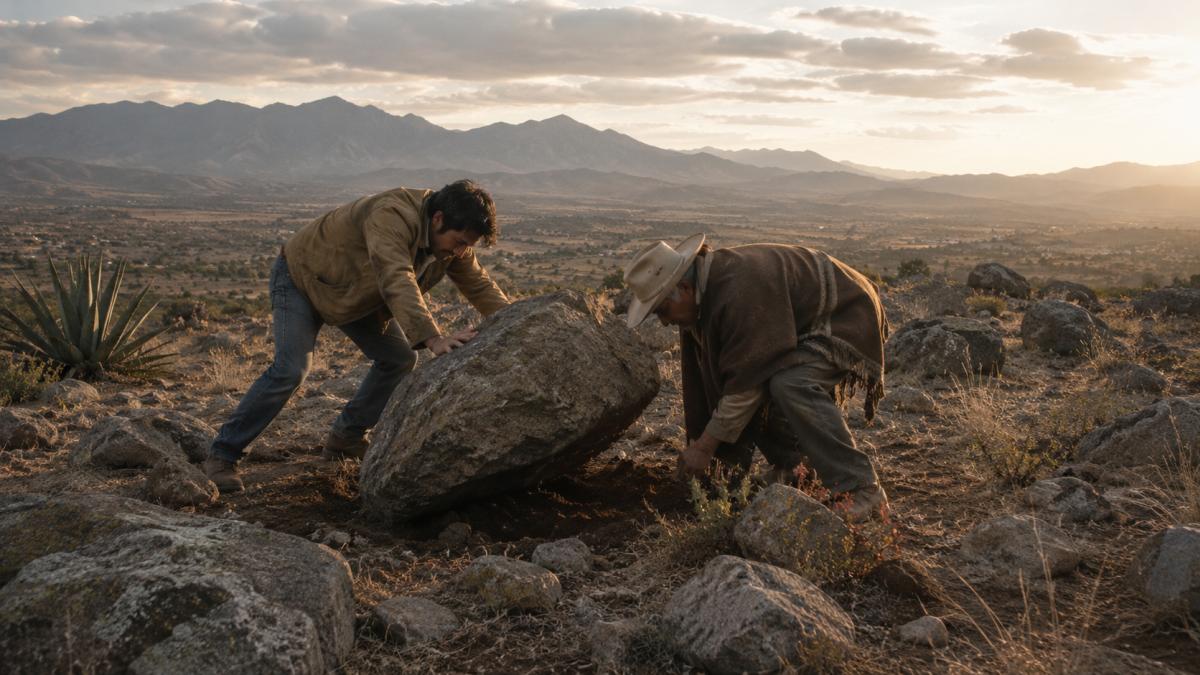
There is a moment in Carlos Castaneda's Journey to Ixtlan that stops many readers cold. Don Juan, the Yaqui sorcerer and teacher, instructs his apprentice to turn to his left shoulder before making any significant decision, because that is where death waits. Not as a threat. Not as a punishment. But as the most honest counselor a human being will ever have.
There is a moment in Carlos Castaneda’s Journey to Ixtlan that stops many readers cold. Don Juan, the Yaqui sorcerer and teacher, instructs his apprentice to turn to his left shoulder before making any significant decision, because that is where death waits. Not as a threat. Not as a punishment. But as the most honest counselor a human being will ever have.
This is not morbid philosophy. It is one of the most practical and liberating ideas in the entire body of Castaneda’s work, and it maps surprisingly well onto the broader territory of consciousness teachings that have shaped contemporary spiritual thought.
The core of don Juan’s teaching on death is deceptively simple. Most human suffering, he argues, is manufactured by the petty concerns of the ego, the endless negotiation with what others think, the attachment to outcomes, the performance of identity for an invisible audience. These concerns feel enormous in the moment but dissolve almost instantly when placed against the one certainty every living being shares.
Don Juan does not ask his apprentices to dwell on death in a depressive or nihilistic way. He asks them to use its presence actively. When you are agonising over a decision, when fear or pride or resentment is driving your behaviour, you turn to your left and you consult the advisor that never flatters you. Death will always tell you the truth. Is this important enough to spend your limited time on? Is this worth the energy it is costing you? Almost always, the answer reorganises your priorities immediately.
This practice is not unique to the Toltec lineage don Juan represents. It echoes across wisdom traditions in ways that suggest it points to something real about the structure of human consciousness rather than being the invention of any single culture.
The Stoic philosophers of ancient Rome and Greece arrived at strikingly similar territory through a completely different route. Marcus Aurelius, Seneca, and Epictetus all practised what they called memento mori, a deliberate and regular contemplation of mortality designed to strip away the trivial and reveal what actually matters. Seneca wrote extensively about how the person who has learned to die has unlearned how to be a slave, referring not to physical slavery but to the internal bondage of fear, status-seeking, and avoidance.
What makes don Juan’s version distinctive is the embodied, directional quality of the practice. You do not simply think about death in the abstract. You locate it spatially, to your left, and you address it as a presence. This engages the body and the imagination in a way that abstract philosophical reflection rarely does. It makes the advisory relationship felt rather than merely understood. The relationship between mortality awareness and psychological wellbeing has been explored extensively in contemporary research, with findings that broadly support what don Juan intuitively taught: conscious engagement with mortality reduces anxiety rather than increasing it, because it transfers attention from imagined threats to actual reality.
One of the most important distinctions don Juan makes is between fearlessness and recklessness. A warrior, in his framework, is not someone who has suppressed fear or numbed themselves to it. A warrior is someone who has fear but refuses to let it make decisions. The difference is profound.
Most of us live in a kind of managed cowardice. We tell ourselves stories about why we are not pursuing what matters most, why we are staying in situations that diminish us, why we are performing instead of living. These stories are sophisticated and often socially reinforced. Don Juan’s death advisor cuts through all of them because it asks the one question our stories cannot answer: if this were your last act on earth, would you still be wasting your attention here?
This is very close to the teaching Eckhart Tolle offers around the dissolution of the egoic self and the access to presence that becomes available when we stop defending a fixed identity.
[Also See: Eckhart Tolle on the Pain Body]
One of the subtler consequences of taking death seriously as an advisor is what it does to your experience of time. When you genuinely absorb the fact that your hours are finite and non-renewable, the present moment becomes qualitatively different. It stops being a corridor to somewhere else and starts being the only place anything real ever happens.
Don Juan repeatedly returns to the idea that ordinary people treat time as if they have an unlimited supply. They defer what matters, they postpone the life they intend to live, they invest enormous energy in protecting an image that will be forgotten within a generation of their death. The warrior, by contrast, lives with urgency, not the anxious urgency of someone running from something, but the clean urgency of someone who knows that this specific day will not come again.
Buddhist teachings on impermanence reach this same recognition through the concept of anicca, the understanding that all conditioned phenomena are in constant flux and that clinging to any of them as permanent creates suffering. What don Juan adds to this is the practical tool: the advisor on your left shoulder who makes impermanence personal and immediate rather than philosophical and distant.
Don Juan introduces the concept of the warrior’s last battle as a way of describing a quality of engagement with life rather than a preparation for literal death. When a warrior performs any act, whether it is a conversation, a creative project, a decision, or a moment of rest, they bring to it the full weight of their attention, as if it might be the last act they ever perform.
This is not theatrical or performative. It is actually the opposite of performance. When you stop trying to manage how you appear and start giving yourself fully to what is in front of you, the quality of everything you do changes. There is a presence in it that other people feel, even if they cannot name what they are responding to.
Research into flow states and peak performance consistently identifies full absorption in the present task as the common thread across experiences of exceptional engagement, creativity, and wellbeing. Don Juan would not have used that language, but he would have recognised the territory immediately.
It sounds paradoxical to suggest that death is liberating, but don Juan is very clear on this point. It is precisely because life ends that it has weight. It is precisely because your time is limited that your choices matter. A life that went on forever would have no stakes, no significance, no reason to do anything in particular rather than simply deferring indefinitely.
The advisor on your left shoulder is therefore not your enemy. It is the voice that keeps you honest when everything else in your social environment is conspiring to keep you comfortable, distracted, and small. Existential philosophy has long engaged with this territory, from Heidegger’s concept of being-toward-death as the condition that makes authentic existence possible, to the existentialist insistence that awareness of finitude is what transforms mere existence into genuine living.
Don Juan’s genius was to take this insight out of the seminar room and put it in the body, in the dirt under your feet, in the turn of your head to the left. He made it a practice rather than an idea, and that is why it has stayed with so many people long after they finished the last page.
The question he leaves us with is not theoretical. It is immediate. Turn to your left right now. What does your advisor say about how you are spending today?