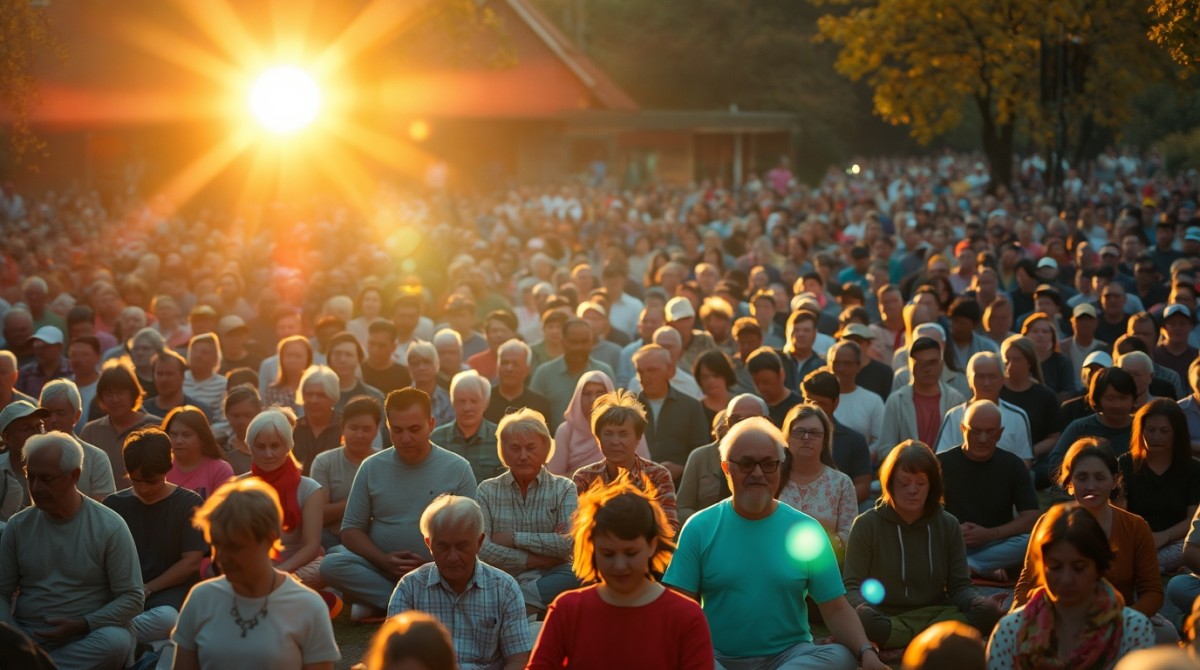
In a world often defined by chaos, conflict, and noise, the idea that groups of people sitting in silence—whether meditating or praying—could influence global events might seem mystical. Yet, a growing body of research suggests that collective spiritual practices like mass meditation and prayer could be more than personal rituals. They might hold the key to societal and even physical transformation. Let’s explore the science, stories, and unanswered questions about the power of shared intention.
The Science of Shared Silence: Meditation and Prayer
Both meditation and prayer share a common thread: the focused use of intention and awareness. While meditation often emphasizes inner stillness, prayer typically directs energy outward—toward a higher power, healing, or peace. Science is now investigating how these practices, when done collectively, might create measurable ripple effects.
1. Mass Meditation: The Data on Peace and Crime Reduction
- Reducing Violence: A landmark 1988 study in the Journal of Conflict Resolution found that when 1% of a population practiced Transcendental Meditation (TM) in conflict zones, war-related deaths dropped by 70%. Similarly, a 20-year analysis in Social Indicators Research linked TM groups to a 24% average reduction in urban crime rates.
- Mental Health at Scale: A 2014 meta-analysis in the Journal of Behavioral Medicine concluded that meditation reduces stress, anxiety, and depression. Proponents argue these benefits amplify in groups, creating a “resonance effect” that calms communities.
2. Mass Prayer: The Healing Power of Collective Faith
Prayer, like meditation, has shown surprising correlations in scientific studies:
- Pain and Anxiety Reduction: A study in Alternative Therapies in Health and Medicine (2001) tracked patients undergoing surgery. Those who were prayed for by groups (without their knowledge) reported 25% less pain and 35% less anxiety post-operation compared to control groups.
- Heart Health: Research in The Lancet (2005) found that prayer was associated with a 10% lower risk of death from heart attacks in patients, even when they were unaware others were praying for them.
- Mental Wellness: A meta-analysis of 17 studies in the Journal of Religion and Health (2019) linked prayer to reduced symptoms of depression and anxiety, particularly in faith-based communities practicing together.
These findings blur the line between spirituality and science, hinting that collective intention—whether secular or religious—might influence physical and emotional outcomes.
The Anecdotal Evidence: When Silence and Faith Made Waves
- The 1993 Washington, D.C. Meditation Experiment: Over 4,000 meditators gathered for six weeks, correlating with an 11% drop in violent crime. Police acknowledged the trend but stopped short of endorsing causation.
- The Power of Prayer Chains: In 2008, a global interfaith prayer initiative for peace in Sudan coincided with a sudden ceasefire agreement—an event locals dubbed “miraculous.” Skeptics attribute this to politics, but participants insist collective prayer played a role.
- Healing Services: Groups like the Christian Science community have long reported anomalous recoveries during mass prayer sessions, though such claims remain controversial and anecdotal.
The “Field Consciousness” Hypothesis: Bridging Science and Metaphysics
How could silent meditation or prayer influence the external world? Ancient traditions and modern theorists alike propose the existence of a collective consciousness—an invisible field linking all minds. Here’s how both practices might tap into this:
- The Neuroscience of Shared Focus
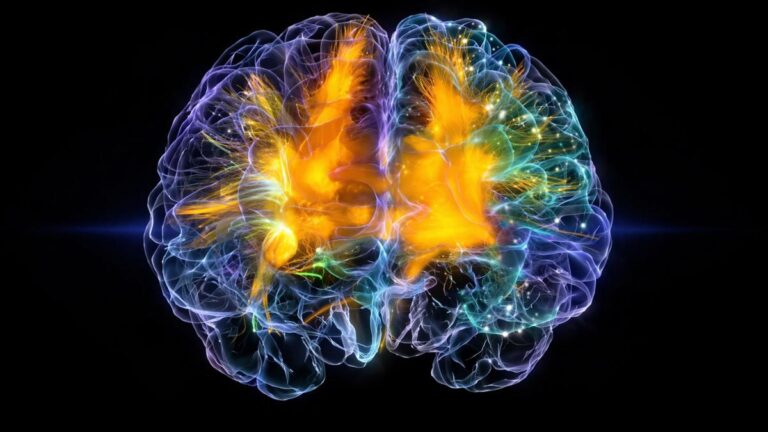
Studies show that group meditation synchronizes participants’ brainwaves, creating coherence in the prefrontal cortex (linked to decision-making) and dampening activity in the amygdala (the brain’s fear center). Similarly, fMRI scans of people praying reveal heightened connectivity in regions associated with empathy and emotional regulation. When done collectively, this “neural harmony” might extend beyond the group, though the mechanism remains unclear.
- Quantum Theories and Non-Local Effects
Physicist Ervin László’s “Akashic Field” theory posits that information and intention are stored in a quantum field accessible to all beings. The Global Consciousness Project (GCP) at Princeton detected anomalous coherence in random number generators during globally significant events (e.g., 9/11), suggesting mass human emotion or intention can influence physical systems. If focused prayer or meditation emits a “signal” into this field, it could theoretically alter reality.
- The Placebo Effect… or Something More?
Critics argue that benefits of prayer and meditation are placebo-driven. Yet studies where patients were prayed for without their knowledge (like the surgery study) challenge this. If intention works “non-locally,” it aligns with metaphysical concepts like Rupert Sheldrake’s “morphic resonance,” where habits and patterns propagate across space and time.
Skepticism and the Limits of Science
Not all studies are conclusive:
- A famous 2006 Harvard-led “STEP” trial found no evidence that prayer improved cardiac patients’ recovery—and oddly, those who knew they were being prayed for had higher complication rates, possibly due to performance anxiety.
- Many early TM studies lacked rigorous controls, and prayer research often struggles with defining “success” (e.g., is a answered prayer luck, divine intervention, or statistical noise?).
As neuroscientist Dr. Lisa Miller notes, “The challenge is measuring the immeasurable. How do you quantify a spiritual experience?”
Participating in the Movement: From Meditation Circles to Prayer Chains
Whether through secular mindfulness or sacred ritual, collective intention practices are accessible to all:
- Global Synchronized Events: World Meditation Day or interfaith prayer vigils like Pope Francis’ 2020 “Prayer for Humanity” during COVID-19.
- Local Communities: Churches, mosques, temples, and mindfulness centers often host group sessions.
- Personal Practice with Purpose: Even solitary prayer or meditation, when aligned with a shared goal (e.g., visualizing peace), may contribute to the “field.”
Conclusion: The Alchemy of Shared Intention
Science may never fully explain why mass meditation and prayer correlate with societal healing, reduced violence, or improved health. Yet the parallels between these practices are striking: both quiet the mind, focus intention, and connect individuals to something greater than themselves.
From a metaphysical perspective, this suggests that consciousness is not confined to our brains—it might be a collective force we can harness. As the Sufi poet Rumi wrote, “You are not a drop in the ocean. You are the entire ocean in a drop.”
In a divided world, the act of coming together in silence or shared faith—whether through a mantra, a prayer, or a breath—may be the ultimate act of hope. And as both ancient wisdom and modern science hint, that hope might be more powerful than we realize.