Physical Address
304 North Cardinal St.
Dorchester Center, MA 02124
Physical Address
304 North Cardinal St.
Dorchester Center, MA 02124

The ten best vegetarian protein sources, from tempeh and hard cheeses to lentils, chickpeas and seeds, with real protein figures and easy ways to eat them.
Ask anyone who has stopped eating meat what question they hear most, and the answer is almost always the same: “But where do you get your protein?” It is a fair question, asked with genuine concern, yet it rests on an old assumption that protein lives mainly in animal flesh. It does not. Protein is woven through the plant world and through the gentler gifts of animals, such as milk and eggs, that do not require a life to be taken.
For many people on a spiritual path, the choice to eat vegetarian grows out of compassion, a wish to live more lightly, or simply a sense that the body feels clearer without meat. Whatever the reason, the body still has real needs. Honouring those needs is part of the practice. A vehicle that is poorly fuelled makes a poor companion for meditation, energy work, or any kind of inner exploration.
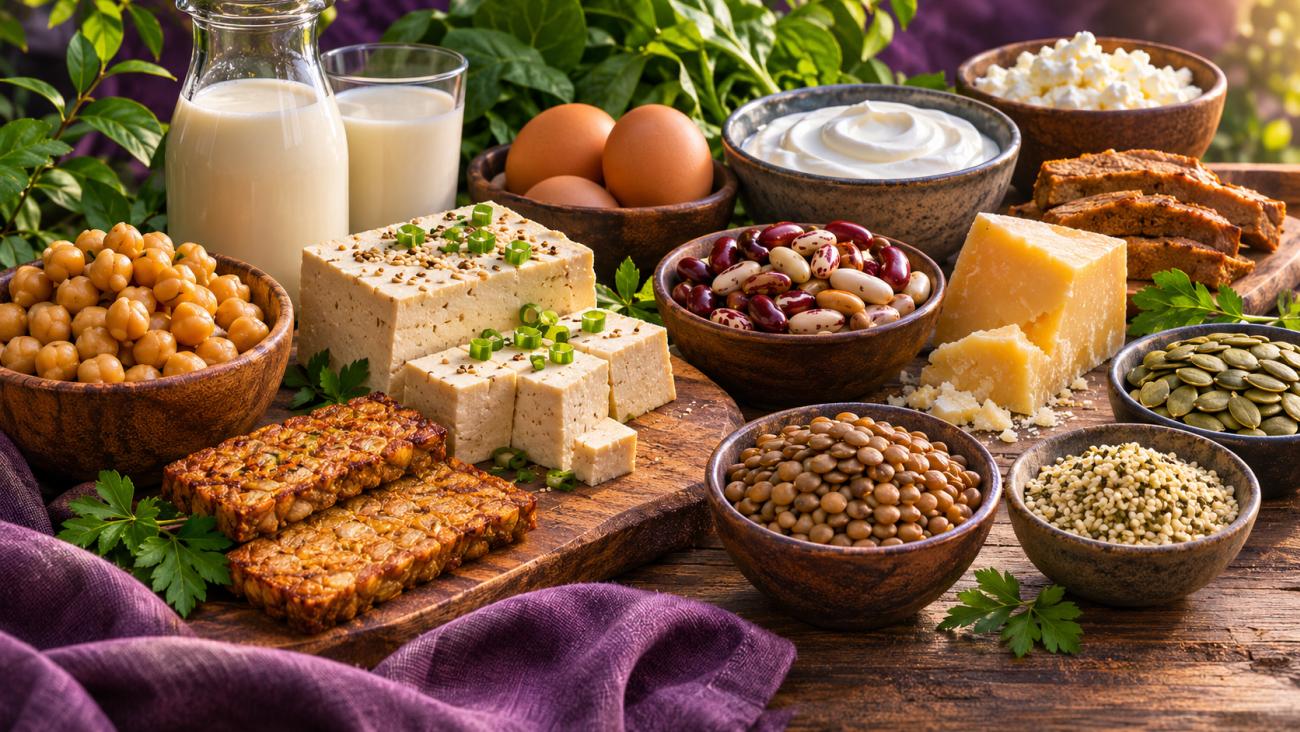
This guide ranks the ten best vegetarian protein sources, from dairy and eggs through to soy, pulses and seeds. Each entry includes realistic protein figures, what makes the food special, and a practical way to bring it to the table.
Before ranking foods, it helps to know the target. The standard guideline for healthy adults is 0.8 grams of protein per kilogram of body weight per day. The Harvard Nutrition Source protein guide explains that this works out to a little over 7 grams for every 20 pounds of body weight. A person weighing 70 kg therefore needs roughly 56 grams a day as a baseline.
That number is a minimum, not a ceiling. People who train hard, who are recovering from illness, or who are older often benefit from more. Many researchers suggest that adults past their mid sixties aim somewhat higher and spread protein evenly across meals to help preserve muscle.
The good news is that 56 grams is far easier to reach than most people think. A single cup of cooked lentils supplies around 18 grams. Add a couple of eggs, a tub of Greek yogurt and a handful of seeds, and the day is covered before dinner even starts.
You may have heard that plant proteins are “incomplete” and must be carefully combined at every meal, rice with beans, bread with peanut butter, and so on. This idea took hold in the 1970s and has proved remarkably sticky.
Modern research has softened it considerably. A major 2019 review in the journal Nutrients, Dietary Protein and Amino Acids in Vegetarian Diets, concluded that legumes, nuts and seeds can fully meet adult protein needs on vegetarian and vegan diets. The authors called the complete versus incomplete labels misleading and found no evidence that proteins must be paired within the same meal. Eating a reasonable variety over the course of the day is enough.
Even so, a few foods on this list stand out because they deliver all nine essential amino acids in useful proportions on their own: dairy, eggs, soy and hemp. Pulses are rich in lysine, the amino acid grains tend to lack, which is why traditional pairings like dal with rice or beans with maize feel so natural. Your ancestors were simply doing good nutrition by instinct.
Soy earns the top spot because it is one of the few plant foods that provides a genuinely complete protein, along with iron, calcium, magnesium and fibre.
Tempeh is made by fermenting whole cooked soybeans into a firm, nutty cake. Because the whole bean is used, it is denser in protein than tofu. According to Harvard Health’s guide to tempeh, a half-cup serving supplies about 18 grams of protein, more than double the amount in the same volume of firm tofu. Tofu, made by curdling soy milk, is milder and softer, offering roughly 8 to 17 grams per 100 grams depending on how firm it is. Extra-firm blocks sit at the top of that range.
Edamame, the young green soybean, belongs here too. A cup of shelled edamame provides about 17 grams of protein and makes a superb snack straight from the steamer with a pinch of salt.
How to use it: Slice tempeh thinly, steam for ten minutes to soften its slightly bitter edge, then marinate and pan-fry. Press firm tofu between towels before baking or stir-frying so it crisps rather than steams.
Seitan is made from wheat gluten, the protein portion of wheat flour, and it is one of the most protein-dense foods a vegetarian can eat. Prepared seitan typically delivers 20 to 25 grams of protein per 100 grams, with very little fat. Its chewy texture has made it a staple in Buddhist temple cooking for centuries, where it is sometimes called “mien chin” or “wheat meat”.
There are two caveats. Seitan is relatively low in lysine, so it shines when eaten in the same day as beans, lentils or soy. And because it is pure gluten, it is entirely unsuitable for anyone with coeliac disease or gluten sensitivity.
How to use it: Simmer seitan in a well-seasoned broth, then slice and add to stews, curries or sandwiches. Shop-bought versions can be salty, so check the label.
Hard, aged cheeses lose much of their water during maturation, which concentrates the protein. The differences between cheese types are striking:
Dairy protein is complete and highly digestible. The trade-off is that hard cheeses are also rich in saturated fat and salt, so they work best as a flavourful supporting act rather than the centre of every meal. A small grating of Parmesan adds a surprising protein boost to soups, pasta and roasted vegetables.
A note for strict vegetarians: many traditional hard cheeses, including authentic Parmigiano Reggiano, are made with animal rennet. Look for cheeses labelled as suitable for vegetarians, which use microbial or plant-based rennet instead.
How to use it: Grill thick slices of halloumi until golden and serve with lentil salad, or crumble cheddar over a bean chilli.
Cottage cheese has enjoyed a quiet revival, and with good reason. It delivers about 11 grams of protein per 100 grams, which means a single cup provides somewhere between 25 and 28 grams, more than many meat portions. Ricotta is similar at around 11 grams per 100 grams, with a creamier texture.
Much of the protein in these fresh cheeses is casein, which digests slowly and keeps you feeling full for hours. That makes cottage cheese an excellent evening snack or a satisfying breakfast.
How to use it: Blend cottage cheese until smooth and use it as a high-protein base for dips, pancake batter or pasta sauce. Spread ricotta on wholegrain toast with sliced tomato and black pepper.
Straining yogurt removes much of the watery whey and leaves a thicker product with roughly double the protein of regular yogurt. Plain Greek yogurt provides about 10 grams per 100 grams, and Icelandic skyr is often slightly higher. A 200 gram bowl gives you around 20 grams of protein before you have added anything else.
Milk itself remains a reliable source. The same Harvard protein guide lists an 8 ounce glass (about 240 ml) at 8 grams of protein. Milk protein is a natural blend of fast-digesting whey and slow-digesting casein, which is why both are sold separately as supplements.
The Mayo Clinic’s vegetarian nutrition guide notes that eggs and dairy are good protein sources and that vegetarians do not need to eat large amounts to meet their needs. Choose plain, unsweetened versions where possible, as flavoured yogurts can carry a surprising amount of added sugar.
How to use it: Top Greek yogurt with berries, hemp seeds and a drizzle of honey. Use milk in porridge instead of water for an easy extra 8 grams.
Eggs have long been the reference standard against which nutrition scientists measure other proteins. Harvard Health’s article on eggs and protein puts one large egg at about 6 grams of protein, containing all nine essential amino acids.
A common mistake is discarding the yolk. Nearly half of an egg’s protein sits in the yolk, along with choline, vitamin D, lutein and most of its minerals. Unless you have specific medical advice to limit yolks, eat the whole egg.
How to use it: Hard-boil a batch at the start of the week for grab-and-go snacks. A three-egg vegetable omelette with a sprinkle of feta delivers over 20 grams of protein in under ten minutes.
Lentils are perhaps the most generous protein food on the planet for their price. One cup of cooked lentils provides about 18 grams of protein and 15 grams of fibre, with virtually no saturated fat or sodium. They are also rich in iron and folate, two nutrients vegetarians should keep an eye on.
Unlike most dried pulses, lentils need no soaking. Red lentils collapse into a creamy dal in about 20 minutes, while green and brown lentils hold their shape for salads and stews. Black beluga lentils are firmer still and look striking on the plate.
How to use it: Cook a large pot of brown lentils on Sunday and use them through the week in soups, grain bowls and stuffed peppers.
Chickpeas, also called garbanzo beans, offer about 14 to 15 grams of protein per cooked cup, alongside plenty of fibre, manganese and folate. They are endlessly versatile, from Middle Eastern hummus and falafel to Indian chana masala and crunchy roasted snacks.
The Harvard Nutrition Source guide to legumes and pulses describes pulses as an inexpensive source of protein, vitamins, complex carbohydrates and fibre, and notes that dietary guidelines suggest about three cups of legumes a week. Chickpea flour, known as besan or gram flour, is another hidden gem with around 22 grams of protein per 100 grams.
How to use it: Toss drained chickpeas with olive oil, smoked paprika and salt, then roast until crisp. Whisk chickpea flour with water and spices to make savoury pancakes that work like an eggless omelette.
Black beans, kidney beans, butter beans, cannellini and pinto beans all deliver roughly 14 to 15 grams of protein per cooked cup. They are lysine-rich, which makes them the perfect partner for rice, maize and wheat, and they bring soluble fibre that supports healthy cholesterol levels.
According to Harvard Health’s look at legumes and heart health, swapping legumes in for some animal protein may help manage risk factors for heart disease. The same article acknowledges the obvious downside: gas. Increasing your intake gradually, and soaking and cooking dried beans in fresh water, helps the gut adjust.
One safety note: raw or undercooked red kidney beans contain a natural toxin. Dried kidney beans must be soaked and then boiled vigorously for at least ten minutes before simmering. Canned beans are already cooked and perfectly safe.
How to use it: Make a big pot of three-bean chilli, or mash black beans with cumin and lime for a quick taco filling.
Small but mighty, seeds and nuts round out the list. Hulled hemp seeds, sometimes sold as hemp hearts, provide about 9 to 10 grams of protein in three tablespoons and are one of the few plant foods with a complete amino acid profile. Pumpkin seeds are similarly impressive at around 30 grams per 100 grams, along with generous amounts of zinc and magnesium.
Peanuts are technically a legume rather than a nut, which explains their high protein content of roughly 25 grams per 100 grams. Two tablespoons of natural peanut butter supply about 7 grams. Almonds come in a little lower at about 6 grams per ounce.
Seeds and nuts are calorie-dense because of their healthy fats, so think of them as boosters rather than the main event.
How to use it: Keep a jar of mixed hemp and pumpkin seeds on the counter and scatter them over yogurt, salads, soups and porridge.
Several foods narrowly missed the top ten but still deserve a place in your kitchen. Quinoa offers about 8 grams of protein per cooked cup and a complete amino acid profile. Oats contribute around 5 grams per half cup of dry flakes. Nutritional yeast, a favourite in plant-based kitchens, adds a cheesy flavour and roughly 8 grams of protein per two tablespoons. Green peas, often overlooked, provide about 8 grams per cooked cup.
Here is how easily the numbers add up across a single ordinary day:
That totals roughly 79 grams of protein, comfortably above the baseline for most adults, without a single protein shake and without any meat.
Choosing what to put on your plate is one of the most frequent decisions you make, several times a day, every day of your life. When those choices are made with attention, they become a quiet form of practice. You begin to notice how different foods affect your energy, your sleep, the clarity of your mind during meditation.
A vegetarian diet built around soy, dairy, eggs, pulses and seeds is not a diet of compromise. It is a diet of abundance, and it supports the body that carries you through this life and all its inner journeys. Start with one or two foods from this list that appeal to you, learn to cook them well, and let the rest follow naturally.
If the ethical side of this choice speaks to you, our reflection Dominion or Stewardship? The Question at the Heart of Christspiracy explores it further, and Edgar Cayce on Fasting looks at food and abstinence as a spiritual discipline.
This article is for general information only and is not medical or dietary advice. Protein needs vary with age, health and activity. If you have a medical condition, are pregnant or breastfeeding, or are planning a major change to your diet, speak to a doctor or registered dietitian first.