Physical Address
304 North Cardinal St.
Dorchester Center, MA 02124
Physical Address
304 North Cardinal St.
Dorchester Center, MA 02124

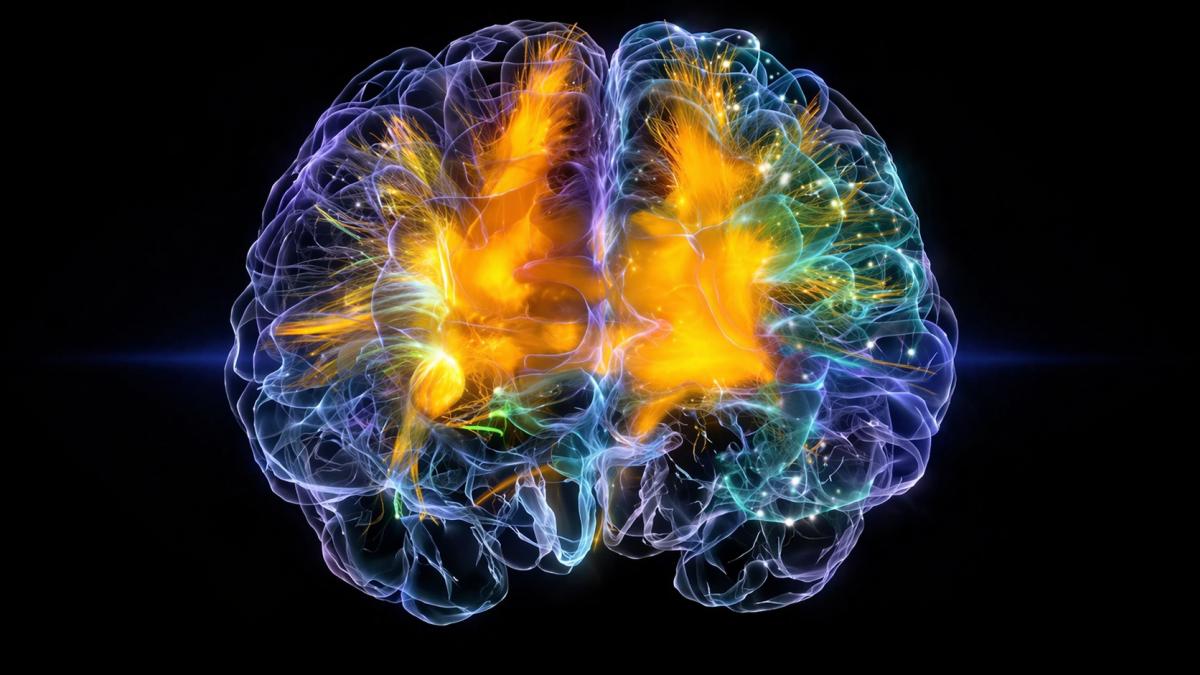
Most people assume that meaningful change in the brain takes months, even years, of dedicated practice. That belief is understandable but increasingly challenged by hard science. A landmark study published in the peer-reviewed journal Communications Biology has demonstrated that just seven days of intensive meditation can trigger measurable, wide-ranging changes in both brain function and blood biology. The implications reach far beyond stress relief. We are talking about fundamental shifts in how your brain engages with reality.
Most people assume that meaningful change in the brain takes months, even years, of dedicated practice. That belief is understandable but increasingly challenged by hard science. A landmark study published in the peer-reviewed journal Communications Biology has demonstrated that just seven days of intensive meditation can trigger measurable, wide-ranging changes in both brain function and blood biology. The implications reach far beyond stress relief. We are talking about fundamental shifts in how your brain engages with reality.
Researchers at the University of California San Diego found that an intensive retreat combining multiple mind-body techniques, including meditation and healing practices, produced rapid and wide-ranging changes in brain function and blood biology.
The study involved 20 healthy adults who took part in a seven-day residential program led by neuroscience educator and author Joe Dispenza. The retreat included daily lectures, about 33 hours of guided meditation, and group healing sessions. Before and after the retreat, participants underwent functional magnetic resonance imaging (fMRI) to monitor brain activity, while blood samples tracked changes in metabolism, immune function, and other biological markers.
The findings were striking across multiple dimensions. Brain network changes showed that meditation during the retreat reduced activity in parts of the brain associated with mental chatter, making overall brain function more efficient. Enhanced neuroplasticity was also demonstrated when blood plasma from post-retreat participants, applied to laboratory-grown neurons, caused brain cells to grow longer branches and form new connections.
Beyond the brain, the study uncovered systemic biological changes. Blood levels of endogenous opioids, the body’s natural painkillers, increased after the retreat, indicating that the body’s natural pain-relief systems were activated. Meditation also increased inflammatory and anti-inflammatory immune signals simultaneously, suggesting a complex, adaptive immune response rather than simple suppression or activation. Gene and molecular signaling also shifted, with small RNA and gene activity in blood changing in pathways directly related to brain function.
Neuroscience has long acknowledged that habits can reshape the brain over time. What makes this research remarkable is the speed and breadth of the changes observed. Prior studies on meditation typically focused on months or years of practice before documenting structural change. A seven-day protocol challenges that assumption entirely.
Senior study author Hemal H. Patel, Ph.D., professor of anesthesiology at UC San Diego School of Medicine, put it plainly: “This isn’t about just stress relief or relaxation; this is about fundamentally changing how the brain engages with reality and quantifying these changes biologically.”
The speed of neurological adaptation points to the brain’s remarkable short-term plasticity when subjected to intensive, consistent practice. Focused attention meditation recruits overlapping networks involved in attention control, emotional regulation, and working memory — areas that are especially responsive to training in compressed timeframes.
Brain plasticity refers to the brain’s ability to reorganize itself by forming new neural connections throughout life. When you meditate, you are repeatedly engaging and then releasing mental effort, training your brain to maintain attentive awareness rather than drifting into habitual reactive patterns. Several mechanisms underpin this transformation.
Synaptic efficiency improves with repetitive attention training, meaning that neurons communicate more reliably and with less metabolic cost. The brain essentially learns to do more with less.
Myelination may also be promoted through consistent practice. Myelin is the protective sheath around axons that speeds up signal transmission between brain regions, effectively upgrading the neural wiring that connects your emotional and rational centers.
Neurogenesis, the birth of new neurons, is supported by emerging evidence pointing to meditation as a stimulus for new cell growth, particularly in the hippocampus, the region central to memory and emotional processing.
Default mode network modulation is perhaps the most significant finding. Research published in Communications Biology confirmed that meditation decreases functional integration in the default mode network and salience networks, and reduces whole-brain modularity. In practice, this means your brain is spending less energy on aimless internal chatter and more on present-moment awareness.
These changes collectively shift the brain toward what researchers describe as a state of preparedness — a condition where your nervous system can move quickly from stress activation to calm recovery.
One of the more surprising dimensions of the UC San Diego findings is the parallel drawn between deep meditation and psychedelic experience. The research suggests that intensive meditation can trigger very similar brain activity to that previously documented with psychedelic substances — without any pharmacological intervention.
Participants completed the Mystical Experience Questionnaire (MEQ-30), which measures feelings of unity, transcendence, and altered awareness. Scores increased from an average of 2.37 before the retreat to 3.02 afterward. Those who reported stronger mystical experiences also showed more pronounced biological changes, including greater coordination between different brain regions.
This finding bridges an important gap between contemplative traditions and clinical neuroscience. The deep states described in meditation lineages for centuries are not metaphorical — they correspond to measurable neurological phenomena.
While the neuroscience data are compelling in isolation, the ultimate value of meditation lies in how brain changes translate to daily life. Research consistently documents several categories of real-world improvement following short-duration meditation programs.
Stress reduction is the most immediately reported benefit. Participants in multiple studies show lower scores on the Perceived Stress Scale after as few as five to seven days of practice. The prefrontal cortex, strengthened through training, exercises greater regulatory control over the amygdala, reducing the intensity of stress responses.
Sleep quality improves as a downstream consequence of better emotional regulation. A calmer amygdala at night produces fewer sleep disruptions, allowing the brain to complete full cycles of restorative deep sleep.
Focus and cognitive performance are supported by the strengthening of executive function networks. Mindfulness meditation has been linked to strengthened connections between the prefrontal brain and limbic system, improving emotional control and stress resistance.
Immune function receives a documented boost. As the UC San Diego research demonstrated, even a single week of intensive practice produced adaptive shifts in immune signaling, pointing to the deep interconnection between mental states and physical health.
Empathy and social cognition are enhanced through loving-kindness practices in particular, with measurable changes appearing in neural networks associated with perspective-taking and compassion.
You do not need a residential retreat to begin experiencing the benefits. The research supports consistent daily practice as the primary driver of change. Here is a framework grounded in the science.
Day 1: Anchored Breath Awareness (5 minutes) Sit comfortably, close your eyes, and place all attention on the sensation of breathing at your nostrils. When your mind wanders, gently return focus without judgment. This establishes the foundational skill of attentional redirection.
Days 2 and 3: Body Scan (10 minutes) Expand awareness from breath to body. Move attention slowly from feet to crown, noting physical sensations without reacting to them. This deepens proprioceptive awareness and begins modulating default mode network activity.
Days 4 and 5: Loving-Kindness Practice (15 minutes) Silently direct warm, compassionate phrases toward yourself, then toward others. This engages the medial prefrontal cortex and strengthens neural pathways associated with emotional regulation and social connection.
Days 6 and 7: Open Awareness (15 minutes) Allow your attention to rest without fixing on any single object. Observe sounds, sensations, and thoughts as they arise and pass. This final phase reinforces the brain’s capacity to monitor experience without automatic reactivity — the hallmark of a well-regulated nervous system.
Consistency matters more than duration. Even five focused minutes on a difficult day preserves the neural momentum you are building throughout the week.
It is reasonable to question whether seven days of practice can produce changes that persist. The evidence offers a reassuring answer. While the UC San Diego study measured changes immediately after the retreat, broader neuroimaging literature documents that structural adaptations can persist for months, even when practice is temporarily interrupted. The initial week appears to function as a threshold event, establishing new neural patterns that are easier to maintain and build upon.
For those who find stillness difficult, movement-based alternatives such as walking meditation or breath-focused yoga engage the same attentional networks and produce overlapping neurological effects. The specific form matters less than the quality of attention you bring to it.
For those concerned about the spiritual framing that often accompanies meditation instruction, the brain changes observed are entirely physiological. You do not need to adopt any belief system to experience the benefits. Think of it as interval training for your neural circuits.
The UC San Diego study is part of a broader and rapidly growing body of evidence that human consciousness is not a fixed property but a trainable capacity. Mindfulness meditation has been shown to increase gray matter density in the hippocampus, associated with learning and memory, and to reduce the size of the amygdala, the brain’s fear center. These are not subtle statistical effects — they are structural changes visible on brain scans.
Seven days is not a miracle cure. It is, however, a genuine threshold. The science is clear that within one week of consistent practice, your brain begins to reorganize itself around calmer, more attentive, more resilient patterns of engagement. The default mode of chronic mental noise is not your inevitable reality. It is a habit, and habits can be changed.
Commit to the week. The brain you have at the end of it will be measurably different from the one you start with.