Physical Address
304 North Cardinal St.
Dorchester Center, MA 02124
Physical Address
304 North Cardinal St.
Dorchester Center, MA 02124

In 1961, a young Soviet surgeon named Leonid Rogozov found himself in a crisis that had no precedent. Deployed as the sole doctor on an Antarctic expedition, he watched the winter ice close in around his station, and then he started to feel sick. Abdominal pain. Fever. He knew the diagnosis immediately: appendicitis. He also knew what it meant. Without surgery, he would die. But he was the only surgeon for thousands of miles, trapped on a frozen continent with a ship that would not return until spring.
What a Soviet surgeon stranded in Antarctica can teach us about transforming our minds, and why science is finally catching up to what scripture always knew
In 1961, a young Soviet surgeon named Leonid Rogozov found himself in a crisis that had no precedent. Deployed as the sole doctor on an Antarctic expedition, he watched the winter ice close in around his station, and then he started to feel sick. Abdominal pain. Fever. He knew the diagnosis immediately: appendicitis. He also knew what it meant. Without surgery, he would die. But he was the only surgeon for thousands of miles, trapped on a frozen continent with a ship that would not return until spring.
What Rogozov did next is the founding story of Dr. W. Lee Warren’s remarkable new book, The Life-Changing Art of Self-Brain Surgery: Connecting Neuroscience and Faith to Radically Transform Your Life. Facing certain death, Rogozov made a profound mental shift. He stopped thinking of himself as a helpless patient waiting for rescue that would never come, and started thinking of himself as a doctor who already possessed the knowledge and tools to solve the problem. He trained a truck driver to pass him instruments, instructed a colleague to slap him awake if he fainted, and then performed an appendectomy on himself with a local anesthetic and extraordinary composure. He survived.
Dr. Warren, a board-certified neurosurgeon, Iraq War veteran, and author, uses this story not merely as a dramatic opener but as a precise metaphor for the central thesis of his book: the transformation most of us desperately need does not require waiting for someone or something outside ourselves. The tools are already present. The surgery can begin today. All that is required is a change of perspective from patient to doctor.
Warren’s credibility on this subject is hard-won. He served in a combat hospital in Iraq in 2004 and 2005, performing over 200 brain surgeries under rocket and mortar fire and surviving more than 100 attacks. He returned home emotionally shattered, spent years suppressing his trauma, and then faced an even greater blow: the death of his teenage son Mitch in 2013. Out of those experiences came more than a decade of studying what separates people who find hope in devastation from those who are consumed by it.
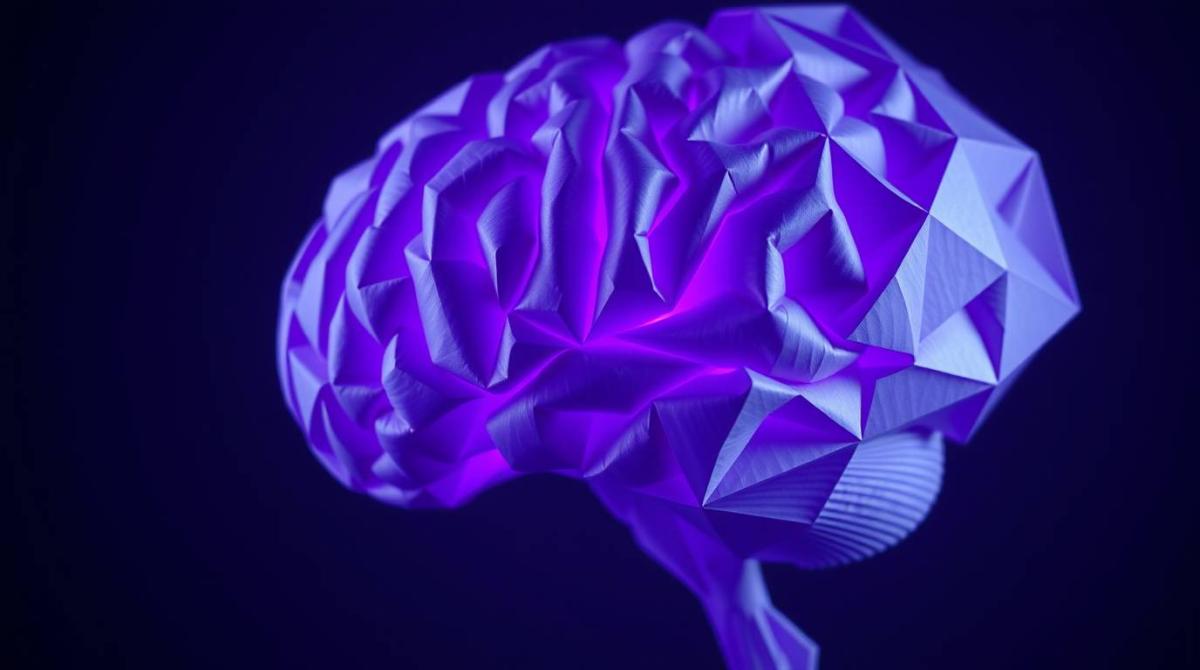
The answer, he discovered, lies in a process called neuroplasticity, which is the brain’s extraordinary ability to rewire itself in real time based on what we think about. Warren witnessed this firsthand when he and his grieving wife were invited to observe functional MRI research at Auburn University shortly after their son’s death. In functional MRI, researchers can watch the brain doing things, not just observe its structure.
What he saw changed everything. When a research subject was asked to recall her worst memory, the fear and pain centres of her brain lit up, and her heart rate and blood pressure rose accordingly. When she was then asked to recall her best memory, those same regions calmed, and her physiology followed. In real time. Structurally. Not metaphorically.
“That’s surgery,” Warren realised. “When you purposefully change what you’re thinking about and your brain makes structural changes to itself, that’s the same thing I do in the operating room. I intentionally make structural changes in your brain for the purpose of making your life better.”
This is the essence of self-brain surgery. Neuroplasticity happens whether you direct it or not. If you never consciously intervene in your own thought life, your brain simply keeps reinforcing the same neural pathways: the same anxiety loops, the same grief cycles, the same defeated narratives. The moment you choose to redirect your thoughts, however, your brain is ready to change with you. You are, as Warren puts it, designed to heal.
Here is where Warren’s book becomes genuinely thought-provoking. Warren is both a rigorous scientist and a committed Christian, and he argues compellingly that these two identities are not in tension. They are converging.
Philippians 4:6-8 instructs believers that if they want to be less anxious, they should be more grateful and dwell on things that are true, noble, and pure. Romans 12:2 commands transformation through the renewing of the mind. Ephesians 4 ties moral and behavioural collapse directly to “futile thinking,” and prescribes renewal through changed thought patterns. These instructions are thousands of years old, and 21st-century neuroscience is now confirming them with brain imaging data.
Warren puts it plainly: “Just about everything in the Bible, when God prescribes something and promises it will lead to our flourishing, neuroscience is now backing it up.”
This is not a new intuition. More than seventy years ago, the American pastor Norman Vincent Peale articulated something remarkably similar in his landmark 1952 bestseller, The Power of Positive Thinking. Peale’s central argument was that disciplined, faith-anchored positive thought could transform a person’s circumstances, health, and relationships. Critics called it wishful thinking dressed up in religious language.
What Warren’s work effectively does is provide the neurological scaffolding that Peale’s generation lacked. Where Peale offered pastoral conviction and anecdotal evidence, Warren offers fMRI scans and synaptic biology. The two men are, in a sense, describing the same phenomenon from different centuries and different vantage points. Peale saw the fruit. Warren is showing us the root.
This intersection of spirituality and the scientific understanding of consciousness is something we explore in depth here on this site. If you want to go deeper on how meditation reshapes the brain and your inner reality, the science behind Warren’s claims connects directly to those principles.
Warren’s book is not content with theory. He prescribes fifteen specific “operations,” which are practical techniques for managing your thought life and rewiring your brain. These are grounded in his clinical experience, his own personal suffering, and the growing body of research in cognitive neuroscience.
Among the most striking is the concept of the thought biopsy, drawn from 2 Corinthians 10:5 and the principle of taking every thought captive. Warren notes that research suggests roughly 80% of our automatic thoughts are false or distorted. Just as he would never open a patient’s skull based purely on symptoms, we should not act on our automatic thoughts without first examining them critically. Identify the negative automatic thought. Assess its accuracy. Replace it with something true. This is not positive thinking as wishful fantasy. It is cognitive surgery as rigorous practice.
There is also the two-patient rule, which is the understanding that how we manage our own minds directly affects the people around us. Mirror neurons mean our emotional states are literally contagious. And the emerging science of epigenetics shows that the stress responses we carry can be transmitted to our children and grandchildren, but so can the healing. Breaking a generational cycle of anxiety, addiction, or trauma in your own lifetime means your descendants may be born into a better neurological inheritance.
For those on a conscious awakening journey, this idea resonates deeply. The inner work is never just personal. It ripples outward in ways we may never fully see. You can read more about the spiritual dimensions of this generational healing in breaking ancestral patterns through spiritual practice.
All of it comes back to Rogozov in Antarctica. The surgeon did not suddenly acquire new skills on the day he operated on himself. He had possessed them all along. What changed was his perspective, specifically his willingness to stop waiting for external rescue and to step into the agency he already held.
Warren is not suggesting we suffer alone or reject help. He is suggesting that we stop outsourcing responsibility for our inner lives entirely to circumstances, to the past, to other people, or to the next pill or the next therapy session. God, Warren argues, has already built into the human nervous system an extraordinary capacity for renewal, healing, and transformation. Self-brain surgery is simply the decision to pick up the scalpel.
The operation, as Rogozov proved, is possible. It just requires the courage to begin.
Dr. W. Lee Warren’s The Life-Changing Art of Self-Brain Surgery is available now. For more on the foundational principles of thought-transformation and faith, Norman Vincent Peale’s The Power of Positive Thinking remains an essential companion read.