Physical Address
304 North Cardinal St.
Dorchester Center, MA 02124
Physical Address
304 North Cardinal St.
Dorchester Center, MA 02124


For decades, near-death experiences have made their way into mainstream conversation. Tunnels of light, out-of-body moments, a sense of overwhelming peace, these accounts are familiar enough that most people have heard at least one version of the story. But there's a quieter, stranger cousin to the near-death experience that has only recently started getting serious attention: the shared death experience, or SDE.
For decades, near-death experiences have made their way into mainstream conversation. Tunnels of light, out-of-body moments, a sense of overwhelming peace, these accounts are familiar enough that most people have heard at least one version of the story. But there’s a quieter, stranger cousin to the near-death experience that has only recently started getting serious attention: the shared death experience, or SDE.
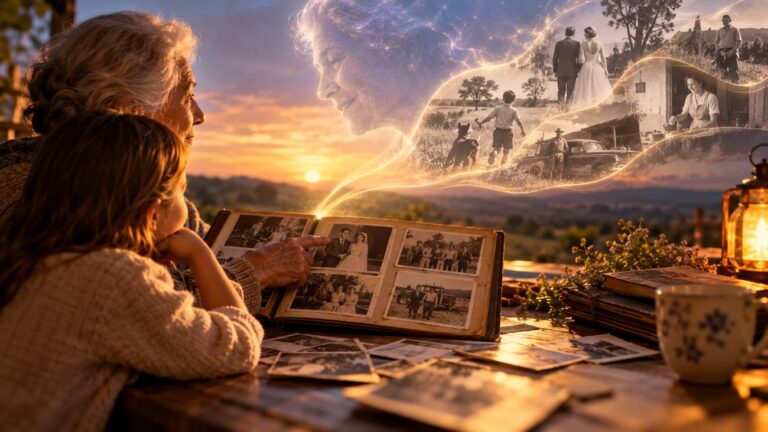
An SDE happens when someone who is not dying somehow participates in the death of another person. A caregiver, a spouse, a friend, even a stranger in a hospital hallway, reports briefly sensing, witnessing, or accompanying the dying person into what looks like the early stages of the afterlife. It isn’t a metaphor for grief. People who describe these moments insist they were fully conscious, fully aware, and utterly unprepared for what happened to them.
The person most associated with formalizing the study of this phenomenon is William Peters, a psychotherapist and hospice worker who founded the Shared Crossing Project after years of working directly with dying patients and their families. Peters describes the SDE as fundamentally a journey experience. The person having it often reports moving alongside their loved one, watching them ascend toward light, encountering deceased relatives, or feeling emotions so far outside ordinary human experience that words fail to capture them.
One detail Peters keeps returning to is the boundary. At some point in nearly every account, the experiencer reaches a threshold they cannot cross. They sense they are not permitted to go further, and in an instant they are back in their body, disoriented and often shaken by an experience they have no framework for understanding.
Peters also points to something else that shows up again and again in his research: the relationship between the two people involved usually carries real emotional weight. Sometimes that bond is deep and loving. Other times it’s strained, and the SDE becomes an unexpected moment of repair between two people who never fully reconciled while both were alive. He has spoken about these patterns at length in interviews such as this conversation with the Buddha at the Gas Pump project, where he lays out how his own near-death experiences as a teenager first pointed him toward this work.
One of the clearest firsthand accounts comes from a woman named Christina, who was with her mother in the hospital during her final hours. Her mother had suffered a sudden brain hemorrhage after what had been an ordinary, healthy life, and doctors had already told the family there was nothing more to be done.
Christina describes being alone in the room with her mother, holding her, telling her it was safe to let go. As she repeated those words, she felt the room around her begin to shift, almost as if reality itself had come loose. A tunnel opened in her peripheral vision, and the hospital equipment around her dissolved into a field of brilliant white light. She says the light had a physical quality to it, almost a texture she could feel against her skin.
Christina, by her own account a skeptical and logical person who had never put stock in these kinds of stories, found herself overwhelmed with love and joy as she watched her mother move toward a second, more distant light. Then, just as suddenly as it began, she was back in the hospital room, and her mother had passed. She has described the days that followed as suffused with a strange, lingering peace, one she still struggles to put into ordinary words.
A very different but equally striking case comes from Elizabeth Boisson, co-founder of the nonprofit Helping Parents Heal, who lost her son Morgan during a university trip to the Everest base camp in Tibet. Morgan and a group of students had ascended too quickly, and altitude sickness spread through the group. When Morgan collapsed and stopped breathing, one of his fellow students called Boisson and held the phone to Morgan’s ear so she could speak to him as fellow students attempted CPR.
Boisson recalls telling her son they loved him, that they were proud of him, and not to be afraid. In that instant, she says she felt an overwhelming embrace, as though Morgan had reached across an impossible distance to hug her one final time. She describes feeling pure peace and love in that moment, with no trace of the physical suffering altitude sickness would normally cause. She was thousands of miles away and had no medical explanation available to her for what she felt.
That experience became the seed for an international support organization for bereaved parents, one built specifically around the idea that these kinds of connections deserve to be discussed openly rather than dismissed.
A third account, relayed by neuroscientist Marjorie Woollacott, involves Dr. Joan Borysenko, a Harvard-trained researcher in mind-body medicine, and her mother’s death in 1988. The two women had a famously difficult relationship, and as Borysenko wheeled her dying mother back to her hospital room, her mother suddenly turned to her in the elevator and asked to be forgiven for a lifetime of criticism.
What followed, according to the account, was an exchange of forgiveness and an unusual request: Borysenko’s mother asked for her daughter’s compassion, and Borysenko asked in return for her mother’s courage. Later, at the bedside, Borysenko describes being pulled into a vision involving birth, light, and an encompassing sense of unconditional love, an experience her own son reportedly shared simultaneously from the other side of the same bed.
Whatever is happening in moments like these, it clearly isn’t limited to the person who is dying. Researchers studying the topic have started to nest these firsthand accounts within longer conversations exploring consciousness more broadly, including the recordings collected on The Telepathy Tapes’ YouTube channel, where interviews like these are available in full. Listeners who want the extended, ad-free versions of these conversations along with additional case material can find them through the show’s backstage subscription.
What makes Peters’ research particularly hard to dismiss is a pattern his team didn’t expect to find. After collecting more than 150 documented cases, researchers discovered that 64 percent of shared death experiences happened remotely, meaning the experiencer was not physically present at the bedside. In some of those cases, the person reported the experience before they even knew their loved one was dying.
This detail matters because it undercuts one of the easiest explanations skeptics reach for. If someone is standing at a bedside, it’s tempting to chalk up strange sensations to grief, suggestion, or the emotional intensity of the moment. But if a person hundreds of miles away, with no knowledge that anything is wrong, reports the same tunnel, the same light, the same overwhelming love, that explanation gets a lot harder to sustain.
Woollacott, who spent her career studying the brain at the University of Oregon, doesn’t pretend traditional neuroscience has a tidy explanation for any of this. Her own training taught her that human beings only have access to information gathered through five senses, filtered heavily by the brain to keep us from being overwhelmed by input.
Her argument is that those filters, the ones responsible for keeping our attention narrow and functional, seem to loosen under certain conditions: meditation, sleep, and apparently the extreme circumstances surrounding death. She suggests that consciousness may not be produced by the brain so much as filtered by it, and that shared death experiences represent moments when that filter briefly drops for two people at once, even when only one of them is actually dying.
This idea sits alongside a related and equally puzzling phenomenon called terminal lucidity, in which people with advanced dementia or severe cognitive decline unexpectedly regain clarity, memory, and the ability to communicate in the days or hours before death. Researchers exploring terminal lucidity have similarly found themselves questioning long-held assumptions about how tightly consciousness is bound to brain function.
Dr. Monica Williams, an emergency physician involved in shared death research, frames the significance of these accounts less as a scientific puzzle and more as a question of whether the medical system is willing to listen. Her concern isn’t proving these experiences to skeptics. It’s making sure patients and families who go through something like this feel safe enough to talk about it with their doctors rather than staying quiet out of fear of being dismissed.
That shift, from proving to listening, might be the more realistic near-term goal for this field. Shared death experiences remain difficult to study in controlled conditions for obvious ethical reasons. Nobody can schedule a death to observe it. What researchers can do is keep gathering firsthand accounts, look for patterns across cultures and circumstances, and stay honest about how often those patterns defy the explanations currently on offer.
None of this proves what happens after death. What these accounts do suggest is that the line between one person’s consciousness and another’s may be less fixed than most of us assume, particularly at the extremes of human experience. People with no religious background, committed skeptics, physicians trained in strictly materialist models, all describe encountering something that changed how certain they could be about where their own awareness ends and someone else’s begins.
Maybe that’s the real invitation buried inside these stories. Not a demand to believe anything in particular, but a nudge to stay curious about how much of reality still sits outside the models we’ve built to explain it.