Physical Address
304 North Cardinal St.
Dorchester Center, MA 02124
Physical Address
304 North Cardinal St.
Dorchester Center, MA 02124

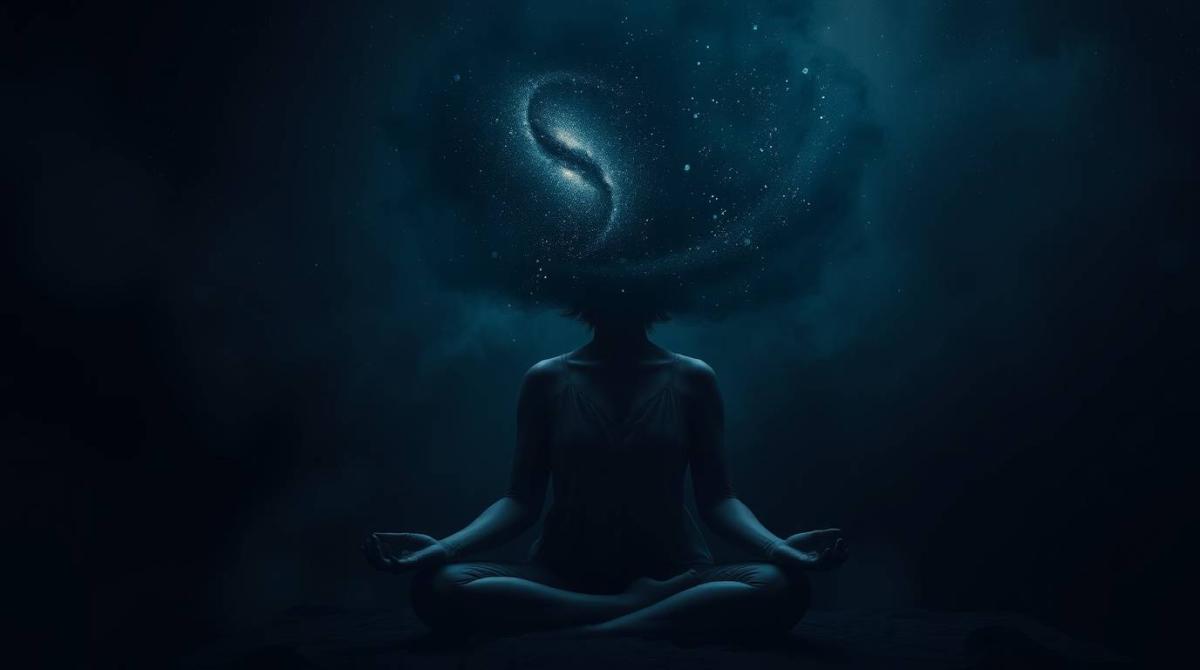
Have you ever wondered what it would feel like to truly step outside of yourself? To experience the world not as a separate individual but as something much larger and more unified? There’s a fascinating method called the Headless Way, developed by Douglas Harding, that offers a direct and surprisingly simple path to this profound realization.
Have you ever wondered what it would feel like to truly step outside of yourself? To experience the world not as a separate individual but as something much larger and more unified? There’s a fascinating method called the Headless Way, developed by Douglas Harding, that offers a direct and surprisingly simple path to this profound realization.
Instead of getting lost in complex philosophies or years of meditation, the Headless Way invites you to notice something immediately available: from your own direct experience, you have no head. And in that realization, a whole new perception of reality can open up.
Douglas Harding was a British philosopher and mystic who, after a deep personal quest for self-understanding, realized that what he truly was could not be seen by the eyes. He developed a set of experiments to help others come to the same direct realization. His approach, called the Headless Way, is refreshingly down-to-earth and experiential.
Rather than telling people what they are through teachings or scriptures, Harding offered a playful but powerful method of investigation. Simply notice: from your own perspective, you cannot see your head. There is a wide open field of experience, but no face, no skull looking back at you. Just an empty space where the world happens.
There is a beautiful story that echoes the heart of the Headless Way.
A man once wished deeply to see Shiva, the great god. He spent years meditating, praying, and performing rituals but to no avail. One night, Shiva appeared to him in a dream. Desperate, the man begged, “Please let me see you!” Shiva replied, “Tomorrow I will appear to you as the man with no head.”
The next morning, the man set out eagerly, scanning every face he encountered. But everyone he saw had a head. Hours passed, and frustration grew. Then, late in the day, he happened to glance at his own reflection. He saw his shoulders, his arms, his torso—but from his own first-person perspective, he realized he could not see his own head.
At that moment, he understood. He was the man with no head. And in recognizing this, he realized he was none other than Shiva himself.
This story echoes the great Advaita Vedanta teaching: “Tat Tvam Asi” — “Thou art That.” The realization that one’s true self is not a separate entity but the very fabric of existence.
The practice itself is remarkably simple. Sit comfortably. Take a look around. Notice your hands, your arms, your body, your surroundings. Notice the sounds you hear, the sensations on your skin, the thoughts passing through your mind.
Now, imagine you have no head. Do not try to believe it or think it into existence. Simply pretend, as if playing a game. From your direct experience, notice that you cannot see your own head. You can see your hands moving. You can hear your voice speaking. But the spot where a head would be is simply open space.
Stay with this experience. What begins as a game can turn into something much deeper. Your sense of self may begin to shift from being a small person inside a body to being the open, aware space in which all things are happening.
One helpful way to deepen the understanding is through the analogy of a dream.
In dreams, you often have a body. You might even see yourself in a mirror. You may think you are looking out of dream-eyes. But none of it is real in the physical sense. There is no actual light entering dream-eyes. No real head exists in the dream world.
You, the dreamer, are outside the dream entirely, creating the dream experience from beyond.
Similarly, in waking life, when you pretend you have no head, you might realize that your awareness is not located inside the body at all. It is something much vaster. You are not looking out from a point inside a head. You are the open space in which everything appears.
Modern neuroscience provides an interesting complement to this discovery.
All sensory information—sight, sound, touch, taste, and smell—is processed within the brain. The world we experience is not directly out there but is constructed internally, within what scientists sometimes call the sensorium.
According to materialist neuroscience, everything you see and hear is happening inside your skull, constructed from electrical signals. You do not directly experience the outside world. You experience an internal representation of it.
When practicing the Headless Way, you realize this directly. Everything you perceive is happening within the space of your own awareness. In a very real sense, the world is arising within you.
One of the most profound shifts that can happen through this practice is a move from identifying as a person to recognizing yourself as presence.
Normally, we feel like a little someone, located somewhere behind the eyes. A small observer, vulnerable and limited. But when you notice that you have no head, that you are simply open awareness, something shifts.
You realize you are not a small someone. You are the vastness in which all things arise. You are presence itself.
Another realization that may come is that you are not located within the world. Just like the dreamer is outside the dream, your true awareness is not inside the three-dimensional world at all.
From this perspective, you see that nothing in the world can ultimately touch you. Your awareness remains untouched by the events that happen within it.
Fire on a cinema screen does not burn the screen. Similarly, pain, pleasure, gain, loss—all arise and pass away within awareness without disturbing the awareness itself.
In this spacious state of being, you notice that awareness naturally embraces everything. It accepts all experiences without resistance. Joy and sorrow, sound and silence, action and stillness—all are allowed to be exactly as they are.
This echoes spiritual teachings across traditions that speak of unconditional acceptance, love, and surrender. Not as things to be achieved but as the natural qualities of awareness itself.
It is important to acknowledge that for many people, the Headless Way does not produce instant transformation.
Years ago, many who first encountered Harding’s experiments found them confusing or anticlimactic. Pointing at the place where your head should be might feel silly or artificial at first.
But with patience, a light-hearted attitude, and perhaps hearing the practice explained in a new way, it can suddenly click. What was once abstract becomes obvious. And once seen, it cannot be unseen.
There is an intriguing question that arises when considering others in this new perspective.
If you realize yourself as a viewpoint from nowhere, what about others? Are there multiple viewpoints from nowhere? Or is there really only one awareness appearing as many?
This leads into deeper explorations of non-duality. If everyone is actually this same vast awareness, then the boundaries between self and other are revealed to be illusions. There is only one Being, one Consciousness, playing as many.
The beauty of the Headless Way is that it requires no belief, no complicated philosophy, and no special attainment. It is available here and now, to anyone willing to look.
You do not need to change anything about yourself. You do not need to meditate for decades. All that is required is a willingness to notice what is already true: from your own direct experience, you have no head.
In that noticing, the door to a deeper, freer way of being swings open. You may find yourself no longer confined to the little person inside the body but resting as the vast, open awareness in which the whole world appears.
Right now, take a moment. Look around. Notice your hands, the room, the sounds. Notice the absence where a head would be. Feel the openness.
Perhaps, just perhaps, you will glimpse the incredible truth: you are not a thing in the world. You are the space in which the world arises.
And in that seeing, everything changes.