Physical Address
304 North Cardinal St.
Dorchester Center, MA 02124
Physical Address
304 North Cardinal St.
Dorchester Center, MA 02124

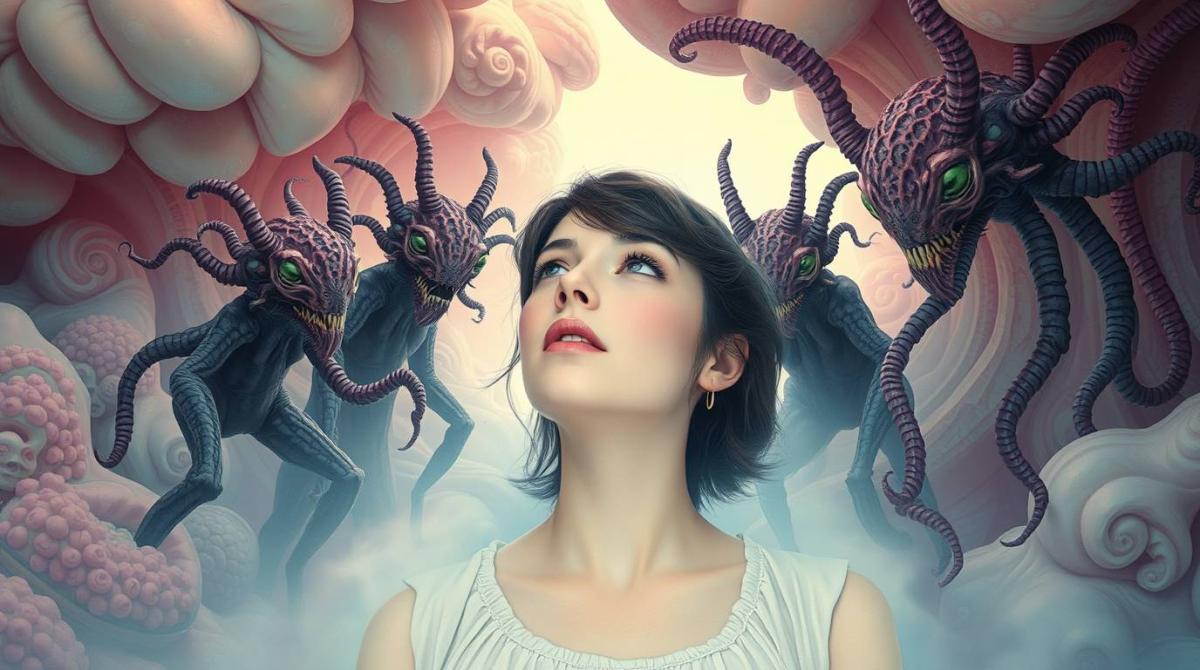
For the intrepid psychonaut, the allure of N,N-Dimethyltryptamine (DMT) is undeniable. It promises a glimpse behind the curtain of consensus reality, a journey into realms of impossible geometry, and encounters with seemingly autonomous entities. These experiences are often described in hushed, reverent tones—as accessing a divine, "immortal language" or a communion with the infinite. But for every tale of cosmic love and profound insight, there exists a shadow narrative, a cautionary tale that is just as impactful: the story of being banned.
For the intrepid psychonaut, the allure of N,N-Dimethyltryptamine (DMT) is undeniable. It promises a glimpse behind the curtain of consensus reality, a journey into realms of impossible geometry, and encounters with seemingly autonomous entities. These experiences are often described in hushed, reverent tones—as accessing a divine, “immortal language” or a communion with the infinite. But for every tale of cosmic love and profound insight, there exists a shadow narrative, a cautionary tale that is just as impactful: the story of being banned.
Users from across the web report experiences of being violently rejected, chastised, or explicitly “told not to come back” by the very entities others find so enlightening. This isn’t a guide on how to invite such a terrifying cosmic rebuke. Rather, it is an exploration into the psyche of the psychonaut and the conditions that, according to a wealth of anecdotal reports, can lead to the ultimate interdimensional rejection. It’s an examination of what it means when the universe, or a fragment of your own mind, looks you dead in the eye and delivers a resounding, “F*ck You.”
One of the most common pathways to being ostracized from the DMT space appears to be a fundamental lack of respect. This isn’t about failing to perform a specific ritual, but about the underlying attitude brought to the experience. When DMT is treated as a cheap thrill, a party drug, or simply another substance to be conquered, the entities, or the experience itself, can react with startling hostility.
One user’s account is particularly illustrative. After several failed attempts to break through, their frustration and forceful approach were met not with cosmic wonder, but with pure derision. They reported being “taunted” by entities, seeing disembodied hands “flicking the bird,” and hearing an explicit, telepathic message: “fuck you, you are not ready, you are disrespecting this substance in the way you are using it, you are arrogant, this substance is no joke.” To drive the point home, the entities gave the user a forced glimpse into an incomprehensibly vast space—a “taste of insanity”—to underscore the gravity of their transgression. The experience was so chastising it left them “scared to even try ANY psychedelics again.”
This sentiment is echoed by others who felt their ban was a direct result of casual and frequent use. One individual admitted to using DMT “pretty much recreationally and every other night or so,” concluding, “I wasn’t respecting them, and I wasn’t respecting myself.” There’s a shared belief in the community that the DMT experience is something sacred, a profound tool that “can’t be just ‘picked up’ like something from Walmart.” Those who approach it with reverence—setting intentions, creating a sacred space, and genuinely seeking growth—are the ones who are granted access to its depths. Those who don’t may find the door slammed in their face.
The psychedelic experience is often characterized as a journey of dissolution, a temporary melting away of the ego. It is this very process that allows for the profound feelings of connection and timelessness. It stands to reason, then, that clinging to the ego—resisting the surrender—is a recipe for a difficult time. In the DMT realm, this resistance can be interpreted as an act of defiance, leading to a forceful ejection.
The user who was taunted by entities also noted that their ego was “fighting” them intensely during their attempts to break through. This internal struggle preceded the aggressive backlash. The climax of their trip was not only a mental berating but also a physical one: a wave of nausea and dry heaving that felt like the entities’ final, emphatic statement. It was as if the realm itself was physically purging the user’s “idiocy” and resistance. This highlights a crucial lesson: you cannot conquer the DMT space. You can only surrender to it. Forcing a breakthrough or fighting the experience is like trying to punch the ocean; the only thing that gets hurt is your own hand.
Perhaps the most severe and life-altering “bans” are delivered in the context of addiction. When DMT is used not for exploration but as another tool in a cycle of self-destruction, the messages from the entities can shift from merely chastising to gravely serious.
One of the most powerful accounts comes from a user who had been battling a multi-year cocaine addiction. While high on cocaine, they would use DMT heavily, essentially diving into one altered state from within another. This pattern culminated in a “DMT HELL TRIP” where they heard horrific screaming and received an unequivocal warning, an inner voice or feeling that communicated a terrifying truth: “I was going to die if I continue going down this road of addiction.” The message that followed was not a suggestion or a temporary suspension, but a permanent expulsion: “NEVER COME BACK.”
The impact was immediate and profound. The user entered rehab shortly after and has remained sober since. For them, the message was not a psychedelic scare tactic; it was a direct and literal warning about their impending death. The entities didn’t say to take a break; they delivered a final, life-saving ultimatum. Another user with an “addict mentality” reported a similar ban for trying to “live there” in the DMT realm, viewing it as an escape. A respondent wisely clarified that this desire to escape is, in itself, a form of disrespect to one’s own life, stating, “Ya can’t, not here in this incarnation.”
For many, DMT entities act as teachers, presenting lessons, insights, and new perspectives on life. However, insight without integration is useless. If a user continually returns to the well for more profound experiences without applying the lessons from previous journeys to their waking life, they may find their access revoked.
One beautiful analogy compares this to an archaeologist who keeps digging for new fossils without ever cleaning, polishing, or studying the ones they’ve already found. They suggested that one must “research and contemplate” the experiences, to “Polish the experiences with science and mythology” before they are truly ready for more. The purpose, it seems, is not to collect bizarre experiences but to use them as catalysts for tangible growth in reality. If DMT is used merely as a means of escapism, a way to bypass the challenges of life, it’s believed the entities will “cut you off” to prevent the user from straying further from their own evolution.
For those who have felt the cosmic door slam shut, the experience can be deeply unsettling. The ban can manifest as a sudden inability to break through, sometimes accompanied by physical purging. It can involve terrifying auditory and visual warnings, leaving a lingering fear that makes the thought of trying any psychedelic again a source of anxiety. But is the banishment permanent?
The good news is that, in many cases, it is not. The ban appears to be less of a final judgment and more of a forceful, protective intervention. It’s a cosmic “time out,” designed to compel the user to undertake necessary personal growth.
Users who have been banned and later welcomed back consistently report a similar path to redemption. It involves taking a significant amount of time off—often a year or more. During this hiatus, they engage in deep self-reflection, address the underlying issues that led to the ban (be it addiction, arrogance, or escapism), and fundamentally change their relationship with themselves and with psychedelics. When they finally do return, approaching the substance with humility, pure intentions, and profound respect, they report being “welcome with open arms again.”
Whether you view these entities as autonomous beings, fragments of the subconscious, or neurological fireworks, their messages carry undeniable power. The “cosmic fuck you” is not a random act of malevolence. It is a mirror, reflecting the user’s own disrespect, fear, and unresolved pain back at them with terrifying clarity. It is a severe mercy, a shocking intervention designed to force a change in course. It serves as the ultimate reminder that substances like DMT are not toys. They are unbelievable tools for healing and exploration that demand, and will command, your deepest respect.