Physical Address
304 North Cardinal St.
Dorchester Center, MA 02124
Physical Address
304 North Cardinal St.
Dorchester Center, MA 02124

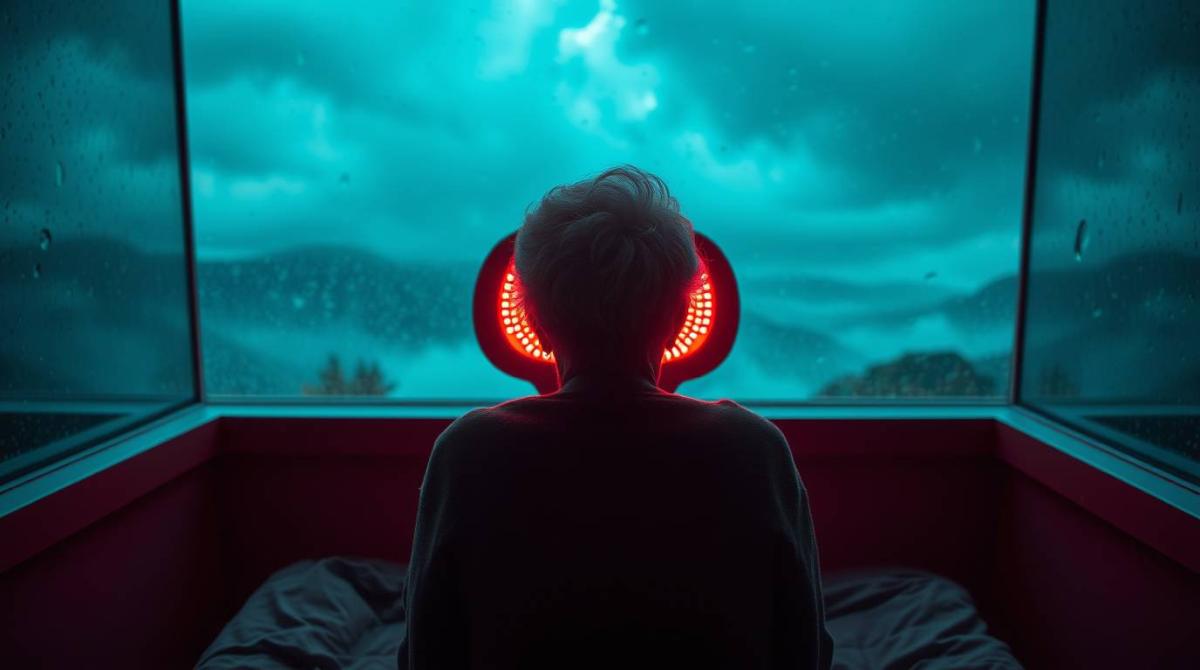
We are living through a paradox. The United States spends more on healthcare than any nation in history, yet chronic disease is skyrocketing, autoimmune disorders are everywhere, cancer rates are rising in younger and younger populations, and depression and anxiety have become so common they barely register as warnings anymore. Something is deeply wrong with a model that keeps people sick while calling it care.
Investigative journalist Jonathan Otto joins Kim Iversen to discuss the science, the studies, and the stunning results behind one of the most suppressed therapies of our time
We are living through a paradox. The United States spends more on healthcare than any nation in history, yet chronic disease is skyrocketing, autoimmune disorders are everywhere, cancer rates are rising in younger and younger populations, and depression and anxiety have become so common they barely register as warnings anymore. Something is deeply wrong with a model that keeps people sick while calling it care.
That conversation is exactly where Kim Iversen opened her recent interview with Jonathan Otto, investigative health journalist, documentary filmmaker behind The Truth About Cancer, and author of the upcoming book The Cancer Off Switch. Otto has spent years sitting across from doctors, researchers, and patients who operate well outside the mainstream pharmaceutical model, and one therapy keeps coming up as a standout: red light therapy.
The premise is deceptively simple. Specific wavelengths of red and near-infrared light, when delivered at the right intensity, penetrate the body and interact with mitochondria at the cellular level. The result is a cascade of biological repair that clinical studies are now linking to everything from improved eyesight and thyroid regulation to cancer cell death and post-stroke recovery. And because it cannot be patented and requires only a one-time device purchase, there is no billion-dollar incentive for the pharmaceutical industry to fund its promotion.
To understand why red light therapy produces such wide-ranging results, you have to start with mitochondria. These are the energy-producing structures inside every cell, and they contain light receptors called chromophores. When these receptors receive specific wavelengths of light, they produce adenosine triphosphate, or ATP, which is the primary energy currency of the cell.
The logic Otto builds from there is elegant: cells can do everything with energy and nothing without it. A thyroid cell with sufficient energy will produce thyroid hormones. An immune cell with sufficient energy will detoxify pathogens and pollutants. A degenerating eye cell, given the right light stimulus, will begin repairing the mitochondrial pathways that vision depends on. The body is not broken. It is often simply energy-starved in ways that red light directly addresses.
Beyond ATP production, the therapy has been shown to stimulate stem cell regeneration and differentiation. By penetrating different layers of the body at different wavelengths, light causes stem cells to regenerate in the areas where they exist, initiating a process of new healthy cell formation. Otto argues, and clinical literature increasingly supports, that many chronic conditions are fundamentally problems of impaired cellular energy and incomplete cell differentiation rather than the kind of irreversible damage mainstream medicine often implies.
One of the most practically useful sections of the interview is Otto’s breakdown of wavelengths and what each one does in the body. This matters enormously when selecting a device or protocol.
Blue light, sitting around 480 nanometers, addresses superficial skin concerns like acne and bacteria. It also plays a role in circadian rhythm and should generally be avoided in the evenings to avoid disrupting sleep biology.
Visible red light in the 630 to 670 nanometer range reaches the dermis and is the wavelength most associated with skin health, wound healing, and anti-aging applications. A notable in vitro study found that 660nm light produced a 40% drop in both triple negative and non-triple negative breast cancer cells within 24 hours, outperforming all other wavelengths tested.
Near-infrared light, ranging from 810 to 1060 nanometers, is invisible to the human eye but has the deepest penetration, reaching bones and internal organs. Otto makes an important point here: if someone shows you a near-infrared device and the light is visible, it is not true near-infrared. This wavelength range is where the most profound systemic effects are documented, and it is where mitochondria in the organs and bones are directly targeted.
Irradiance, meaning the intensity or power delivery of the device, is the other critical variable. A sunset provides natural red and near-infrared light, but a therapeutic device may deliver irradiance levels approximately 40 times higher. That amplification is what makes the difference between gradual lifestyle benefit and the dramatic, fast clinical results seen in studies.
The interview moves through a remarkable range of clinical evidence. For eyesight, Otto references a UCL University study showing a 17% average improvement in vision for people over 40 after a single three-minute morning session of red light exposure with eyes open. The improvement was time-sensitive: morning sessions produced the result, afternoon sessions produced none. A separate analysis of 41 clinical trials involving 6,400 children found red light to be the single most effective treatment for slowing vision deterioration, even outperforming atropine. [Source: University College London, photobiomodulation and retinal aging research]
On thyroid health, a study of 98 women with Hashimoto’s thyroiditis showed that 96% of participants saw their enlarged thyroid return to normal size following a three-week treatment period using near-infrared at 820 nanometers. A follow-up study found that 47% of chronic autoimmune thyroiditis patients were able to stop their thyroid medication entirely after just five weeks of treatment consisting of 20-minute sessions twice a week. [Source: published thyroid photobiomodulation clinical trials, cited in Otto’s research documentation]
For respiratory and long COVID recovery, Otto references a European Society of Medicine study of 62 patients using whole-organ photobiomodulation. The results included 100% resolution of shortness of breath, oxygen saturation of 97% or above without supplemental oxygen, elimination of brain fog, improved memory, and restored executive function. Most patients reached full recovery within four sessions. [Source: European Society of Medicine, photobiomodulation and long COVID outcomes study]
The cancer applications are the most complex and the most carefully framed. Otto describes a mechanism in which light interacts with photosensitising compounds such as curcumin, berberine, or methylene blue that have been absorbed into cancer cells. The interaction accelerates the production of reactive oxygen species, which triggers apoptosis, or programmed cell death, in those cells. He positions cancer not as an unbeatable external force but as a manifestation of cells that lacked sufficient energy to fully differentiate into healthy tissue, and that restoring that cellular energy changes the trajectory of the disease.
Otto makes a compelling financial case that the upfront cost of a quality device is deceptive when compared against recurring expenses. A single supplement at $50 a month for a family of four costs $2,400 per year and $24,000 over a decade. Thyroid medication at $100 a month costs $1,200 per year indefinitely. A medical-grade red light panel, rated for a 50,000-hour lifespan, is a one-time investment the entire household uses for decades.
For those interested in exploring devices and educational resources, Jonathan Otto’s site myredlight.com offers a range of panel sizes, masks, and full-body systems, along with weekly training for users who want to optimise their protocols for specific conditions.
There is something worth pausing on in this conversation that goes beyond biology. Otto makes the observation that red and near-infrared light is present every single day at sunrise and sunset, and that almost no one actually sees either anymore. We are locked indoors, in front of screens, missing the very light frequencies our cells were designed to receive. Red light therapy is, in one sense, simply returning to the body what industrial life has taken away.
This sits naturally alongside the broader conversation happening in conscious health communities about reclaiming what is natural, inexpensive, and aligned with how the body was designed to function. Whether you are exploring grounding, breathwork, or meditation practices for cellular and nervous system health [internal link], red light therapy integrates seamlessly into a holistic approach that prioritises energy, cellular vitality, and self-directed healing over pharmaceutical dependency.
Otto describes his grandmother, who had stopped flying due to falls and balance problems, regaining her independence and moving back into her home within weeks of starting red light therapy with a modest entry-level device. He describes a woman bedridden for seven years with fibromyalgia who had seen 70 doctors and spent $100,000 and found no relief, recovering her health entirely. He describes a 92-year-old woman recovering peripheral vision lost to macular degeneration. These are not statistical abstractions. They are the kind of stories that emerge when the body is finally given what it needs to do what it was always designed to do.
Perhaps the most quietly profound moment in the interview is Otto’s simple observation that sunrise and sunset are not just beautiful. They are medicine. The light that reaches you in those moments is doing something real and biological to your cells, your eyes, and your brain. Red light therapy, at its core, is the discipline of taking that gift seriously and delivering it consistently, at therapeutic intensity, to a body that has been starved of it.
The question is no longer whether this works. The clinical literature is substantial and growing. The question is whether you will wait for the mainstream to catch up or decide now to give your cells what they have been asking for.