Physical Address
304 North Cardinal St.
Dorchester Center, MA 02124
Physical Address
304 North Cardinal St.
Dorchester Center, MA 02124

Have you ever encountered a figure during meditation or an altered state that seemed to exist independently of your imagination? Across continents, cultures, and centuries, humans have been meeting the same mysterious characters. And now, science is beginning to ask: what if these encounters aren't just hallucinations, but glimpses into something far more profound?
Have you ever encountered a figure during meditation or an altered state that seemed to exist independently of your imagination? Across continents, cultures, and centuries, humans have been meeting the same mysterious characters. And now, science is beginning to ask: what if these encounters aren’t just hallucinations, but glimpses into something far more profound?
Dr. David Luke, an associate professor of psychology at the University of Greenwich, was visiting an Indigenous community in northern Mexico when something extraordinary happened. Without taking any hallucinogenic substances, he closed his eyes and found himself flooded with visions from the Wixárika cosmology. Deer appeared. Fractal coyotes materialized. Peyote visions swirled through his consciousness.
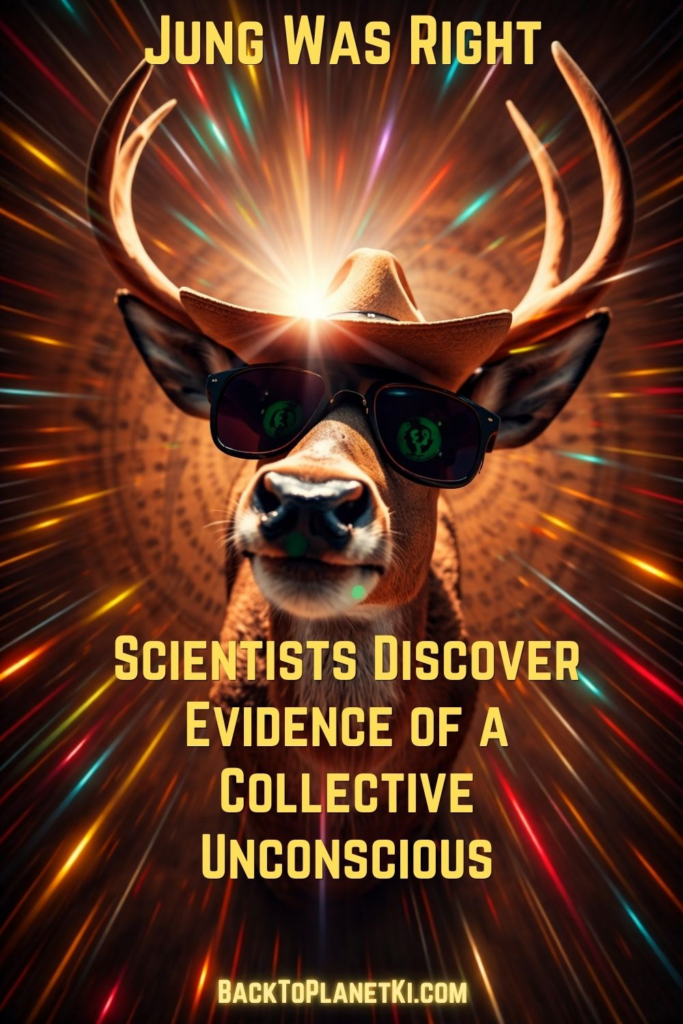
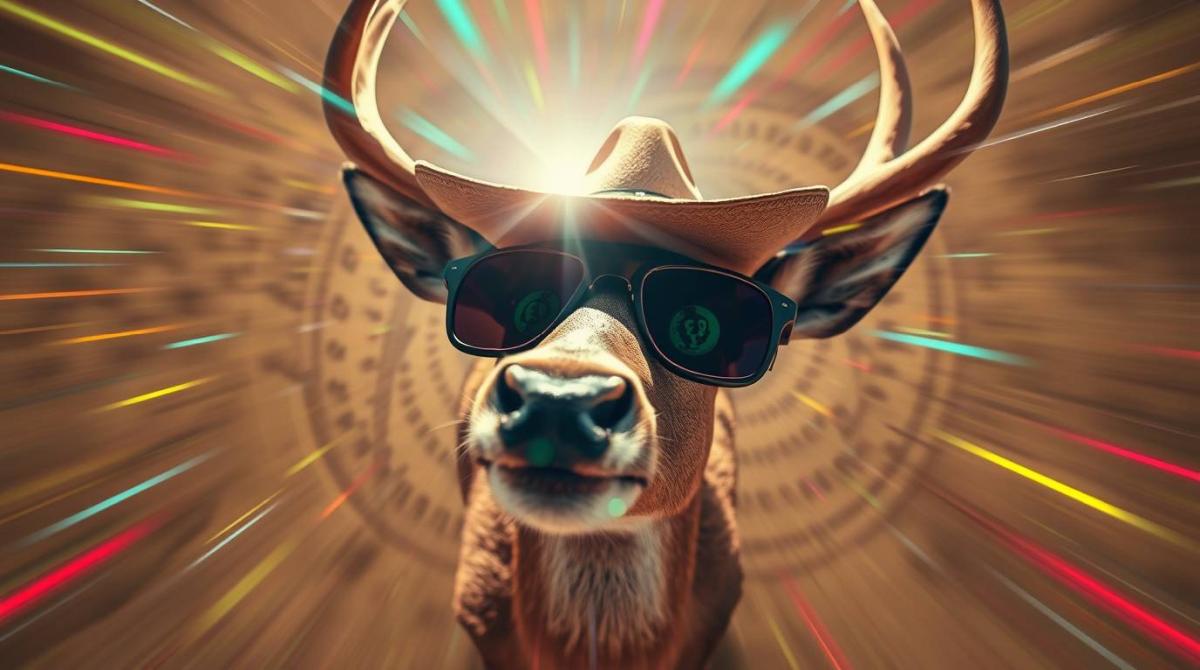
Then came the moment that would challenge everything he thought he knew about the mind. A deer appeared before him, but not just any deer. This one wore sunglasses and a cowboy hat. “Yo, dude, what are you up to?” it said.
In Wixárika tradition, the deer is a trickster figure, a boundary-breaking character who delivers wisdom through absurdity and humor. What unsettled Luke wasn’t the ridiculous image itself. It was how effortlessly it arrived, as if his mind hadn’t invented it but had simply tuned into a frequency that was already broadcasting.
Luke’s experience, while unusual, is far from unique. Throughout history, people from completely different cultural backgrounds report encountering strikingly similar figures during altered states. Tricksters, guides, watchful presences, shadowy beings, and jesters all seem to interact directly with those experiencing them.
These encounters share common traits. They’re intensely personal, often feel “more real” than waking consciousness, and frequently begin with “I’ve never told anyone this before.”
Why would the same archetypal characters keep appearing in minds separated by thousands of kilometers and entirely different cultures? Why would a person in Mexico, a shaman in Siberia, and a meditator in California all report meeting similar trickster figures?
Carl Jung proposed an answer over a century ago that mainstream science long dismissed as too mystical. He called it the “collective unconscious,” a hidden mental layer beneath individual consciousness that stores universal symbolic archetypes shaping our dreams, myths, and inner experiences.
Think of it this way: your personal unconscious contains individual memories and experiences. But beneath that, Jung proposed, lies something deeper and shared. A repository of symbolic patterns accessible to all humans. The trickster. The wise elder. The great mother. The shadow. These aren’t learned. They’re inherited.
For decades, this remained on psychology’s fringes, too esoteric for serious science. But now, mainstream neuroscience is quietly exploring whether Jung might have been right.
A 2025 neuroscientific review reframed Jung’s work in contemporary terms. Rather than mystical clouds, researchers investigate whether the collective unconscious might be shared neural patterns between brains, shaped by social learning and cultural transmission.
A 2024 study of shamanic rituals found that archetypal symbols like masks and totems significantly shaped participants’ consciousness, suggesting collective cultural symbols influence experiences beyond personal memory.
The mainstream explanation is elegant. Our brains evolved under similar pressures. We share basic neural architecture. Pattern recognition that helped ancestors detect threats now creates faces in clouds and agents in randomness. This tendency, called apophenia, explains why we perceive meaningful patterns in random data.
From this view, recurring tricksters aren’t evidence of shared mental realms but proof that evolution built similar hardware in all human brains.
Professor Christopher French, a psychologist researching anomalous experiences, puts it plainly. These potentially threatening stimuli may have become hardwired into our brains for evolutionary reasons. Being alert to deception and manipulation, even erring on the side of paranoia, could have been advantageous in our ancestral environment. The trickster figure might simply be evolution’s way of keeping us vigilant against con artists and scammers.
Here’s where the neat scientific explanation begins to fray. Some people have aphantasia, a condition where they cannot form visual mental images. When asked to picture an apple, they see nothing. Their mind’s eye is blank.
Logic suggests people with aphantasia shouldn’t have vivid visual encounters with archetypal figures. If pattern recognition and visual imagination create these experiences, how could someone with no visual imagination have them?
Yet they do. People with aphantasia still report entity encounters during altered states. They still meet tricksters, guides, and mysterious presences.
This is what cognitive explanations struggle to accommodate. If these encounters are simply our brain’s pattern-making machinery at work, why do they persist in brains that can’t make visual patterns at all?
Luke believes we should remain open to more radical possibilities. What if consciousness patterns don’t live only inside individual skulls? What if there’s a shared informational field, a collective memory our minds access under certain conditions?
Cutting-edge models are exploring territory that sounds more like philosophy than neuroscience. Cognitive scientist Donald Hoffman argues reality might be a perceptual interface, a biological “desktop” hiding deeper informational layers. We don’t see reality as it is but a user-friendly version our brains construct for survival.
Neuroscientist Anil Seth describes all perception as “controlled hallucination.” Your brain doesn’t passively receive reality. It constructs an internal model and compares sensory data against it. What you experience as “the real world” is your brain’s best guess.
If basic perception is already controlled hallucination, what happens when those controls relax during altered states? Do we simply hallucinate more randomly? Or might we access patterns and information existing beyond individual minds?
What strikes many researchers most deeply isn’t just that these figures recur across different minds. It’s how people interact with them. These entities don’t feel like products of imagination. They feel autonomous, intelligent, and often more knowing than the people encountering them.
“Sometimes atheists convert to theists,” Luke notes. The experiences are so striking, so hyperreal, that they frequently trigger profound metaphysical and spiritual belief shifts. People come away convinced they’ve touched something beyond physical reality.
Professor French offers an honest admission that should give us all pause. “No one really knows why these common themes occur.”
And perhaps that unknowing is exactly where we need to linger. In our rush to explain everything through brain chemistry and evolutionary psychology, we might be missing something essential. Not every mystery needs to be immediately solved. Not every experience needs to be reduced to neurons firing.
The ancient Greeks spoke of universal logos, a hidden order beneath appearances. Plato imagined ideal forms existing independently of perception. Indigenous cultures worldwide have long held that consciousness flows through all things, not trapped inside individual skulls.
What if they weren’t making metaphors? What if consciousness operates more like a field than a substance locked in our heads? What if, during certain states, we tune into frequencies most of us ignore during ordinary life?
The trickster in sunglasses might be telling us something important. Not through his specific absurdity, but through the fact that he appears at all. He reminds us that reality is stranger, deeper, and more interconnected than our everyday assumptions allow.
Whether the collective unconscious is neural architecture, a shared informational field, or something we lack words for, one thing seems certain: we’re far more connected than our culture of radical individualism suggests. The boundaries between minds may be more permeable than we think. And the figures we meet in altered states might be messengers from the parts of ourselves we share with everyone else.
The deer is still wearing sunglasses, still asking: “Yo, dude, what are you up to?” Maybe it’s time we took the question seriously.