Physical Address
304 North Cardinal St.
Dorchester Center, MA 02124
Physical Address
304 North Cardinal St.
Dorchester Center, MA 02124


Throughout history, certain figures have emerged who seemed to possess an extraordinary ability to glimpse into this veiled future, offering insights that captivated and challenged their contemporaries. Among the most prominent of these in recent history is Edgar Cayce, widely known as the "Sleeping Prophet." Operating from a self-induced trance state, Cayce delivered thousands of "readings" that covered an astonishing breadth of topics, including health remedies, past life accounts, spiritual guidance, and notably, detailed prophecies concerning future Earth changes and societal shifts.

It's Your Awareness Potential: At its core, it's your ability to be aware, to be conscious. It's like a computer that's turned on and ready, but doesn't have any programs or data yet ("unfed").
It Has the Power of Will: This core awareness isn't just passive. It comes with the inherent power to choose where to focus its attention and what to seek. This is the "use of will."
It Needs Input (from the Potentiator/High Priestess): This basic awareness ("the computer") needs experiences and information to function and grow. This input comes from another part of the mind, the "Potentiator" (represented by the High Priestess), which holds infinite possibilities and unconscious knowledge.

The question of suffering is perhaps one of the most enduring and challenging mysteries of human existence. Why do we experience pain, loss, and hardship in a world that also holds such immense beauty and joy? For millennia, philosophers, theologians, and everyday people have grappled with this profound inquiry, often arriving at vastly different conclusions. Some attribute suffering to divine will, seeing it as a test or punishment. Others view it as an inherent, unavoidable part of the human condition, a random byproduct of a chaotic universe.

Imagine existence not as a linear march through time, but as an ascent through levels of consciousness, like climbing a ladder of light. In the teachings of the Law of One, these levels are known as densities – states of being and understanding that define the nature of experience. We, as inhabitants of Earth, currently reside predominantly within the third density, a crucible of self-awareness and choice. But the journey doesn't end here. As great cosmic cycles draw to a close, a profound event known as the "harvest" occurs, presenting an opportunity for souls to graduate to the next level: the fourth density.

Have you ever felt a sudden spark of intuition, a moment of clarity that seemed to come from beyond your everyday thoughts? These moments might be more than fleeting—they could be whispers from a profound aspect of yourself known as the Oversoul or higher self. Drawing from spiritual teachings like those found in the Law of One, the Oversoul is not a distant guide but an integral part of your being, vibrating at a higher frequency and holding timeless wisdom. In this exploration, we’ll uncover the nature of the Oversoul, its role in your life, and how you can connect with this inner source of guidance to enrich your spiritual journey.
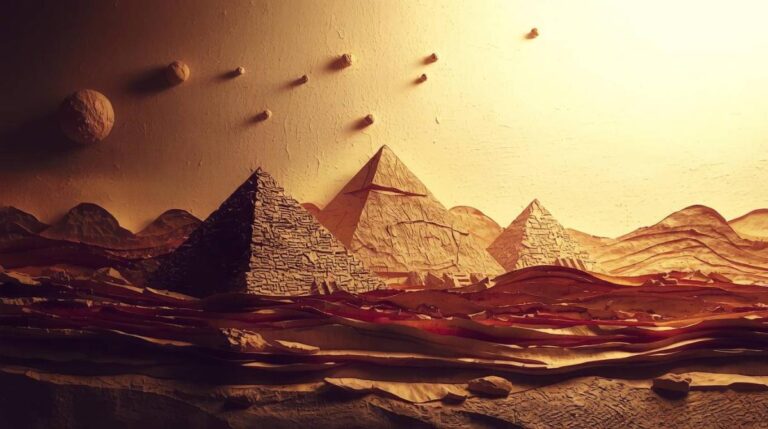
The Law of One material, channeled in the early 1980s, offers a fascinating perspective on the pyramids of Earth, particularly the Great Pyramid of Giza. According to this source, the story behind these magnificent structures extends far beyond conventional archaeological understanding, involving extraterrestrial influences and metaphysical purposes that span multiple timeframes.
Neale Donald Walsch's "Conversations with God" series has become a spiritual touchstone for millions of readers worldwide. While often categorized within the broader New Age movement, Walsch's work contains several distinctive philosophical positions that set it apart from many mainstream New Age teachings. This exploration focuses on three key areas where Walsch's teachings diverge from typical New Age philosophy.

Neale Donald Walsch’s Conversations with God Book 1 has captivated readers with its bold reimagining of spirituality, divinity, and human purpose. Presented as a direct dialogue with God, the book offers perspectives that often stand in stark contrast to traditional Christian teachings rooted in the Bible. Through its provocative ideas, it challenges long-held assumptions and invites readers to rethink their spiritual frameworks. Here are nine surprising deviations from commonly accepted biblical doctrines—each a window into a radically different worldview. Let’s explore these differences and what they mean.

Jane Roberts’ Seth Speaks, channeled through the entity Seth, offers a profound metaphysical framework for understanding reality—one where our beliefs are not just passive thoughts but active creators of our experiences. Among the many provocative ideas Seth presents, one stands out as both challenging and transformative: the notion that it’s better not to believe in evil, as doing so gives it form and power in our lives. This concept, rooted in the idea that we shape our reality through our expectations and perceptions, invites us to reconsider how we approach the dualities of good and evil. Drawing from Seth’s teachings, let’s explore this idea in depth and uncover its implications for our lives—both in the physical world and beyond.

In Jane Roberts' seminal work "The Nature of Personal Reality," the entity known as Seth outlines a powerful yet straightforward technique for reshaping your personal experience. This method, often referred to as Seth's self-hypnosis technique, provides a practical framework for implementing one of Seth's core teachings: that we create our own reality through our beliefs and thoughts.