Physical Address
304 North Cardinal St.
Dorchester Center, MA 02124
Physical Address
304 North Cardinal St.
Dorchester Center, MA 02124


Imagine stepping into a room that is completely dark, no flicker of light, no reflection off a wall, just an endless blackness that presses against your vision, your senses, and even your thoughts. In a recent New York Times piece, a writer took on this challenge for three days, documenting the roller‑coaster of emotions, hallucinations, and revelations that unfolded when the world’s colors were stripped away. The experiment, called a “total darkness retreat,” pushes the limits of meditation and sensory deprivation, revealing how powerful - and sometimes unsettling - our inner landscapes can be when external distractions are removed entirely.
Imagine stepping into a room that is completely dark, no flicker of light, no reflection off a wall, just an endless blackness that presses against your vision, your senses, and even your thoughts. In a recent New York Times piece, a writer took on this challenge for three days, documenting the roller‑coaster of emotions, hallucinations, and revelations that unfolded when the world’s colors were stripped away. The experiment, called a “total darkness retreat,” pushes the limits of meditation and sensory deprivation, revealing how powerful – and sometimes unsettling – our inner landscapes can be when external distractions are removed entirely.
At its core, the darkness retreat is a radical form of mindfulness practice. The participant spends each day in an isolated, completely light‑blocked space, usually a small room or a specially built chamber. No windows, no lamps, no electronic devices – just a blanket of blackness that forces the brain to confront itself.
On the first day, the author described a feeling akin to being swallowed by a black ocean. The sudden lack of vision triggers the brain’s default “fight or flight” response, leading to heightened anxiety and a surge of sensory input from the other senses – particularly hearing. The mind, deprived of visual grounding, often turns to auditory hallucinations, imagining voices or distant music that never existed.
Many participants report a “mind‑vacuum” that feels both terrifying and exhilarating. The absence of light forces the brain to “re‑wire” its perception of time and space, often resulting in a slowed perception of seconds that can feel like minutes or hours.
By day two, the author noted a shift from panic to a more nuanced relationship with the darkness. The brain begins to adapt; the intense fear lessens, replaced by an eerie sense of curiosity. In this second phase, the retreat can serve as a conduit to explore hidden thoughts and suppressed memories. The lack of visual input removes the usual distraction of scrolling feeds or watching a TV screen, making it easier to confront inner narratives.
During this stage, many describe experiencing vivid imagery and dreams. Because the brain is deprived of visual input from the outside world, it fills the void with internally generated images, sometimes forming elaborate visual scenes that are entirely imagined.
The final day, as the article recounts, brings a moment of clarity. The darkness becomes almost familiar, almost a companion. The author mentions a “surge of insight” that feels like a breakthrough in understanding their own mental architecture. The retreat culminates in a sense of detachment from the external world, a temporary escape from the noise that dominates modern life.
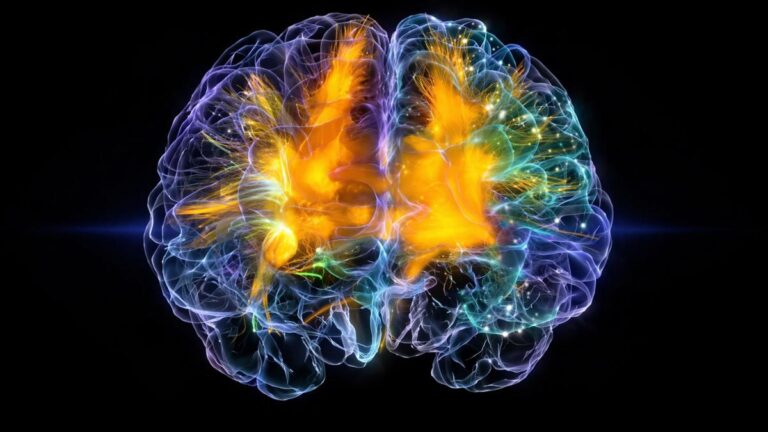
Scientific research into sensory deprivation offers a framework for understanding what happens during a darkness retreat. When visual input is removed, the brain’s occipital lobe is deprived of stimulation, but other areas – such as the limbic system – take over, heightening emotional and auditory processing. The result is often a cascade of sensory substitution: the mind may rely more heavily on hearing, touch, or even taste to maintain a sense of reality.
Neuroscientists have observed increased activity in the default mode network (DMN), a group of brain regions that becomes active when the mind is at rest or engaged in introspection. This heightened DMN activity correlates with deeper self‑reflection and, in some cases, with vivid dream-like experiences.
For more on the science of sensory deprivation, you can read a study on the topic: ScienceDirect – Sensory Deprivation and Brain Activity.
The idea of retreating into darkness is not new. Several ancient traditions have employed lightlessness as a contemplative tool. For example:
In each of these traditions, darkness serves as a blank slate – an opportunity to confront the self without external references.
While the darkness retreat can offer profound insights, it is not without risks. Psychological distress, hallucinations, and anxiety can occur, especially for those with pre‑existing mental health conditions. Here are practical safety tips for those considering a retreat:
Researchers have studied the effects of prolonged sensory deprivation in controlled environments. The consensus is that short, supervised sessions are generally safe, but extended periods can lead to neurological changes, such as impaired spatial orientation and heightened anxiety. One review published in Nature Scientific Reports highlights the importance of monitoring for neuroplastic changes after extended dark exposure.
Not everyone will find darkness meditation beneficial, but it can be a valuable tool for those seeking:
Before embarking on a darkness retreat, consider the following self‑assessment:
Answering “yes” to these questions can help gauge readiness. If uncertain, it may be safer to start with guided meditation sessions that use visual or auditory focus before trying a full darkness retreat.
Preparing for a darkness retreat involves both practical and mental steps:
The New York Times article on a three‑day darkness retreat shines a light – ironically – on the human psyche’s capacity for resilience, curiosity, and transformation. By stripping away external stimuli, the practice forces a confrontation with the inner self that is both brutal and revealing. While the experience can trigger intense anxiety or hallucinations, it also offers a unique gateway to deeper mindfulness, heightened awareness, and profound personal insights.
Like any powerful tool, darkness meditation demands respect, preparation, and care. Those who approach it thoughtfully – understanding both its potential benefits and risks – can harness the darkness to illuminate parts of themselves that routine daily life keeps hidden. Whether you’re a seasoned meditator or someone curious about unconventional self‑exploration, a darkness retreat invites you to ask: What happens when the world around you disappears?