Physical Address
304 North Cardinal St.
Dorchester Center, MA 02124
Physical Address
304 North Cardinal St.
Dorchester Center, MA 02124

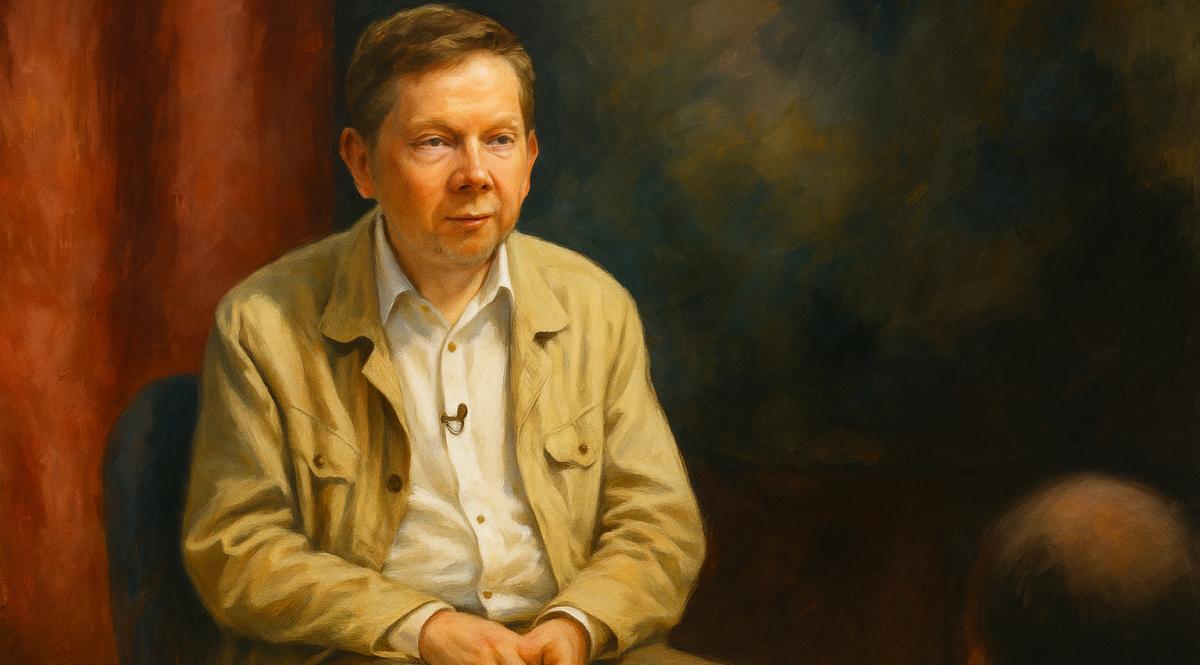
If you've ever felt trapped by your own thoughts, constantly replaying conversations, worrying about the future, or caught in mental loops you can't escape, Eckhart Tolle's The Power of Now offers a surprisingly simple solution. The key isn't to stop thinking or to fight your thoughts. Instead, Tolle teaches something far more powerful: learning to observe your thoughts without being consumed by them.
If you’ve ever felt trapped by your own thoughts, constantly replaying conversations, worrying about the future, or caught in mental loops you can’t escape, Eckhart Tolle’s The Power of Now offers a surprisingly simple solution. The key isn’t to stop thinking or to fight your thoughts. Instead, Tolle teaches something far more powerful: learning to observe your thoughts without being consumed by them.
Among the many practices in his groundbreaking book, two stand out as particularly transformative and deeply interconnected. The first teaches you how to watch your thoughts, while the second takes this skill to a deeper level, actively creating gaps in your thinking where true presence can emerge.
Tolle’s first essential practice, which he calls “Watching the Thinker,” introduces a radical concept: you are not your thoughts. The constant mental chatter running through your mind is something you can observe, which means there must be something deeper than the thoughts themselves. That deeper awareness is your true self.
The practice itself is deceptively simple. Begin by turning your attention inward and listening to the voice in your head. Notice the ongoing commentary, the judgments, the worries, the planning, and the rehashing of past events. Most people go through life completely identified with this voice, believing that they are these thoughts. This practice creates separation between the observer and the observed.
As you watch your thoughts, the critical instruction is to observe without judgment. Don’t analyze why you’re thinking certain thoughts. Don’t condemn yourself for negative thinking patterns. Even that condemnation would just be another thought, another trick of the mind to pull you back into identification with thinking.
What happens when you successfully maintain this witnessing presence? The thoughts begin to lose their power. Like a performer who loses energy without an audience, your thoughts slow down and eventually create small gaps of silence. In these moments of “no-mind,” you experience something profound: consciousness without thought, presence without mental noise.
This practice works because it introduces space between you and your mental activity. You begin to realize experientially, not just intellectually, that you are the awareness in which thoughts appear and disappear. This recognition is the beginning of spiritual awakening.
Once you’ve become familiar with watching your thoughts, Tolle offers a more advanced technique that intensifies the experience of presence. I call this the “enhanced” version because it takes the passive observation of the first practice and transforms it into an active meditation that more reliably produces thought-free awareness.
The exercise is brilliantly simple: Close your eyes and ask yourself mentally, “I wonder what my next thought is going to be?” Then wait, completely alert and attentive, watching for that next thought to appear. Tolle compares this state to a cat watching a mouse hole, poised in absolute stillness and readiness.
What makes this practice so effective? By watching for the next thought rather than simply watching thoughts as they come, you create a state of intense alertness that is itself free from thought. You cannot simultaneously think and watch for thinking. The very act of vigilant waiting occupies your awareness completely, leaving no room for the usual mental chatter.
The gap of silence before the next thought appears is the goal. In that space, you experience pure presence. You are fully conscious, fully alert, yet completely free from mental activity. This is the state of Being that Tolle describes throughout his book, the doorway to enlightenment that exists in every present moment.
Understanding the relationship between these two practices helps you use them more effectively. The first practice, Watching the Thinker, trains your ability to disidentify from thoughts. You learn that you can observe mental activity without being swept away by it. This is the foundational skill.
However, for many people, simply watching thoughts can be challenging. The mind is so active, thoughts come so rapidly, that maintaining the observer position feels difficult. You might find yourself getting caught up in the content of thoughts before you even realize you’ve stopped observing.
The second practice solves this problem by creating a more structured approach. By actively waiting for the next thought, you engage your attention in a way that naturally prevents thinking. The anticipatory state itself becomes a meditation. You’re not just passively noticing thoughts after they’ve already started; you’re positioning your awareness at the source, catching the moment before thinking begins.
Think of it this way: the first practice is like learning to notice you’re wet after falling in a river. The second practice is like standing on the riverbank, watching carefully so you don’t fall in at all. Both are valuable, but the second offers more immediate access to the thought-free state.
The beauty of both these practices is their accessibility. You don’t need special circumstances, equipment, or extended periods of time. You can watch your thoughts while standing in line at the grocery store. You can practice the “next thought” technique while sitting at a red light.
Start with the first practice throughout your day. Whenever you remember, simply become aware of your thinking. Don’t make it a big production; just notice the mental voice and recognize that you are the one noticing it. Over time, this awareness becomes more constant, running in the background of your daily activities.
When you have a few quiet moments, use the second practice. Even thirty seconds of intensely waiting for your next thought can create a powerful experience of presence. The more you practice, the longer you can maintain that gap of no-mind, and the more readily you can access it.
These two practices from The Power of Now offer a practical path to the present moment. They’re not about achieving some special state or becoming someone different. They’re about recognizing what you already are beneath the constant noise of thinking.
The first practice shows you that you are not your thoughts. The second practice gives you direct access to what you truly are: the conscious presence that exists before, during, and after all mental activity. Together, they form a complete approach to awakening, starting from wherever you are right now.
The transformation doesn’t require belief or faith. It only requires practice. Try watching your thoughts today. Then try catching the gap before the next one appears. In that silence, you’ll find what you’ve been searching for all along.