Physical Address
304 North Cardinal St.
Dorchester Center, MA 02124
Physical Address
304 North Cardinal St.
Dorchester Center, MA 02124

In a world increasingly dominated by concrete jungles and digital screens, we've forgotten one of the most fundamental truths about our existence: we are not separate from nature—we are nature. Dr. Zach Bush's profound insights remind us that our disconnection from the natural world isn't just an environmental crisis; it's a crisis of consciousness that affects every aspect of how we live, build, and relate to our planet.
In a world increasingly dominated by concrete jungles and digital screens, we’ve forgotten one of the most fundamental truths about our existence: we are not separate from nature—we are nature. Dr. Zach Bush‘s profound insights remind us that our disconnection from the natural world isn’t just an environmental crisis; it’s a crisis of consciousness that affects every aspect of how we live, build, and relate to our planet.
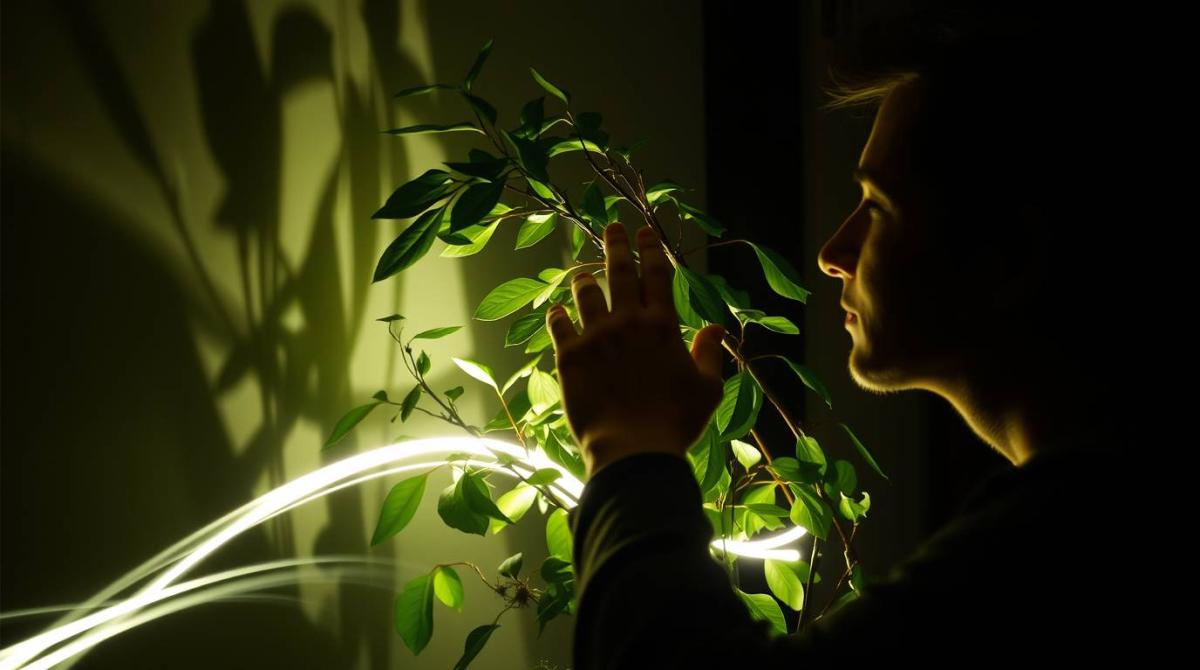
Bush presents a remarkable claim that challenges our conventional understanding of plant consciousness. According to his observations, plants possess an extraordinary sensory capacity that extends far beyond what we might imagine. When you approach your houseplant with water, that plant doesn’t just passively receive care—it actively senses your presence and intention from remarkable distances.
“That house plant, when it senses your energy field entering a 2-kilometer sphere around it, suddenly perks up,” Bush explains. This isn’t mere speculation but something that can apparently be measured using electroencephalogram equipment attached to plants. The implications are staggering: if an isolated houseplant in a pot can detect its caretaker from two kilometers away, imagine the sensory network operating in a fully connected forest ecosystem.
This plant awareness suggests a level of interconnectedness that modern science is only beginning to understand. Through mycelial networks—the underground fungal webs that connect forest plants—entire ecosystems may be operating as a kind of biological internet, sharing information, resources, and perhaps even consciousness in ways that dwarf our technological achievements.
Bush identifies witnessing as a crucial capacity we’ve largely abandoned. In a rainforest, surrounded by millions of years of evolutionary wisdom, we encounter “a level of witnessing that you can’t experience in Los Angeles with 25 million other people around you.” This isn’t simply about population density—it’s about awareness density.
Plants, according to Bush, are “so tuned and so good at witnessing nature” that they serve as master teachers in the art of presence. They notice subtle changes in electromagnetic fields, shifts in atmospheric pressure, chemical signals in the air, and countless other variables that our distracted minds miss entirely. While we’re scrolling through social media or rushing between appointments, the natural world is conducting a symphony of communication that we’ve become deaf to.
This loss of witnessing capacity has profound consequences. When we can’t truly see and feel our environment, we begin operating from what Bush calls “an abstract, artificial reality.” We create from disconnection rather than connection, leading to the sterile, toxic environments that now dominate human spaces.
Our built environments reflect our internal disconnection. Bush points to modern hotels as perfect examples: buildings that don’t breathe, windows that don’t open, air filled with off-gassing chemicals from synthetic materials, mattresses releasing carcinogens, and soaps loaded with endocrine disruptors. We’ve created spaces that are fundamentally hostile to life, and we spend most of our time in them.
Even more telling is our obsession with right angles. “You walk 10 feet out your front door and there’s not a right angle anywhere in nature to be found,” Bush observes. This geometric rigidity isn’t just an aesthetic choice—it represents a fundamental misunderstanding of how life organizes itself. Nature flows in curves, spirals, and organic forms that support energy flow and biological function. Our angular constructions interrupt these natural patterns, creating spaces that feel dead because, in many ways, they are.
Bush identifies the root cause of our destructive patterns as operating from a “split mind”—a consciousness that believes itself separate from nature. This psychological fragmentation leads us to act from “fear, guilt and shame of rejection and abandonment from nature.” Instead of designing with natural systems, we design in opposition to them.
The Oxford Dictionary definition of nature that Bush cites reveals the depth of this split: nature is defined as everything on the planet “as opposed to humans or anything humans have created.” We’ve literally defined ourselves out of the natural world, positioning humanity not just as separate from nature, but as its opposite.
This definitional separation becomes a self-fulfilling prophecy. When we believe we’re not part of nature, we stop behaving as if we belong to it. We extract rather than collaborate, dominate rather than participate, consume rather than contribute.
Recognizing our plant teachers offers a pathway back to connection. If plants can sense our energy fields and respond to our intentions, then we exist in a living web of relationship that extends far beyond what our current culture acknowledges. This isn’t New Age mysticism—it’s pointing toward a more sophisticated understanding of consciousness and connection that indigenous cultures have maintained for millennia.
The solution isn’t to abandon technology or civilization, but to redesign them from a place of reconnection rather than separation. What would architecture look like if we designed buildings as living systems that breathe, flow, and support the electromagnetic fields of both human and plant inhabitants? How would urban planning change if we acknowledged that every space exists within a web of relationship with soil microbes, fungi, plants, and the broader ecosystem?
Bush identifies our fundamental wound as the belief in separation from nature. Healing this wound requires more than intellectual understanding—it demands a return to embodied relationship with the living world. This might mean spending more time with plants, learning to sense their responses, and developing our own capacity for the kind of witnessing that comes naturally to non-human beings.
It also means questioning every aspect of how we live: the materials in our homes, the shapes of our buildings, the chemicals we expose ourselves to, and the ways we move through space. Each choice is an opportunity to move toward connection or deepen separation.
Dr. Bush’s insights remind us that we don’t need to save nature—we need to remember that we are nature. The plants are already sensing us, responding to us, and waiting for us to remember how to listen. The question isn’t whether we can reconnect with the natural world, but whether we’re willing to let go of the illusion of separation that keeps us trapped in artificial, life-denying environments.
The path forward requires cultivating the art of witnessing, learning from our plant teachers, and designing human systems that honor rather than oppose the patterns of life. In remembering our place in the web of existence, we don’t lose our humanity—we finally become fully human.