Physical Address
304 North Cardinal St.
Dorchester Center, MA 02124
Physical Address
304 North Cardinal St.
Dorchester Center, MA 02124


There is a leafy herb growing across Asia right now that contains up to 64% alpha-linolenic acid in its pressed seed oil. That is the highest concentration of plant-based omega-3 fatty acids ever measured in any species. It self-seeds aggressively, requires almost no maintenance, and has been feeding and healing communities continuously for over two thousand years. Its name is perilla. And if you live in the Western world, there is a very good chance you have never once heard of it.
There is a leafy herb growing across Asia right now that contains up to 64% alpha-linolenic acid in its pressed seed oil. That is the highest concentration of plant-based omega-3 fatty acids ever measured in any species. It self-seeds aggressively, requires almost no maintenance, and has been feeding and healing communities continuously for over two thousand years. Its name is perilla. And if you live in the Western world, there is a very good chance you have never once heard of it.
That absence is not an accident of nature. It is a consequence of economics, language barriers, and the structure of how nutritional research gets funded. This article is about putting the record straight.
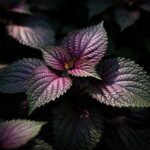
Perilla frutescens is a broad-leafed annual herb in the mint family. Koreans call it kkaennip, Japanese call it shiso, Chinese call it zisu, and botanists call it Perilla frutescens. Four different names across four major cultures for the same extraordinary plant. That fragmentation of naming is precisely why it never developed a unified identity in Western consciousness, the way cilantro did once food cultures agreed on a shared label.
In Korea it is so ubiquitous that vendors stack fresh bundles of it in open-air markets the way Western delis stack parsley. At Korean barbecue restaurants, diners wrap grilled meat in large serrated leaves with deep purple undersides. In Japan, shiso appears beneath every sashimi plate, not merely as decoration. Japanese chefs have understood for five centuries that the leaf contains compounds that inhibit bacterial growth and spoilage. In China, the dried herb has been catalogued in traditional medicine since at least 200 AD, when it appeared in the Shennong Bencao Jing, the oldest surviving pharmacopoeia in human history.
In 1991, researchers at the National Institute of Nutrition in India published an analysis of perilla seed oil. The results were remarkable. Alpha-linolenic acid (ALA), the plant form of omega-3 fatty acid, was present at concentrations between 54 and 64 percent of total oil content.
To understand why that matters, consider the context. Flaxseed oil contains approximately 53% ALA. Health food stores position flax as the gold standard of plant-based omega-3. Chia seed oil reaches around 58%. Both carry premium price tags in Western markets. Perilla seed oil surpasses both, yet remains almost entirely absent from Western nutrition conversations.
The seeds themselves contain between 35 and 45 percent oil by weight. This means a modest harvest of dried perilla seeds, cold-pressed using a simple hand tool costing under a hundred dollars, can produce a meaningful annual supply of omega-3 oil with no industrial input whatsoever. Traditional Korean farming families have been doing exactly this for generations, storing the golden oil in ceramic jars throughout winter.
You can read more about how other overlooked plants carry extraordinary nutritional profiles in our article on purslane, another undervalued leafy green with a surprisingly rich fatty acid content.
The ancient record is one thing. The clinical science is another. Both point in the same direction.
In 2004, Japanese researchers published a clinical trial in the Annals of Allergy, Asthma and Immunology showing that perilla extract reduced seasonal allergy symptoms in patients by approximately 50 percent. The active compound responsible is rosmarinic acid, and perilla contains more of it than any other culinary herb tested, including rosemary, basil, and oregano. Rosmarinic acid inhibits the enzymes that trigger the allergic response cascade, and the mechanism is now well understood in the pharmacological literature.
A 2004 study published in the journal Biofactors documented the ability of perilla compounds, specifically perillaaldehyde, to inhibit tumour growth in laboratory settings. A 2017 Korean research paper examined the relationship between ALA from perilla oil and cognitive protection, finding that the omega-3 fatty acids crossed the blood-brain barrier and shielded neurons from oxidative stress. Then in 2024, a groundbreaking study explored cold-pressed perilla seed oil in the context of Parkinson’s disease in animal models, finding that the oil improved symptoms through the gut-brain axis by increasing populations of beneficial gut microbiota.
For a deeper read on the published research, the National Institutes of Health PubMed database contains over 400 studies on perilla nutrition and medicinal properties, the vast majority originating from Korean, Japanese, and Chinese research institutions.
A search for “fish oil omega-3” on PubMed returns more than 15,000 studies. A search for “perilla oil omega-3” returns around 400. That is a ratio of roughly 37 to one. This is not because fish oil outperforms perilla. It is because fish oil has an industry behind it.
The global omega-3 supplement market reached approximately $7.68 billion in 2024, with fish oil commanding around 61.5 percent of that market share. Supplement companies fund clinical trials that validate their existing products. Universities pursue research grants from available sources, and those sources overwhelmingly favour patentable interventions. A self-seeding plant that can be cold-pressed with a hand tool in a backyard shed cannot be patented. It cannot generate repeat sales. It cannot support a supply chain. So no one funds the studies.
The problem was compounded by language. Until the early 2000s, major English-language medical databases systematically underindexed research published in Asian languages. Hundreds of studies on perilla cultivation, extraction, and clinical application were published in Korean and Japanese from the 1950s onward and simply did not register in Western research networks. Thousands of years of documented knowledge existed on one side of a translation barrier, while a multi-billion-dollar supplement industry grew on the other side.
Beyond the seeds, the leaves themselves carry a strong nutritional profile. Fresh perilla leaves contain approximately 3.9 grams of protein per 100 grams, which exceeds spinach and kale by most measures. Calcium content reaches 230 mg per 100 grams. Iron sits at 1.7 mg. Vitamin A concentration reaches over 5,500 international units. This is a complete, nutrient-dense leafy green that also happens to produce one of the most omega-3-rich seed oils ever measured.
The culinary applications span the entire range of Asian cuisines. In Vietnam, perilla accompanies pho and spring rolls. In Laos and Thailand it appears in curries. In Korea it is pickled in soy and garlic, used as a ssam wrap, and pressed for oil that seasons rice dishes. The plant appears at every meal and every occasion because it has proven its value across centuries of daily use.
The USDA Plants Database classifies perilla as adaptable across USDA hardiness zones 2 through 11, which encompasses virtually the entire continental United States, most of Europe, and equivalent temperate and subtropical zones worldwide. It tolerates poor soil, drought once established, and mild neglect.
The self-seeding behaviour of perilla is what distinguishes it as a genuine food security plant rather than merely a health curiosity. A single mature plant produces between 1,000 and 4,000 seeds. Approximately 85 percent of those seeds will germinate, and they remain viable in soil for five years or longer. Korean farming communities have documented perilla patches returning voluntarily to the same land for ten generations.
To establish your own patch, soak seeds in water for 24 hours before planting. Surface-sow onto basic potting soil in a container of at least 3 to 5 gallons. Do not bury the seeds; they require light to germinate. Mist with water and position in a sunny location. Germination occurs within 7 to 21 days. Once seedlings emerge, thin to one or two plants per container and water approximately one inch per week during establishment. After the first month, most established plants adapt to local rainfall patterns.
At the end of the growing season, allow some plants to flower and set seed rather than harvesting everything. The seed heads will scatter naturally, and next spring the plants will return without any replanting on your part. For oil production, harvest the dried seed heads, press them using a cold-press tool, and store the oil in dark glass containers in a cool location. Traditional households kept pressed perilla oil in ceramic vessels in underground cellars throughout winter. Modern refrigeration only improves on those results.
For a deeper look at the omega-3 research landscape and how plant-based sources compare to marine sources, the Oregon State University Linus Pauling Institute Micronutrient Information Center provides a well-referenced overview of alpha-linolenic acid and its dietary sources.
The perilla story is a clear illustration of how economic structure shapes nutritional knowledge. The plant was never hidden. It sat in open-air markets in Seoul and Kyoto across generations. It was documented in pharmacopoeias dating back two millennia. The information was always public. It simply never entered the economic flow that determines what Western populations hear about.
For anyone pursuing genuine food sovereignty and holistic health, perilla represents something rare: a plant that delivers meaningful omega-3 nutrition, antihistamine properties, cognitive support, and antimicrobial activity from a single source that costs almost nothing after the first season. You can explore the growing body of translated research through resources like the World Health Organization’s traditional medicine database for further context on how Eastern pharmacological knowledge is gradually entering mainstream recognition.
One packet of seeds, one container of soil, and a single growing season is all it takes to begin a food supply that, if managed correctly, will return every spring for the rest of your life. Very few decisions in a wellness garden carry that kind of compounding return.