Physical Address
304 North Cardinal St.
Dorchester Center, MA 02124
Physical Address
304 North Cardinal St.
Dorchester Center, MA 02124

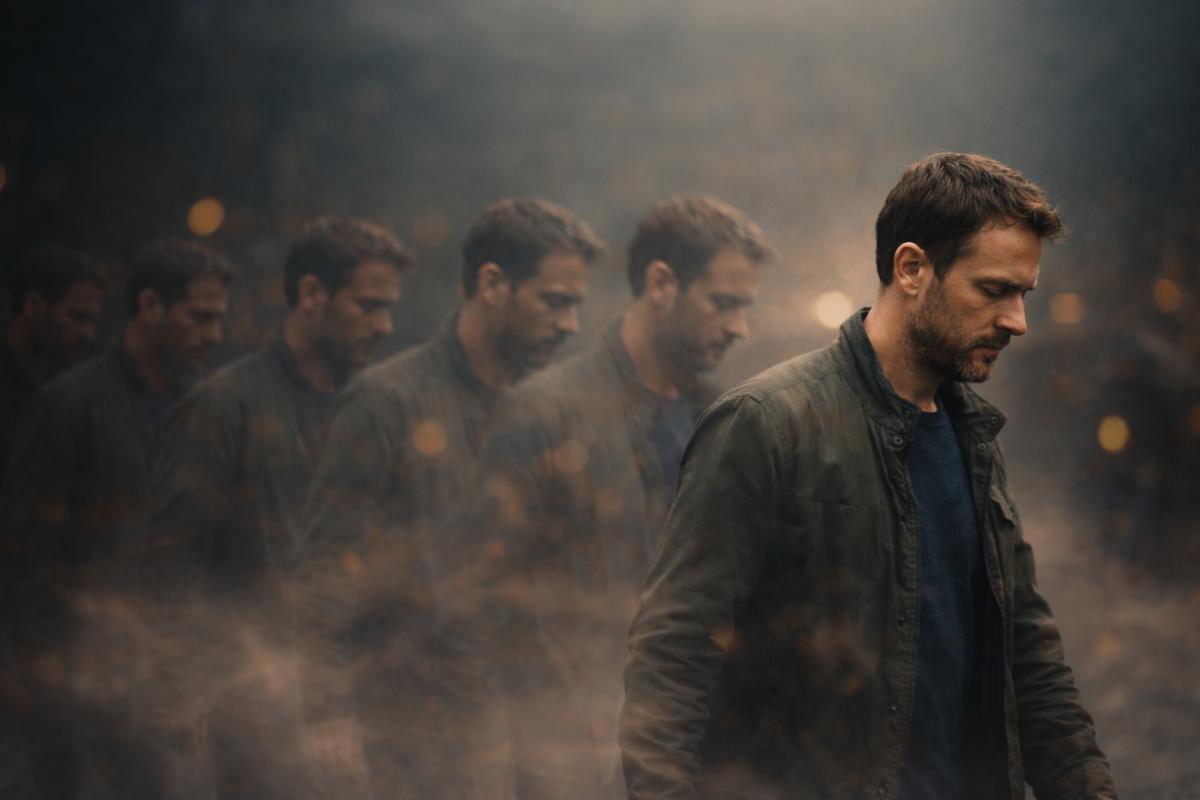
Dr. Michael Newton's trilogy of books exploring the afterlife and reincarnation has revolutionized how we understand the connection between past lives and present-day struggles. Through thousands of hypnotherapy sessions documented in "Journey of Souls," "Destiny of Souls," and "Memories of the Soul," Newton uncovered compelling evidence that many of our deepest traumas, fears, and physical ailments may not originate in our current lifetime at all.
Dr. Michael Newton’s trilogy of books exploring the afterlife and reincarnation has revolutionized how we understand the connection between past lives and present-day struggles. Through thousands of hypnotherapy sessions documented in “Journey of Souls,” “Destiny of Souls,” and “Memories of the Soul,” Newton uncovered compelling evidence that many of our deepest traumas, fears, and physical ailments may not originate in our current lifetime at all.
Newton’s research began unexpectedly when he placed clients in deep hypnotic states to explore childhood memories. What he discovered shocked him: his subjects spontaneously began describing experiences from previous lifetimes and, more remarkably, the period between physical incarnations. Over three decades of clinical practice, Newton documented consistent patterns showing that our immortal souls carry forward unresolved issues from one life to the next.
According to Newton’s findings, while we enter each new life with what he calls a “built-in amnesia block,” our souls retain the energetic imprint of every experience they have endured across multiple incarnations. These soul memories manifest in our current lives as unexplained phobias, chronic pain conditions, relationship patterns, and emotional struggles that seem to have no rational cause in our present circumstances.
Perhaps the most striking evidence Newton presents involves physical ailments that mirror past-life injuries. In his case studies, he recounts numerous instances where chronic pain disappeared after clients uncovered its past-life origin through regression therapy.
One memorable case involved a man who had suffered debilitating pain on his right side for most of his adult life. Medical examinations found no physiological cause for his discomfort. Under hypnosis, the man recalled a past life as a soldier who died when a bayonet pierced him in that exact location. Once he understood the connection and processed the trauma of that violent death, his chronic pain began to diminish.
Another compelling case featured a woman experiencing severe, unexplained leg pain. Through regression, she discovered she had been “a young girl named Ashley” in her most recent past life, whose legs were crushed in a tragic accident involving a horse-drawn carriage. Newton explains that the body may reflect what he calls “soul scars,” using physical discomfort as a signal that an old spiritual wound still requires attention and healing.
These cases illustrate what Newton terms “body imprints,” where the soul’s memory of trauma creates actual physical symptoms in a new body. The phenomenon suggests that healing often requires addressing not just the physical body, but the deeper soul memory that drives the manifestation of pain.
Newton’s research reveals that emotional trauma may be even more likely to carry forward than physical pain. Depression, anxiety disorders, persistent feelings of guilt, and relationship struggles often have their roots in unresolved past-life experiences.
One of Newton’s subjects, a woman named Carol, suffered from severe anxiety and an overwhelming conviction that she was “a bad mother,” despite evidence to the contrary. Her regression revealed a past life as a military officer who felt crushing responsibility for the deaths of soldiers under his command and the subsequent suffering of their families. Newton describes this as an “addictive echo” of guilt that poisoned her ability to feel worthy in her current role as a parent. The unresolved guilt from that lifetime had attached itself to her soul and transferred into her new life circumstances.
Fear of abandonment provides another powerful example. A subject named Belinda experienced profound sadness she could not explain or shake. Her regression uncovered a life as “Elizabeth,” whose husband left her to pursue opportunities in Africa, leaving her to die of what Newton describes as “a broken heart.” The trauma of that sudden separation created a soul wound that manifested in Belinda’s current life as an irrational fear of being left alone.
Perhaps the most challenging concept Newton presents is that souls often deliberately choose difficult life circumstances as part of their spiritual curriculum. Before reincarnating, souls visit what Newton calls the “Ring of Destiny” or “Life Selection” room, where they preview various body options and potential life paths.
According to Newton’s subjects, souls may intentionally select bodies with physical disabilities or challenging brain conditions to develop specific qualities. A woman named Susan, who suffered permanent brain damage from encephalitis, discovered through regression that her soul had purposefully chosen “a brain that would break.” The reason: to force her to develop inner strength rather than continuing to rely on external validation and the approval of others.
Another subject, Erin, chose a life of limited physical mobility to shift away from being a dominant leader personality type and instead develop what she called “inner attunement.” These choices may seem masochistic from a human perspective, but Newton’s research suggests that souls view Earth as a training ground where difficulty accelerates spiritual growth.
Even more provocatively, Newton found that souls sometimes choose abusive or neglectful family situations. A subject named Steve, who was abandoned as a baby and raised by harsh foster parents, learned that in a previous life he had been a high priest who executed his own mother. His current life trauma was a deliberate karmic balancing, designed to help him experientially understand the pain of desertion and betrayal.
If past lives and their traumas are so significant, why do we not consciously remember them? Newton’s subjects consistently explained that the amnesia block serves a crucial purpose. Without it, we would be too inhibited to try new approaches or too consumed with settling old scores. One soul told Newton, “If we remembered all our past mistakes and traumas, we might be too focused on seeking revenge for past wrongs.”
However, the “sacred truths” of our soul history are never completely lost. They filter through in dreams, intuitive hunches, and what Newton calls “red flags” or emotional triggers designed to lead us toward significant people and experiences that align with our soul’s purposes.
Newton’s exploration of the afterlife revealed sophisticated healing processes that occur once a soul returns to the spirit realm. One of the most vivid descriptions involves what subjects called “the Shower of Healing,” a beam of liquid energy that “washes out” the negative emotional imprints and what Newton terms “viruses” from the life just ended.
For souls who have harmed each other across multiple lifetimes, Newton documents a process called “Full Mind Exchange,” where souls telepathically experience each other’s pain and perspective in complete detail. This leads to what subjects describe as “absolute understanding” that makes forgiveness automatic and inevitable.
Newton’s Life Between Lives (LBL) therapy approach allows individuals to access what he calls the “superconscious mind” while still in physical form. By revisiting past-life deaths and recognizing them as non-events from the soul’s eternal perspective, clients can deprogram physical and emotional carryovers. Many report that re-experiencing a traumatic past-life death and recognizing their soul’s continuity eliminates current fears of death or chronic anxiety.
The central message emerging from Newton’s decades of research challenges our victim mentality. The traumas we face, while genuinely painful, represent purposeful opportunities for our souls to evolve. Newton’s work suggests we have survived countless challenges across multiple lifetimes and will continue to exist long after our current bodies fade.
This perspective transforms suffering from meaningless tragedy into meaningful curriculum. As Newton’s subjects repeatedly emphasized, death is not an ending but simply another transition in the eternal journey of consciousness. Our true home, according to these accounts, is a place of absolute peace and acceptance, while Earth serves as the laboratory where we test our ability to maintain integrity and compassion amidst the trials of physical existence.
Understanding that present trauma may have past-life origins offers both explanation and hope: explanation for seemingly irrational fears and pains, and hope that by addressing their deeper soul-level causes, genuine healing becomes possible.