Physical Address
304 North Cardinal St.
Dorchester Center, MA 02124
Physical Address
304 North Cardinal St.
Dorchester Center, MA 02124

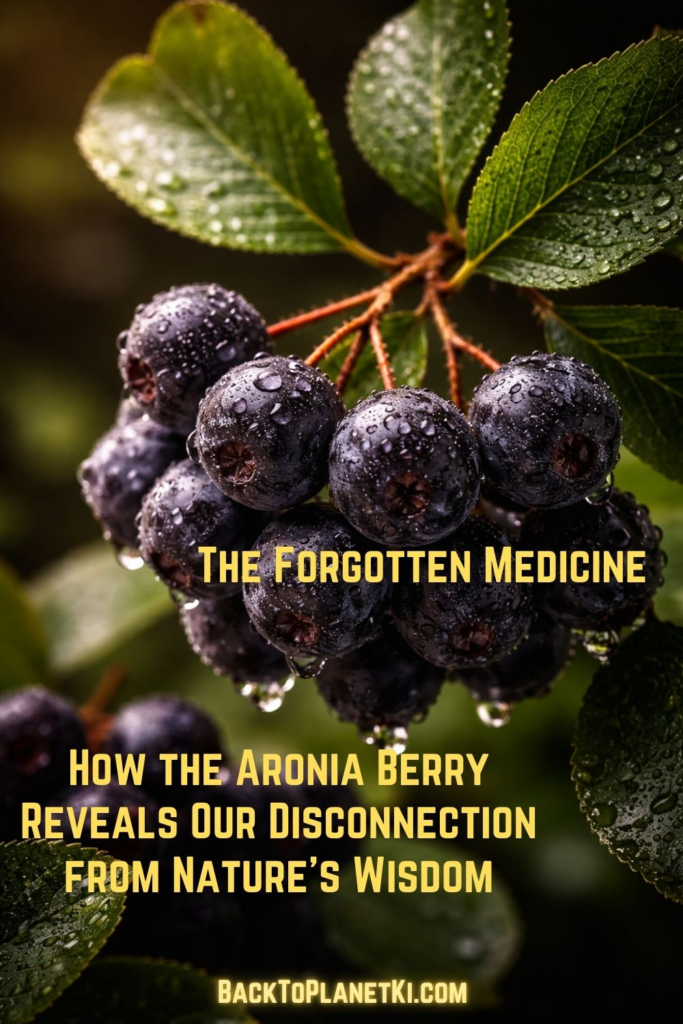
There is a peculiar pattern in modern civilization: the most powerful medicines are often the ones we've been taught to ignore. The aronia berry, known by the unfortunate colonial name "chokeberry," stands as a perfect example of how we've systematically severed ourselves from nature's intelligence in favor of systems that keep us dependent and disempowered.
There is a peculiar pattern in modern civilization: the most powerful medicines are often the ones we’ve been taught to ignore. The aronia berry, known by the unfortunate colonial name “chokeberry,” stands as a perfect example of how we’ve systematically severed ourselves from nature’s intelligence in favor of systems that keep us dependent and disempowered.
This small, dark purple berry, native to over 30 states across North America, contains the highest recorded antioxidant levels of any fruit on the continent. Yet most Americans have never tasted one, never seen one growing, and certainly don’t have a bush in their backyard. The story of how this happened reveals far more than agricultural policy. It illuminates the deeper spiritual crisis of a culture that has forgotten how to listen to the earth.
Long before European contact, the Potawatomi and Abnaki nations didn’t classify aronia as food in the casual sense. They understood it as survival technology, a concentrated form of life force that could sustain human consciousness through the harshest conditions imaginable. The berry was a core ingredient in pemmican, the high-density travel food that allowed people to traverse frozen landscapes where nothing else grew.
The indigenous relationship with aronia wasn’t transactional. It was reciprocal, built on generations of observation and respect for plant intelligence. They recognized that the berry’s intense astringency, the very quality that made settlers recoil, was the signature of its medicine. The high tannin content served dual purposes: preserving the fats in pemmican for months or years while simultaneously providing concentrated nutrients that modern science is only now beginning to quantify.
This understanding represents a form of consciousness that Western civilization has largely abandoned. Where indigenous peoples saw bitterness as medicine, colonizers saw only something to be sweetened, diluted, or discarded. This wasn’t merely a difference in taste preferences. It reflected two fundamentally opposed ways of relating to the natural world.
When measured by ORAC scores, the scientific metric for antioxidant capacity, aronia doesn’t just lead other berries. It obliterates them. With an ORAC score of 16,062 per 100 grams, aronia contains 344% more antioxidants than blueberries and nearly double the levels found in cranberries. According to research published in the Journal of Agricultural and Food Chemistry, aronia ranked highest among dozens of tested fruits for polyphenolic content, particularly anthocyanins and proanthocyanidins.
These aren’t abstract chemical names. Polyphenols are the compounds that protect vascular tissue from inflammation, the root cause underlying most chronic diseases plaguing modern civilization. While the “French Paradox” celebrates red wine’s protective properties, aronia contains approximately 400% more of these same compounds than the finest wine grapes.
But here’s where the spiritual dimension becomes impossible to ignore: these compounds work by neutralizing free radicals, the unstable molecules that damage cells and accelerate aging. In energetic terms, they restore coherence to systems thrown into chaos. The berry doesn’t just feed the body. It supports the body’s capacity to maintain its own order against the forces of entropy and disorder.
The rebranding of aronia as “chokeberry” represents what can only be described as linguistic violence. When European settlers encountered the fruit, their palates had already been conditioned for immediate sweetness. Sugar was becoming the standard by which all food was judged. The berry’s astringency, which indigenous peoples understood as medicinal intensity, was experienced as harshness by tongues trained to seek pleasure over vitality.
The name “chokeberry” effectively ended two centuries of cultivation in the West. A single word transformed a botanical powerhouse into something inedible, something to be cleared from fence lines as a common weed. This wasn’t accidental. It reflected the deeper colonial project of replacing indigenous knowledge systems with European frameworks that prioritized extraction and control.
The naming reveals an uncomfortable truth about how consciousness operates through language. Words don’t merely describe reality; they shape what we’re able to perceive. Once aronia became “chokeberry” in the collective mind, it ceased to exist as medicine. It became invisible, like so much other indigenous knowledge that threatened to make people too self-sufficient, too healthy, too independent of the systems being constructed to manage their lives.
While Americans were systematically forgetting their native botanical heritage, Eastern Europe was conducting intensive research on aronia’s properties. By the 1970s and 80s, Soviet scientists recognized the need for cold-hardy, nutrient-dense crops capable of thriving in harsh climates and potentially contaminated soils. Poland optimized aronia for industrial cultivation and now produces 90% of the world’s supply.
The irony cuts deep: Americans now import their own native plant as a luxury supplement, often paying ten times what it would cost to grow it in their backyard. This isn’t merely economic inefficiency. It’s a perfect metaphor for spiritual disconnection. We’ve become so estranged from our own land that we need permission from foreign experts to recognize the medicine growing beneath our feet.
This reversal also demonstrates how systems of knowledge are never truly destroyed, only suppressed. While one culture was burying aronia under the weight of industrial agriculture, another was preserving and expanding its cultivation. The plant itself persisted, waiting for consciousness to shift enough for its value to be recognized again.
Modern clinical trials, primarily conducted in Poland, have documented aronia’s capacity to address conditions that generate billions in pharmaceutical revenue. Regular consumption produces average drops in systolic blood pressure of 8 to 11 points, comparable to some prescription interventions. This occurs through improved endothelial function, the health of blood vessel linings.
For diabetes and metabolic syndrome, aronia inhibits alpha-glucosidase, the enzyme that converts carbohydrates into simple sugars. By slowing sugar absorption, it prevents the insulin spikes that drive type 2 diabetes. These aren’t minor effects. They represent genuine therapeutic benefits achieved without side effects, without prescriptions, without monthly costs.
A plant that addresses these conditions for the price of a $40 bush that produces fruit for 30 years represents a direct challenge to economic models built on managing symptoms rather than addressing root causes. This is why aronia remains largely unknown despite its extraordinary properties. It’s too effective, too accessible, and too independent of industrial systems to be widely promoted.
From a consciousness perspective, the suppression of aronia reflects how power structures operate to maintain dependence. When people can grow their own medicine, when they can meet their nutritional needs without participating in commercial food systems, they become harder to control. Self-sufficiency is always threatening to systems built on scarcity and need.
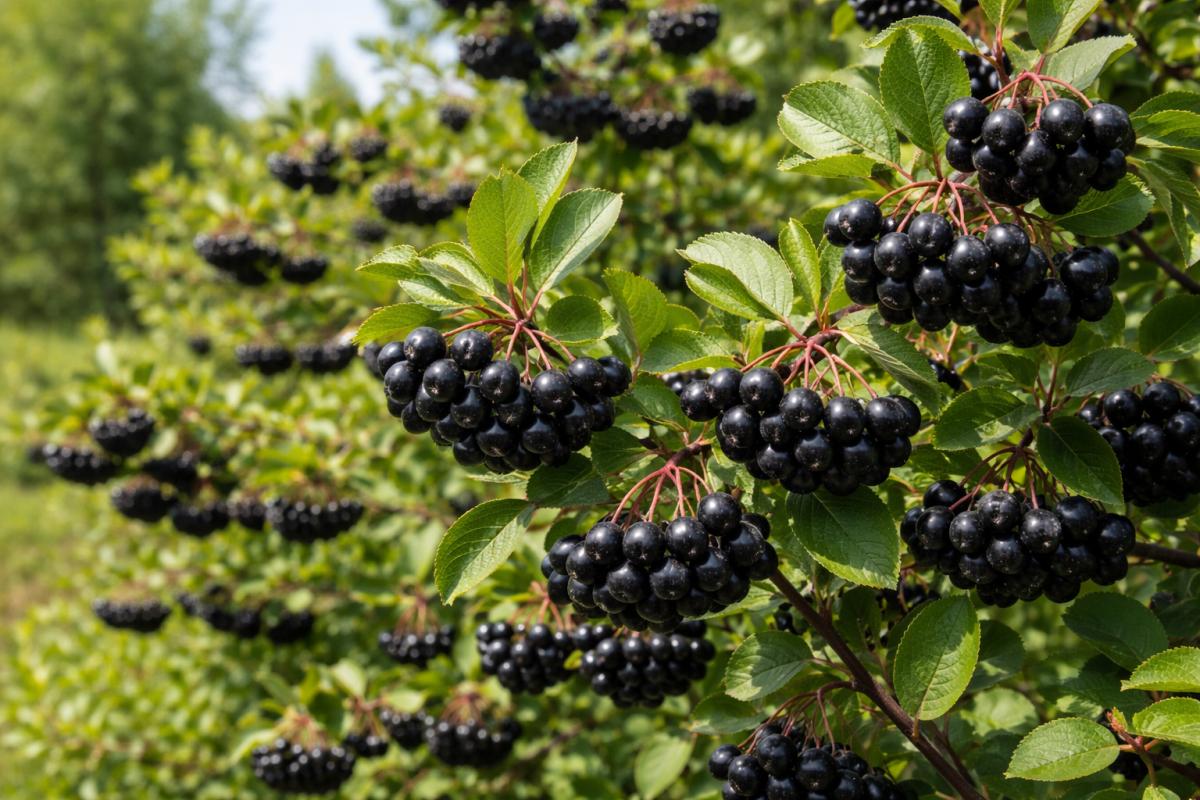
Aronia’s growing characteristics make it a “miracle crop” from the perspective of home gardeners and small farmers, but a nightmare for the agrochemical industry. It thrives on neglect. Hardy to USDA Zone 3, it survives temperatures as low as negative 40 degrees Fahrenheit. Its high tannin content makes it unpalatable to deer and insects, eliminating pest pressure. Once established, its deep root system makes it drought-tolerant.
Unlike blueberries, which demand specific soil pH, constant moisture, and expensive amendments, aronia requires zero chemicals, zero pesticides, zero fungicides. A single bush can produce 15 to 20 pounds of fruit annually for three decades. This is the opposite of industrial agriculture’s model, which thrives on recurring revenue from seeds that must be purchased annually and chemicals that must be applied every season.
The plant’s resilience reveals something profound about how nature operates. The strongest medicines often require the least intervention. They don’t need us to create elaborate systems of support. They simply need us to stop interfering, to step back and allow the inherent intelligence of living systems to express itself.
Growing aronia in your backyard isn’t merely a health decision. It’s an act of remembering, of reconnecting with knowledge systems that have been deliberately obscured. Every autumn, when the bushes produce their dark purple medicine, they offer a direct challenge to the story we’ve been told about what’s valuable, what’s edible, what deserves space in our lives and on our land.
The berry’s astringency can be managed through simple preparation: blended into smoothies, dried for trail mixes and porridges as indigenous peoples did, or juiced and mixed with sweeter fruits. These methods honor both the medicine and our modern palates, creating a bridge between ancient wisdom and contemporary life.
The quiet comeback of aronia in American Midwest states represents more than agricultural diversification. It signals a shift in consciousness, a growing recognition that the old ways of relating to plants and land weren’t primitive or superseded. They were, and remain, more sophisticated than the extractive systems that replaced them.
The most nutritious plants are often those rebranded as weeds because they’re too resilient to control and too beneficial to require ongoing purchases. Aronia reminds us that true medicine has always been freely available, growing wild in the margins, waiting for us to remember how to see it. The question isn’t whether nature can heal us. It’s whether we’re ready to accept healing that doesn’t come packaged, branded, and controlled by systems that profit from our dependence.
In reclaiming aronia, we reclaim something far more valuable than antioxidants. We reclaim the possibility of a different relationship with the earth, one built on reciprocity rather than extraction, on wisdom rather than control, on sufficiency rather than endless need.
PIN It