Physical Address
304 North Cardinal St.
Dorchester Center, MA 02124
Physical Address
304 North Cardinal St.
Dorchester Center, MA 02124

Group meditation has intrigued spiritual practitioners, scientists, and curious onlookers for decades. Many people have reported reduced stress, improved emotional balance, and even broader societal benefits when practicing meditation in a cohesive group setting. One particularly fascinating phenomenon in this context is the “Maharishi Effect,” a term coined to describe a perceived shift in collective consciousness that induces greater harmony and reduced negativity in the environment. Though the concept may initially appear esoteric, numerous observations and studies have sparked ongoing dialogue in the fields of consciousness research, psychology, and social science.
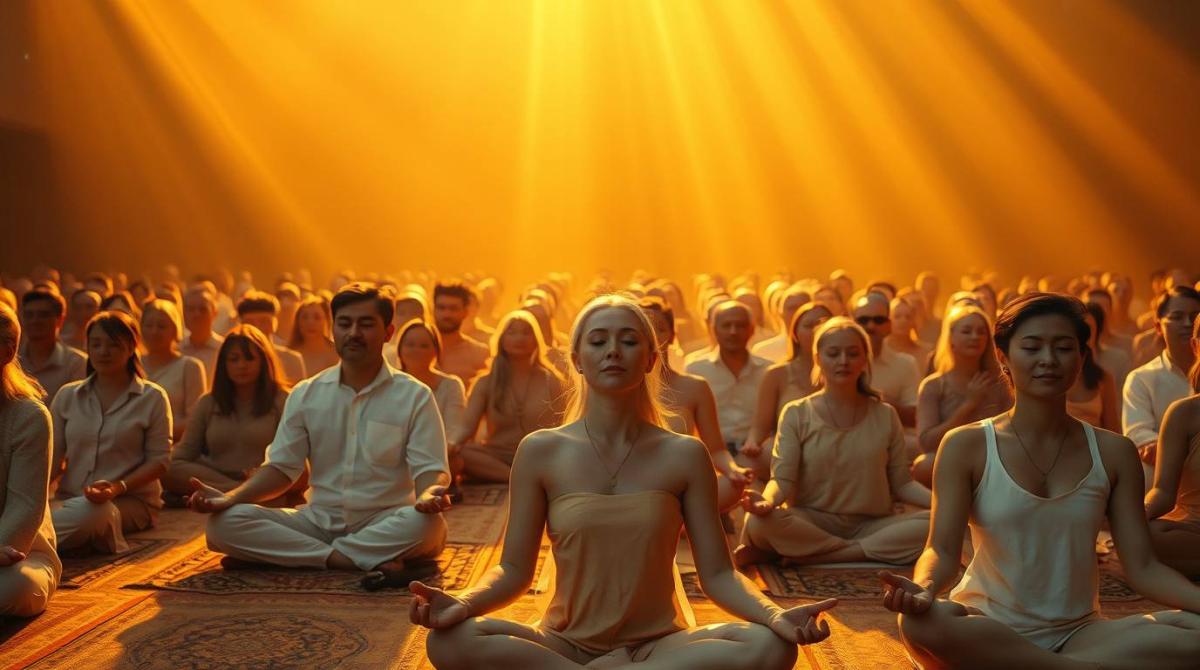
Group meditation has intrigued spiritual practitioners, scientists, and curious onlookers for decades. Many people have reported reduced stress, improved emotional balance, and even broader societal benefits when practicing meditation in a cohesive group setting. One particularly fascinating phenomenon in this context is the “Maharishi Effect,” a term coined to describe a perceived shift in collective consciousness that induces greater harmony and reduced negativity in the environment. Though the concept may initially appear esoteric, numerous observations and studies have sparked ongoing dialogue in the fields of consciousness research, psychology, and social science.
The Maharishi Effect originated with Maharishi Mahesh Yogi, a spiritual leader who popularized Transcendental Meditation (TM). The core idea is that when a group of individuals meditates together, they generate positive energy on a large scale, extending beyond themselves to influence the broader community. Essentially, the group is thought to create a “coherence” or unified field of consciousness that can reduce negative incidents such as crime or conflict. While many spiritual teachings incorporate group prayer or meditation, the Maharishi Effect claims an evidence-based rationale for how this works in measurable ways.
Research into this phenomenon gained momentum in the 1970s and 1980s when groups of meditation practitioners were observed in cities around the world. Some studies reported declines in local crime rates, fewer emergency calls, and even a drop in accidents during organized meditation events. Advocates of the Maharishi Effect interpret these findings as evidence that our collective consciousness can have tangible effects on social and environmental well-being.
Collective consciousness, a term explored by prominent sociologists like Émile Durkheim, suggests that communities share a common mental framework. This goes beyond shared values or norms: it implies an energetic or subtle connection that binds us together on a mental and emotional level. In the context of TM or similar meditative practices, the repeated focus on calmness and positivity from multiple participants is said to magnify this subtle network of shared consciousness.
While the notion of collective consciousness might sound abstract, it is often compared to the concept of resonance in physics. For instance, in acoustics, when one tuning fork is struck and placed near another tuning fork tuned to the same frequency, the second fork begins to vibrate. By analogy, a calm mental state present in a group of meditators might “vibrate” and spread to those in the surrounding environment. While scientific institutions continue to investigate how and why this might happen, proponents consider it both a spiritual and biochemical event, involving factors like brainwave synchronization and hormonal changes that promote relaxation.
Some studies claim to show correlations between group meditation sessions and reduced crime rates, decreased stress-related incidents, and overall social benefits. One widely cited experiment took place in Washington, D.C., in the 1990s. A group of researchers led by John Hagelin organized a large group meditation program over several weeks. By the end of the experiment, the city reported a notable drop in violent crime. While some experts questioned the data analysis and pointed to external factors like weather or policing changes, advocates argue that the results are too compelling to disregard.
Keen observers of the Maharishi Effect often call for more rigorous research designs, including double-blind studies, randomized controls, and broader demographic sampling. Critics note the difficulty of isolating a single variable – like group meditation – in highly complex social environments. Nonetheless, the hypothesis that deeply relaxed, focused minds could affect collective well-being remains a point of fascination among psychologists, sociologists, and practitioners of holistic therapies. For a balanced overview of the debate and references, readers may consult articles published by resources such as the National Institutes of Health (www.nih.gov).
Whether or not you fully embrace the Maharishi Effect, there are practical ways to organize group meditation and potentially tap into its community-enhancing qualities. Below are a few core recommendations for getting started.
The more regularly a group meets and follows these basic guidelines, the more likely participants are to see both personal and collective benefits. Although building such a routine takes effort, many practitioners find the sense of community and shared purpose to be deeply motivating.
On an individual level, group meditation can yield multiple advantages that extend beyond the immediate gathering. Participants often report the following:
When these benefits are magnified by everyone in a group, it is understandable why many believe a larger ripple of positivity can extend into the surrounding environment. Personal well-being can merge with communal well-being, reinforcing the concept of interconnectivity.
One of the most intriguing aspects of the Maharishi Effect is its potential implication for broader social and even global transformation. Some spiritual traditions have long taught that personal inner work can produce shifts in external circumstances, but the Maharishi Effect brings a new layer of academic interest to these claims. While data collection on such phenomena remains a challenge, part of the excitement lies in watching people experiment with ways to create peaceful communities, whether it is through local TM gatherings or mindfulness activities at schools and workplaces.
In cities where group meditations are practiced regularly, participants often report a heightened sense of collective identity. Neighbors become friends, local volunteer projects emerge, and neighborhood conflicts sometimes de-escalate more smoothly. Skeptics may argue that these outcomes hinge on standard community-building efforts, yet even standard community-building can be considered an outgrowth of shared positivity. It is possible that the calm, open-minded atmosphere cultivated by group meditations propels people to collaborate and solve problems in more constructive ways.
For those interested in understanding more about the global surge in mindfulness and meditation, the World Health Organization has released resources discussing mental health initiatives in communities worldwide (www.who.int). Such resources, while not specific to the Maharishi Effect, indicate a wider institutional recognition of the importance of mental wellness and collective well-being.
Moving forward, a greater emphasis on data-driven research may be necessary to propel discussions about the Maharishi Effect into mainstream science. Yet even without universal scientific consensus, the anecdotal and preliminary research data inspire communities to keep exploring group meditation as a practical tool for nurturing harmony. Whether the effect is purely psychological or also involves an energetic dimension remains a topic of debate, further fueling the mystery and allure surrounding collective consciousness.
In a time where news of societal unrest, stress, and anxiety seems prevalent, many are drawn to the idea that a non-invasive, low-cost, and spiritually enriching practice like meditation could do more than just elevate individual well-being. The potential to reduce community tensions, create safer neighborhoods, and foster healthier social interaction is deeply appealing to those who envision a more peaceful and connected world.
Ultimately, whether you approach meditation from a scientific or spiritual perspective, the concept of shared consciousness is worth exploring. By gathering together, setting collective intentions, and focusing on inner tranquility, groups may not only support each member’s personal development but also contribute to a greater climate of peace. As ongoing studies, practitioners, and communities continue to explore these possibilities, the Maharishi Effect remains an intriguing chapter in our understanding of what it means to truly connect – for ourselves and for others.