Physical Address
304 North Cardinal St.
Dorchester Center, MA 02124
Physical Address
304 North Cardinal St.
Dorchester Center, MA 02124

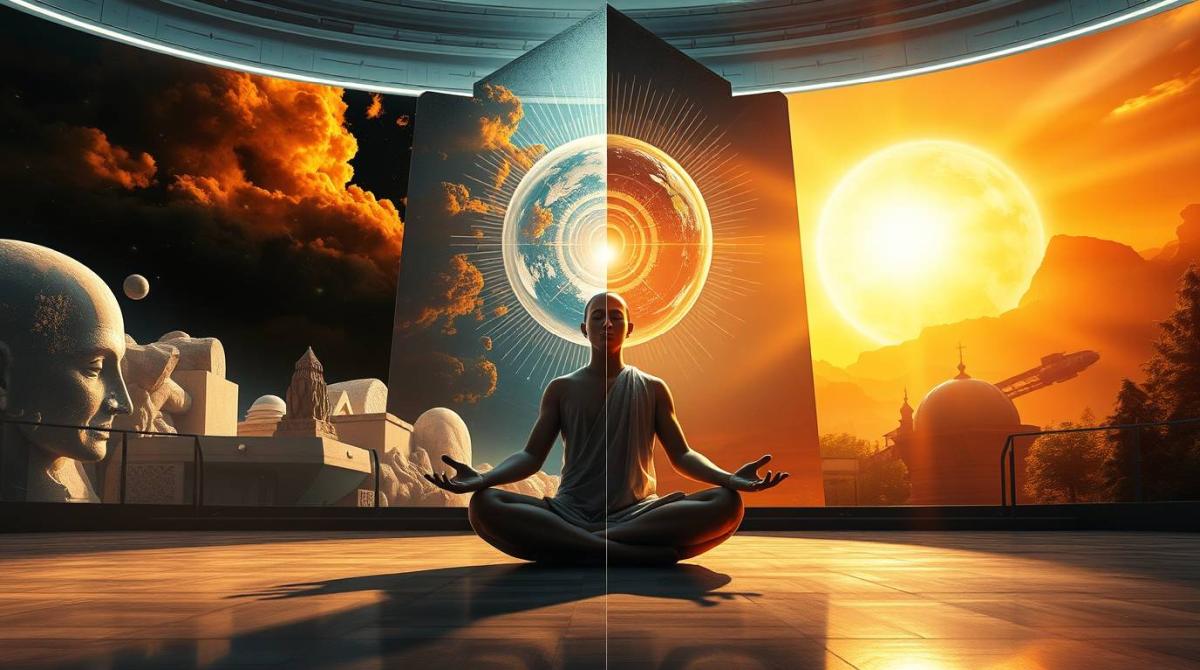
When we sit in meditation, many of us expect stillness, clarity, and focus. Yet sooner or later, something else arises: drifting colors, dreamlike faces, or whole landscapes unfolding behind closed eyes. This is known as hypnagogic imagery - the visions that appear in the theta state, the liminal space between waking and sleep.
For some meditators, these visions are a distraction, a sign the mind is sliding toward drowsiness. But for others - seekers of guides, the higher self, or astral travel - this threshold is not a problem at all. It is a doorway.
When we sit in meditation, many of us expect stillness, clarity, and focus. Yet sooner or later, something else arises: drifting colors, dreamlike faces, or whole landscapes unfolding behind closed eyes. This is known as hypnagogic imagery – the visions that appear in the theta state, the liminal space between waking and sleep.
For some meditators, these visions are a distraction, a sign the mind is sliding toward drowsiness. But for others – seekers of guides, the higher self, or astral travel – this threshold is not a problem at all. It is a doorway.
The word hypnagogia comes from Greek: hypnos (sleep) and agogos (leading). It describes the transitional state as consciousness moves from waking into sleep.
We pass through this state every night without noticing it. Lying in bed, images bubble up – flashes of color, strange voices, surreal dream-fragments. Usually we slip into unconsciousness before we can observe it clearly. But in meditation, we sometimes hover there long enough to witness what unfolds.
From a scientific perspective, this is the theta brainwave band (4–8 Hz). Theta is slower than the relaxed alpha rhythm of daydreaming, but faster than the deep delta waves of dreamless sleep. It is a fertile in-between zone: body heavy and still, mind drifting and fluid.
From a spiritual perspective, this state has long been recognized as a threshold to the subtle worlds. Shamans, mystics, yogis, and visionaries have all described entering trance, seeing visions, or traveling out of body through precisely this liminal doorway.
For meditators, hypnagogia can feel like both friend and foe.
Neither view is wrong. Hypnagogia is simply a natural threshold state. The meaning we give it depends on our path.
Why is this state considered so powerful? A few reasons stand out:
How does one actually use hypnagogia for connection? The key is remaining lucid.
When hypnagogic imagery arises, we usually do one of two things:
But there is a middle way: to stay awake while the visions unfold. This requires a light touch – relaxed, but alert.
Before entering meditation, it is helpful to set a clear intention. For example:
Intention works like a compass. It doesn’t control the imagery, but it shapes its direction, filtering random fragments into more coherent and meaningful visions.
People describe encounters differently:
It is important to approach with discernment. Not every image or voice is a guide; some are just mental noise. With practice, the difference becomes clear. Genuine contact usually carries a quality of coherence, love, and depth that dreamlike fragments lack.
For those interested in out-of-body experiences, hypnagogia is the classic launch pad.
Many practitioners describe the following sequence:
At this point, one may find themselves in a vivid astral environment, or hovering above the body, aware of both realms at once.
The crucial point: hypnagogia is not the end. It is the doorway. The art is to remain calmly present until the transition unfolds.
Here are some tested approaches to working with the hypnagogic state:
The best times are:
Trying late at night often just leads to unconscious sleep.
Choose a light anchor, such as:
This prevents you from dissolving into dream while still allowing visions to bloom.
Always begin with a clear statement, either aloud or inwardly. This shapes the subtle field. For example: “I open only to guidance aligned with my highest good.”
Treat the images like clouds passing through the sky. The more you try to control them, the quicker they vanish. Simply observe. Over time, the imagery may stabilize, becoming a doorway into vision or OBE.
Keep a journal. Even fleeting impressions gain meaning when tracked over time. Patterns may emerge, confirming guidance or showing progress in lucidity.
One of the biggest obstacles is discerning signal from noise. Hypnagogia is naturally chaotic. Not every flash of imagery is meaningful, and not every voice is wise.
A few guidelines help:
Discernment grows with practice, humility, and grounded reflection.
The hypnagogic state is one of meditation’s most misunderstood territories. To the mindfulness practitioner, it may look like failure: the mind nodding off into fantasy. To the visionary seeker, it is the threshold realm, a borderland between waking and dreaming, matter and spirit.
The truth is, it can be both. Hypnagogia is simply a natural function of the human mind. What matters is how we approach it.
If your path is clarity, let it pass.
If your path is vision, learn to linger there, lucid and awake.
In either case, the skill is the same: remaining conscious in the in-between. This is the razor’s edge – awake while the dream begins, grounded while the spirit soars.
For those seeking guides, higher self, or astral travel, hypnagogia is not the enemy. It is the gateway.